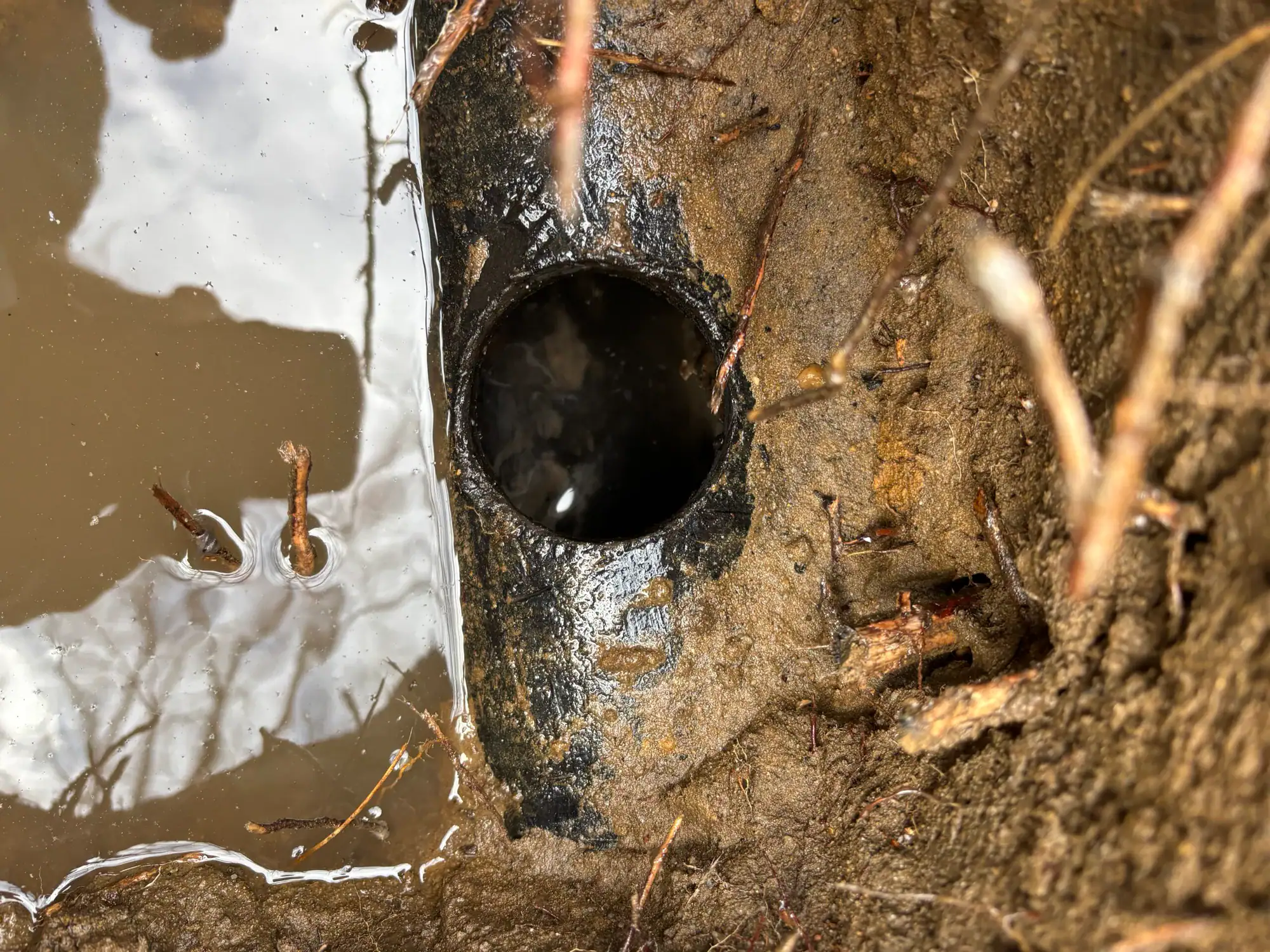
Slow drains, strange smells, soggy yard — knowing whether you need emergency or scheduled cesspool pumping could save you thousands.

Most people don’t think about their cesspool until the drains start gurgling or the yard smells like something died. By that point, the question isn’t whether to call — it’s how bad is this, and how fast do I need someone here? The good news is that not every cesspool problem is a crisis. The bad news is that some of them genuinely are, and the signs aren’t always obvious. Whether you’re dealing with a slow drain that’s been bothering you for weeks or sewage backing up into your basement at 11 PM on a Saturday, this page will help you figure out what’s actually happening and what to do next.
The honest answer depends on your household, not a calendar. The Suffolk County Department of Health generally recommends pumping every three years for most residential systems, but that’s an average — and averages can mislead you. A single person living alone in an older Ronkonkoma cape might go four years without an issue. A family of five in a Bay Shore split-level with a system that hasn’t been touched since the previous owner? They might be overdue right now.
Suffolk County has roughly 252,530 cesspool-only systems — more than almost any other county in the country. Many of those systems were installed in the 1950s, ’60s, and ’70s, when the post-war housing boom turned farmland into neighborhoods. That’s a lot of aging infrastructure underneath suburban yards, and age matters. Older systems without a septic tank fill faster, drain slower, and give you less warning before something goes wrong.
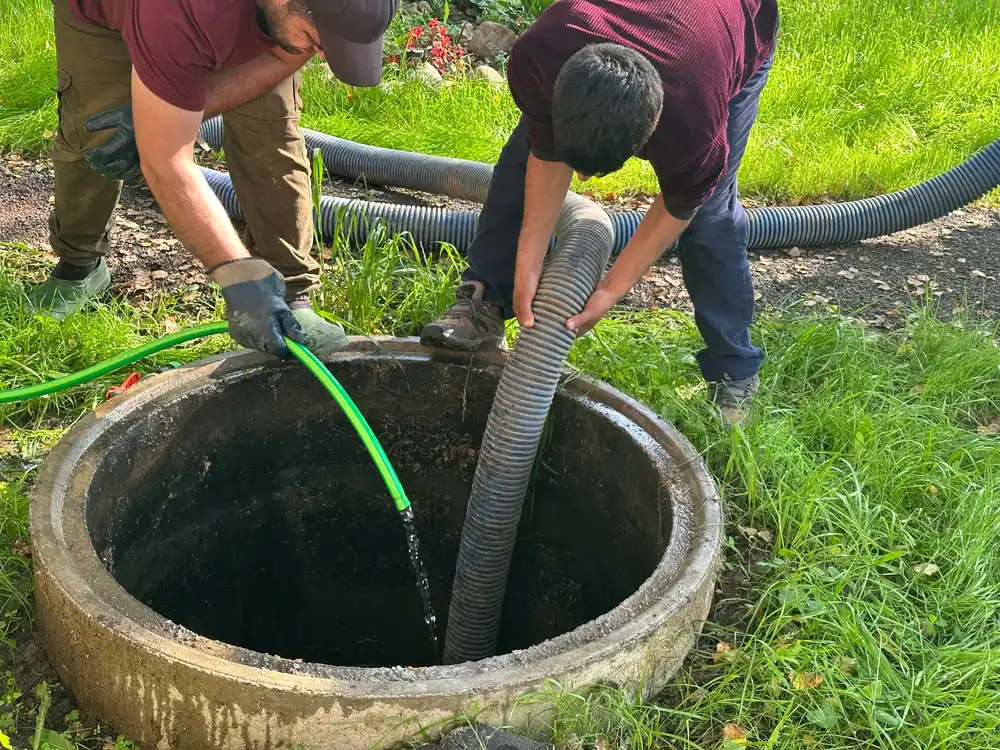
There’s a difference between a system that’s approaching its service window and one that’s telling you it’s done waiting. The most obvious signs tend to show up inside the house first: multiple drains running slowly at the same time, toilets that gurgle after you flush, or a persistent sewage smell coming up through the pipes. One slow drain is usually a localized blockage. When it’s happening in the kitchen, the bathroom, and the utility sink all at once, that’s your cesspool talking.
Outside, look for patches of grass that are unusually green and lush in one area — particularly over where the cesspool is buried. That sounds like a good thing, but it means liquid waste is saturating the soil around the system. A soggy or spongy area in the yard after dry weather is another red flag. So is standing water that doesn’t drain away after rain the way it used to.
The smell is worth taking seriously on its own. A sulfur or rotten-egg odor near the ground in your yard, or drifting into the house through drains or vents, isn’t just unpleasant — it’s a signal that gas is escaping from a system under pressure. That brings up a point most homeowners don’t know until it’s too late: sewer gas isn’t just a smell. It’s a health issue.
One thing that catches a lot of Suffolk County homeowners off guard is the water table. On the South Shore — in communities like Patchogue, East Patchogue, Bay Shore, and Islip — the water table sits close to the surface. After heavy rain or spring snowmelt, that rising groundwater can push back against your cesspool’s drainage, causing backups that seem to come out of nowhere. If you’ve had this happen once, it’s worth scheduling a pumping before the next wet season, not after.
You’ll sometimes hear the term “cesspit” used interchangeably with “cesspool,” especially in older communities across Long Island. Technically, they’re not the same thing. A cesspool has perforated walls or a leaching bottom that allows liquid to drain into the surrounding soil while solids accumulate at the bottom. A cesspit is a fully sealed chamber — nothing drains out. Everything that goes in stays in until it’s pumped.
In practice, the emptying process is similar: a vacuum truck removes the accumulated waste, and a technician inspects the structure for cracks, deterioration, or capacity loss. But because a cesspit has no drainage at all, it fills faster and typically needs to be emptied more frequently than a standard cesspool. If you’re not sure which type of system you have — especially if you bought the house without records — that’s worth finding out before you try to set a pumping schedule.
The other thing worth knowing is that since July 1, 2019, Suffolk County banned new cesspool installations entirely. If your existing system fails and needs full replacement, you can’t just swap it out for an identical unit. You’ll need a septic tank at minimum, and depending on the location and scope, potentially a nitrogen-reducing I/A OWTS system — which can push the cost well above $15,000. That regulatory reality is one of the strongest arguments for maintaining what you have. A $300–$500 pumping every two to three years is a very different conversation than an unplanned five-figure replacement.
This is also why documentation matters. Suffolk County requires proof of cesspool service has context menu for property transfers and renovation permits. Homeowners who’ve kept up with pumping and have the paperwork to show for it are in a much stronger position when it’s time to sell — or when a building department asks questions.
Want live answers?
Connect with a AAA Dependable Cesspool expert for fast, friendly support.
Sewer gas is one of those things that gets dismissed as a nuisance when it’s actually a warning sign. The smell — that rotten egg or sulfur odor — comes primarily from hydrogen sulfide (H2S), a colorless gas produced when organic waste breaks down in an oxygen-deprived environment. It also contains methane, ammonia, and carbon dioxide in varying concentrations. None of those are things you want building up in an enclosed space.
At low levels, H2S causes headaches, nausea, dizziness, and eye irritation. People often chalk these symptoms up to something else entirely — a migraine, a stomach bug, seasonal allergies. But if the symptoms keep appearing when you’re at home and ease up when you leave, that pattern is worth paying attention to. At higher concentrations, hydrogen sulfide causes rapid disorientation and loss of consciousness. It’s been responsible for dozens of workplace deaths in the U.S. over the past decade, and it doesn’t give you much warning.

Yes — and the tricky part is that your nose isn’t a reliable detector. Hydrogen sulfide has an odor threshold of around 0.5 parts per billion, which means you can smell it at concentrations far below dangerous levels. That sounds reassuring until you understand what happens next: at higher concentrations, your olfactory nerves become fatigued and stop registering the smell entirely. The odor disappears. Most people interpret that as the problem going away. It hasn’t. The gas is still there — you’ve just lost the ability to detect it.
OSHA sets a ceiling of 20 parts per million for H2S exposure. By the time concentrations reach that level, you’re already experiencing symptoms. At concentrations above 100 ppm, the effects become severe within minutes. This isn’t meant to cause panic, but it is meant to be taken seriously. A cesspool that’s backing up, overflowing, or venting gas into the home isn’t just a plumbing inconvenience — it’s a genuine health hazard.
Methane, the other major component of sewer gas, adds a different kind of risk. It’s odorless, highly flammable, and can reach explosive concentrations in enclosed spaces like basements or crawl spaces. If you’re smelling sewer gas in your home, don’t go looking for the source with a flashlight in a closed room. Ventilate the space, get everyone out, and call for emergency service. This is exactly the kind of situation where waiting until morning isn’t the right call.
A lot of homeowners assume that if the cesspool gets pumped, the drains will clear on their own. Sometimes that’s true. But when a system has been full or failing for a while, the pipes themselves can be clogged with waste, grease, and buildup that won’t move just because the cesspool has capacity again. Emergency drain service and cesspool pumping often need to happen together — one addresses the root cause, the other clears the path.
Here’s what a full backup scenario typically looks like: the cesspool reaches capacity, liquid has nowhere to go, and it starts pushing back through the lowest drain in the house — usually a basement floor drain, a ground-floor toilet, or a utility sink. By the time you’re seeing sewage inside the home, both the cesspool and the drain lines are compromised. Pumping the cesspool relieves the pressure, but a camera inspection and water jetting of the drain lines is often what gets everything flowing normally again.
This matters for scheduling, too. If you call for emergency cesspool pumping and the technician finds that your drain lines are also blocked, you want a company that can handle both in the same visit — not one that pumps the tank and tells you to call a plumber for the drains. The ability to coordinate cesspool pumping and emergency drain service as a single response is the difference between a problem that’s solved in one visit and one that drags on for days.
For homeowners in Suffolk County, particularly those in communities with older housing stock — Middle Island, Wheatley Heights, parts of Babylon, and the older neighborhoods throughout Brookhaven — this kind of combined response is more common than people expect. Homes built in the ’60s and ’70s often have original cast iron or clay drain lines that have been collecting buildup for decades. The cesspool and the drains are one connected system, and they tend to fail together.
If you’re reading this because something already seems off — slow drains, a smell you can’t place, a yard that doesn’t look right — trust that instinct. The systems under Suffolk County homes don’t give a lot of warning. When they do signal a problem, acting on it quickly is almost always cheaper than waiting to see what happens next.
Scheduled pumping is straightforward: know your household size, know your system’s age, and don’t stretch the interval too far. Emergency pumping is a different conversation — one that involves health risks, drain lines, and sometimes a system inspection that reveals more than just a full tank. Either way, the goal is the same: get the right information from someone who actually knows what they’re looking at.
We’ve been handling both kinds of calls in Suffolk County since 1998. If you’re not sure what you’re dealing with, that’s exactly the kind of question we’re set up to answer — honestly, without pressure, and without making the situation feel bigger than it is.
Summary:
Article details:
Share: