What Ronkonkoma homeowners need to know about cesspool service, Suffolk County regulations, and finding a company with real roots in the community.

If you own a home in Ronkonkoma, there’s a good chance your cesspool has been quietly doing its job for decades — maybe since before you moved in. That’s actually the problem. Most homeowners don’t think about their system until something goes wrong, and by then, what could have been a routine pumping turns into a much bigger conversation.
Suffolk County has its own regulations, its own soil conditions, and its own set of challenges that don’t apply anywhere else on the map. We’ve worked in these neighborhoods since 1998, and we’ve learned what actually matters for systems in this area. This page covers what you need to know — from maintenance basics to local rules to what separates a trustworthy company from one that shows up and finds “problems” on every visit.
Ronkonkoma sits on Long Island’s sandy glacial soil, with a high water table and Lake Ronkonkoma — the largest lake on Long Island — nearby. That combination affects how cesspools perform here in ways that don’t apply in other parts of New York. Sandy soil drains fast, which sounds like a good thing until you realize it also means contaminants move quickly through the ground before they’ve been properly treated.
Most homes in this area were built around 1969. A cesspool installed in 1969 is over 50 years old. The materials, the design, and the regulatory standards it was built to meet are all from a different era. That doesn’t mean it’s automatically failing, but it does mean it deserves attention.

There’s a real difference between a company that serves Long Island and a company that knows Ronkonkoma specifically. We’re based at 2281 Motor Pkwy, Ronkonkoma, NY 11779 — not dispatching from a regional hub an hour away. We’re already here, which matters a lot when you’re dealing with a backup at 9 PM on a Tuesday.
But proximity is only part of it. After 27 years of working in Suffolk County, we’ve seen how the soil behaves in different neighborhoods, how systems near the lake respond to seasonal water table changes, and how aging infrastructure tends to fail in this specific area. That kind of knowledge doesn’t come from a training manual — it comes from decades of showing up and doing the work.
We also operate on a principle of honesty. In this industry, it’s not hard to find a company that arrives, pokes around, and comes back with a list of treatments and upgrades you supposedly need. We don’t operate that way. We tell you what your system actually needs — and what it doesn’t. Over 325 five-star reviews across Google, Angi, and HomeAdvisor reflect how we’ve kept customers coming back since 1998.
When you’re comparing cesspool companies in Suffolk County, look for a Consumer Affairs license — that’s the specific local credential that matters here, not just a general contractor’s license. Ask whether we carry full insurance. And pay attention to whether you get a clear price before the truck pulls up, or whether the number changes once we’re on your property.
A lot of homeowners use “cesspool” and “septic system” interchangeably, which is understandable — they do similar jobs. But they’re not the same thing, and Suffolk County’s regulations treat them differently, so it’s worth knowing which one is on your property.
A cesspool is a single-chamber structure that collects household waste and allows liquids to slowly leach into the surrounding soil. There’s no treatment happening — it’s essentially a holding and dispersal system. Most older homes in Ronkonkoma have some version of this setup. A septic system, by contrast, uses a tank to separate solids from liquids, then routes the liquid effluent to a drain field or leaching structure where further filtration occurs. Modern systems — especially the nitrogen-reducing I/A OWTS systems now required for new construction in Suffolk County — go further still, removing up to 70–90% of nitrogen before anything reaches the groundwater.
Why does nitrogen matter? Because Long Island sits on a sole-source aquifer, meaning 100% of the island’s drinking water comes from the ground beneath your property. What goes into the soil eventually comes back up through the tap. Suffolk County has documented a 40% increase in nitrate concentrations in the Upper Glacial aquifer between 1987 and 2013. That’s your water supply.
We handle both cesspool and septic service across all of Suffolk County, including inspection, pumping, cleaning, repair, and full system installation when the time comes. If you’re not sure what type of system you have or what condition it’s in, a camera inspection can answer that question — without guesswork and without a sales pitch attached to the answer.
Want live answers?
Connect with a AAA Dependable Cesspool expert for fast, friendly support.
Suffolk County has some of the most specific cesspool regulations in the state, and they’ve changed significantly in recent years. If you bought your home more than a few years ago and haven’t looked into this, there’s a reasonable chance you’re not fully up to speed.
The short version: Suffolk County banned new cesspool installations effective July 1, 2019. Since July 1, 2021, any new construction in an unsewered area must install a nitrogen-reducing I/A OWTS system. Existing systems can continue operating, but certain events — a system failure, a major renovation, or a property transfer — can trigger a mandatory review and potentially a required upgrade.
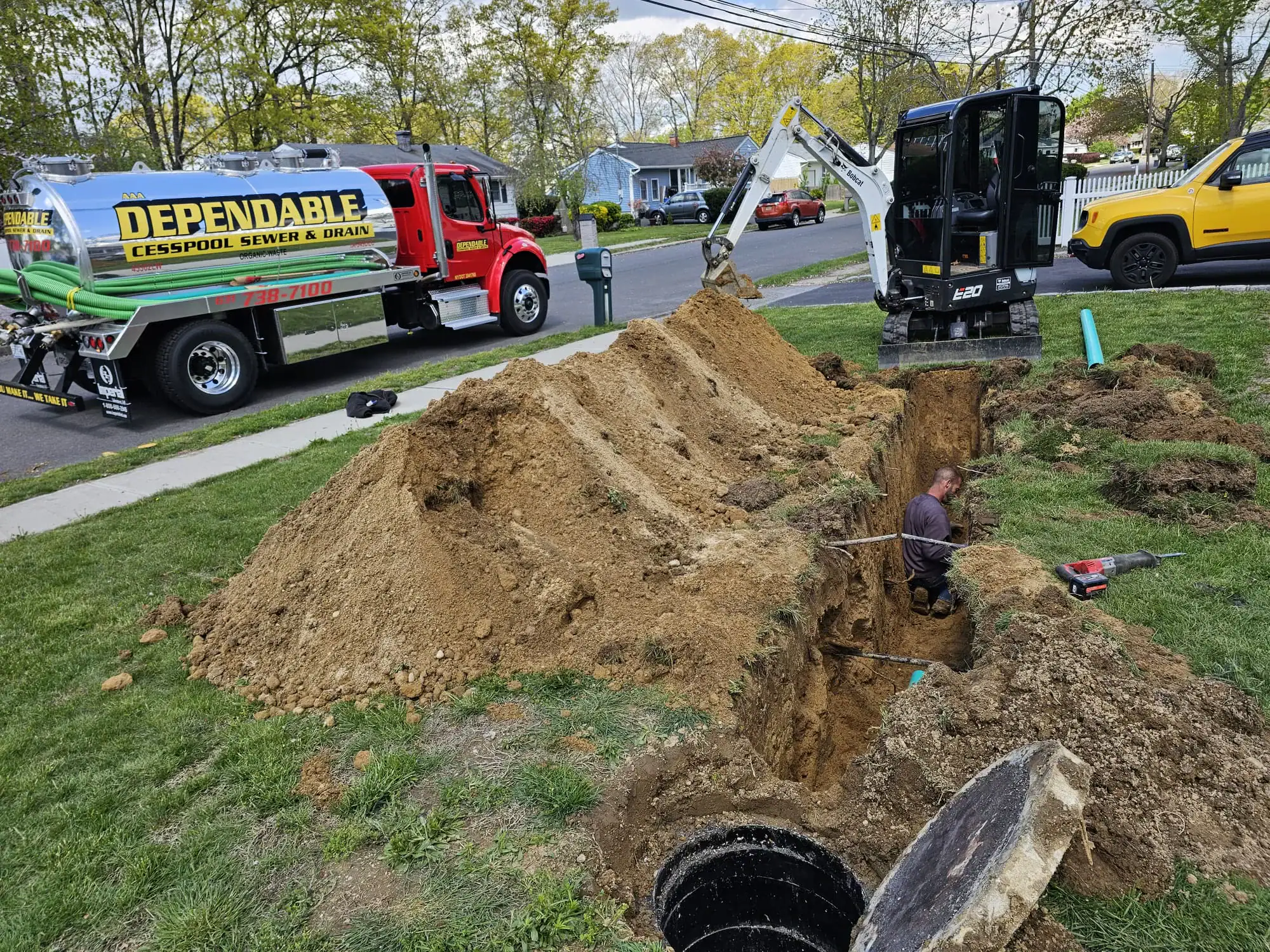
The most common question we hear is some version of: “Do I have to replace my cesspool right now?” The honest answer is: probably not immediately, unless your system has failed or you’re triggering a regulatory review through a renovation or sale. Existing systems aren’t being forcibly replaced on a schedule. But the rules around when upgrades become mandatory are specific, and it helps to understand them before you’re in the middle of a transaction or a repair.
If you’re selling your home, you’ll need a cesspool certification before closing. That involves a licensed contractor inspecting the system, potentially performing a dye test, and issuing documentation that satisfies the lender and the buyer. We handle certifications regularly, and we can move quickly when a closing timeline is involved.
If your system does need to be upgraded or replaced, the cost is real — I/A OWTS systems typically run between $20,000 and $40,000 depending on site conditions. But there’s financial help available that most homeowners don’t know about. Suffolk County’s Septic Improvement Program has awarded grants to over 1,000 homeowners, and when you combine the base grant with income-based supplements and state funding, eligible homeowners can access up to $30,000 in grants and low-interest financing at 3%. We help our customers navigate that process from the start, because an upgrade you can actually afford is better than one that sits on a to-do list for years.
The Suffolk County legislation that established the I/A OWTS framework was actually signed at Lake Ronkonkoma County Park — making this community the symbolic center of the county’s water quality initiative. The lake, the aquifer, and the density of aging cesspool systems in surrounding neighborhoods make this area ground zero for why these regulations exist.
The standard answer is every two to three years for most households, but the real answer depends on your specific situation. A family of four living in a home full-time will put more demand on a system than a couple who travels frequently. Homes with garbage disposals, high water usage, or older systems with reduced capacity may need more frequent service. The only way to know for certain is to have the system inspected.
What we consistently see in Ronkonkoma is homeowners who’ve gone five, seven, sometimes ten years without service — not because they were negligent, but because the system kept working and there was nothing visible to prompt a call. Cesspools fail quietly. Sludge builds up slowly over years until it reaches the outlet pipe, and then things go wrong fast. A backup that forces an emergency call on a holiday weekend costs significantly more than a scheduled pumping would have — typically $800 to $2,000 or more for emergency service, compared to a fraction of that for routine maintenance.
A thorough service call involves more than pulling out the vacuum hose. It should include inspecting the baffles and inlet and outlet pipes, assessing the condition of the tank walls, checking for signs of root intrusion or structural damage, and giving you an honest read on how much life the system has left. If a company shows up, pumps, and leaves without telling you anything about what they found, that’s not a service call — that’s just a transaction.
We build maintenance programs around each customer’s specific system, usage patterns, and household size. Some customers want a set schedule and the peace of mind that comes with it. Others prefer to call when they’re due. Either way, we keep records of every visit so you always know where your system stands — which also matters when you eventually sell the property and need documentation for the closing.
Ronkonkoma homeowners are dealing with aging systems, evolving Suffolk County regulations, and a groundwater supply that’s directly connected to how well those systems are maintained. It’s worth taking seriously.
The good news is that most cesspool problems are manageable when they’re caught early. Routine service, honest inspection, and a company that gives you straight answers go a long way toward avoiding expensive surprises.
If you’re not sure when your system was last serviced, if you’re approaching a home sale, or if something just doesn’t seem right with your drains, call us. We’ve been doing this work in Suffolk County since 1998 — and we’re based right here in Ronkonkoma, which means we’re close when it matters most.
Summary:
Article details:
Share: