
From routine pumping to emergency repairs, here's what cesspool service in Suffolk County actually involves — and how to make sure you only pay for what you need.
Most Suffolk County homeowners don’t think about their cesspool until something goes wrong. A slow drain here, a smell in the yard there — and suddenly you’re searching for answers at the worst possible moment. The good news is that most cesspool problems are manageable when you catch them early. The not-so-good news is that this industry has a reputation for making things sound worse than they are, and not every company out there is going to give you a straight answer. This guide is here to change that. We’ll walk you through every major service, explain what it actually does, and give you the local context that matters specifically for Suffolk County, NY.
“Cesspool service” isn’t one thing — it’s a category that includes everything from a routine pump-out to a full system replacement. What you need depends on what you have, how old it is, how often it’s been maintained, and what’s going wrong (if anything).
Suffolk County has roughly 360,000 homes on individual wastewater systems, and a huge portion of those systems are aging fast. The post-WWII housing stock that defines so much of Long Island means a lot of cesspools that are approaching or well past their design lifespan of 20 to 40 years. Understanding what each service involves — and when you actually need it — is the first step toward making a smart decision and not getting talked into something you don’t need.

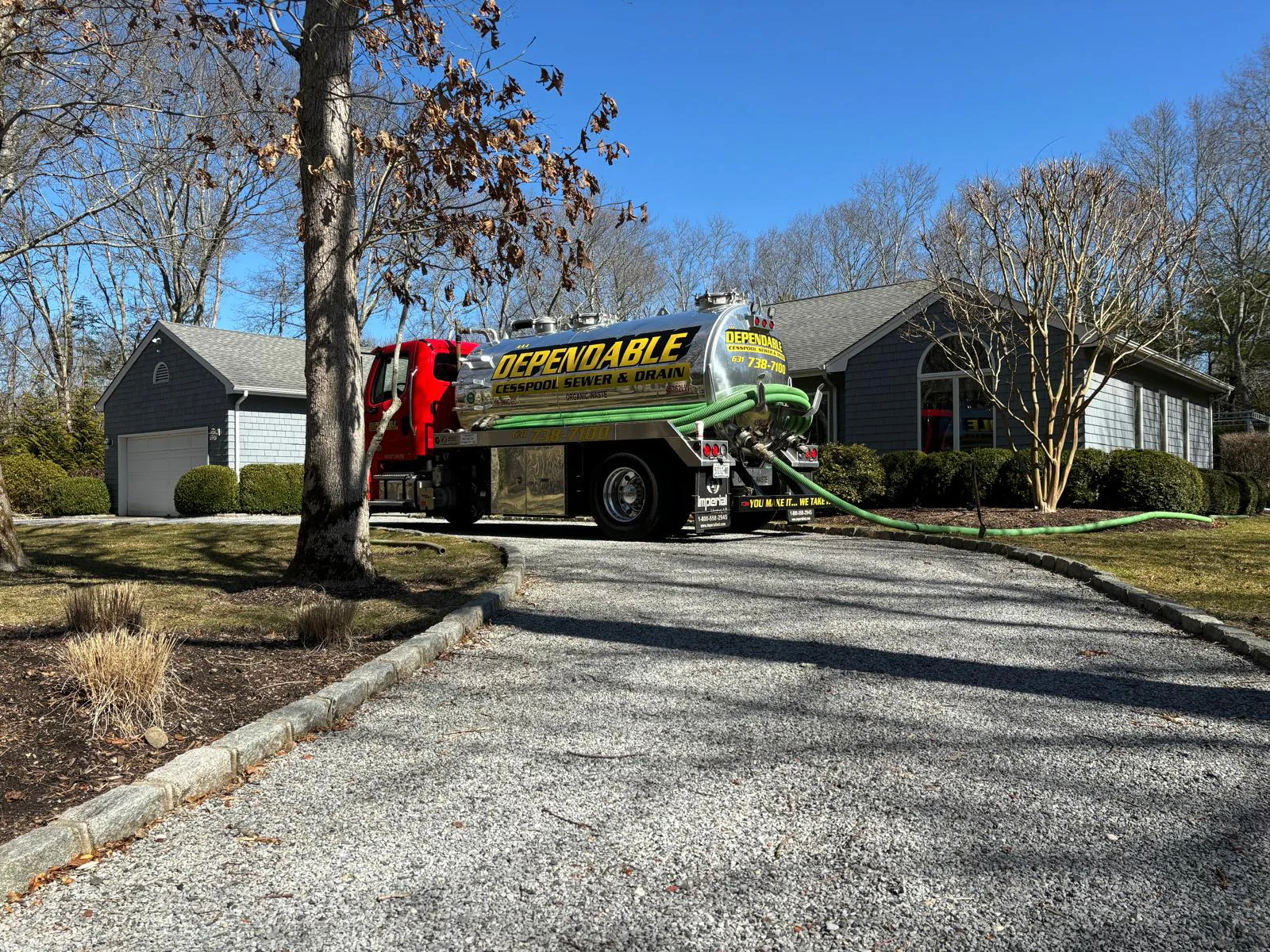
Cesspool pumping is the most common service call we handle, and it’s also the one most people have the most questions about. The basic idea is straightforward: a pump truck removes the accumulated waste from your tank so the system can continue absorbing and processing properly. Most Suffolk County homes should have this done every one to three years, depending on household size, how much water you use, and the age of the system. Larger households and older systems often need it annually.
What separates a quality pumping appointment from a mediocre one isn’t the truck — it’s what happens before and after. A real service visit includes a system inspection before the pump even opens. We’re looking at the condition of the tank, the baffles, the surrounding soil, and any visible signs of stress or structural wear. After pumping, we inspect again. That two-step process is how small problems get identified before they turn into expensive emergencies.
A company that just shows up, pumps, and leaves isn’t doing you any favors. Drain cleaning is related but distinct. If you’ve got a slow drain in one fixture, that’s usually a plumbing issue. If every drain in your house is moving slowly, that’s almost always a cesspool symptom — the system is backed up or at capacity, and the problem is downstream, not at the fixture.
Sewer jetting is the heavy-duty version of drain cleaning: high-pressure water is used to blast through severe blockages in sewer lines, including root intrusion and years of buildup that standard snaking can’t touch. Camera inspection is the tool that makes all of this more precise. A video camera fed through your pipes gives us a real-time view of what’s happening inside the lines — cracks, root intrusion, offset joints, collapsed sections. You can’t see any of that from the outside.
For recurring problems, home purchases, or any situation where you need to know the actual condition of your system before making a decision, a camera inspection removes the guesswork entirely.
This is where a lot of Suffolk County homeowners get blindsided — especially if their system is failing and they assumed they could just replace it with a new cesspool. As of July 1, 2019, that’s no longer an option. Suffolk County no longer permits replacing a failing cesspool with another cesspool. Any replacement must include a septic tank preceding the leaching structure, and depending on the location and the specifics of your property, a full Innovative/Alternative Onsite Wastewater Treatment System — an I/A OWTS — may be required. For new construction, I/A OWTS is mandatory.
This rule exists for a real reason. Cesspools have been a documented source of nitrogen pollution in Suffolk County for decades. The county’s sole-source aquifer — the only drinking water supply for 1.5 million residents, with no backup — is directly affected by what happens underground on your property. The Great South Bay has seen a 93% decline in its clam harvest over 25 years, and nitrogen from aging cesspools and septic systems is a primary driver.
These aren’t abstract environmental concerns — they’re the reason Suffolk County has committed to a 50-year, $4 billion infrastructure plan to upgrade wastewater systems across the county. I/A OWTS systems cost more than a conventional septic system. The Suffolk County Septic Improvement Program covers the first $11,000, with low-interest financing available for the remainder. If your system is aging and you’re starting to think about what comes next, knowing this program exists changes the financial picture significantly.
Cesspool repair — as opposed to full replacement — is absolutely still an option in many situations. Cracked lines, damaged baffles, root intrusion, and certain structural issues can often be repaired without replacing the entire system. The honest answer is that it depends on the specific condition of your system, and a camera inspection is often the most useful tool for making that determination. Anyone who tells you definitively that you need a full replacement without inspecting the system first is not giving you a straight answer.
Want live answers?
Connect with a AAA Dependable Cesspool expert for fast, friendly support.
Cesspool and septic tank are terms that get used interchangeably, but they’re not the same thing. A cesspool is a single chamber — waste goes in, liquids leach out through the walls and bottom, solids accumulate. A septic system has a tank that separates solids from liquids, followed by a distribution system that disperses the treated effluent into a leach field. The maintenance needs, regulatory treatment, and replacement options differ between the two.
If you’re not sure which you have — and a lot of Suffolk County homeowners aren’t — a septic inspection will tell you. This is also one of the most common services requested during real estate transactions, where buyers want to know the condition and type of system before closing.
Septic pumping follows similar general guidelines to cesspool pumping — every one to three years for most households — but the specifics depend on tank size, the number of people in the home, and how much water the household uses on a daily basis. A two-person household with a large tank might go three years comfortably. A family of five in a house with an older, smaller tank might need annual service to stay ahead of the buildup.
What often gets overlooked is the seasonal dimension. Suffolk County has a significant population of seasonal and vacation properties, particularly on the East End — the Hamptons, the North Fork, Shelter Island. A property that sits empty for eight months and then hosts a full house every weekend in July and August is putting stress on the system in a concentrated, irregular pattern. Systems at seasonal properties often need service at the beginning or end of the season, not just on a calendar-year schedule.
The other thing worth understanding is that a septic system that isn’t showing symptoms isn’t necessarily a healthy one. Nitrogen and other contaminants can be moving through the soil and into the groundwater long before you notice any problem at the surface. Because Suffolk County’s aquifer is the only source of drinking water for the entire county, what happens in your system has implications that go beyond your property line.
Regular pumping and inspection isn’t just about protecting your home — it’s about not contributing to a problem that affects your neighbors’ drinking water. Septic inspections are also a smart move any time you’re buying or selling a home. A full inspection documents the condition, type, and location of the system, notes any repairs that may be needed, and gives both parties a clear picture of what they’re dealing with. Surprises at closing are expensive. An inspection before the sale eliminates them.
This might be the most important section in this entire guide, because the company you hire matters as much as the service itself. Suffolk County homeowners have heard enough stories — from neighbors, from online reviews, from their own experience — to know that not every cesspool company operates the same way. Some find problems that aren’t there. Some quote one price and charge another. Some show up late, or not at all.
Here’s what actually separates a trustworthy company from one you should avoid. Licensing is non-negotiable. In New York State, cesspool service requires a state license. In Suffolk County specifically, Consumer Affairs licensing is required for home improvement and service contractors. Ask for it. A company that’s reluctant to confirm their licensing status is telling you something.
Insurance matters just as much. If something goes wrong during a service call — damage to your property, an issue with the work — you want to know you’re protected. A fully insured company means you’re not left holding the bill for someone else’s mistake.
Beyond credentials, pay attention to how a company communicates. Do they explain what they found and what they recommend, or do they just hand you an invoice? Do they tell you what you actually need, or do they seem to be building toward a larger sale? The best signal is usually reviews — not just the star rating, but the specific language people use. When you see the same words coming up again and again — honest, on time, explained everything, fair price, no upsell — that’s a pattern, not a coincidence.
We’ve been doing this work in Suffolk County since 1998. We’re licensed, insured, and have earned more than 325 five-star reviews on Google and Angi, including the Angi Super Service Award for 2025. We offer military, first responder, and senior discounts because this community has given us a lot, and we take that seriously. When we come out to your property, we tell you what we find — not what generates the most revenue. If you just need a pumping, we’ll tell you that. If something else is going on, we’ll show you and explain your options.
Cesspool service doesn’t have to be stressful. The more you understand about your system, the easier it is to make good decisions — and the less likely you are to get talked into something you don’t need. Most problems, caught early, are straightforward to address. Most systems, maintained consistently, last a long time.
If you’re dealing with slow drains, a smell in the yard, a wet patch that won’t dry up, or you simply can’t remember the last time your system was serviced, that’s your signal. Don’t wait for a backup to force the issue.
AAA Dependable Cesspool Sewer & Drain serves homeowners across Suffolk County — from Babylon and Islip to Smithtown, Brookhaven, Riverhead, and out to the East End. Call us, tell us what’s going on, and we’ll give you a straight answer. Free estimates, no pressure, and we show up when we say we will.
Summary:
Article details:
Share: