
Fall is the last easy window to inspect your pipes before winter hits. Here's what Bay Shore homeowners need to know before the ground freezes.
You’ve probably noticed something — a drain that’s slower than it used to be, a gurgling sound from the toilet when you run the washing machine, maybe a faint smell that comes and goes. Nothing dramatic. Nothing you’d call an emergency. But something.
That’s exactly when a camera inspection is most useful. Not when your system has already backed up, but before it does — while there’s still time to deal with whatever’s brewing underground without turning your yard into a construction site or your winter into a nightmare. If you’re in Bay Shore or anywhere in Suffolk County, fall is the window. Here’s why that matters.
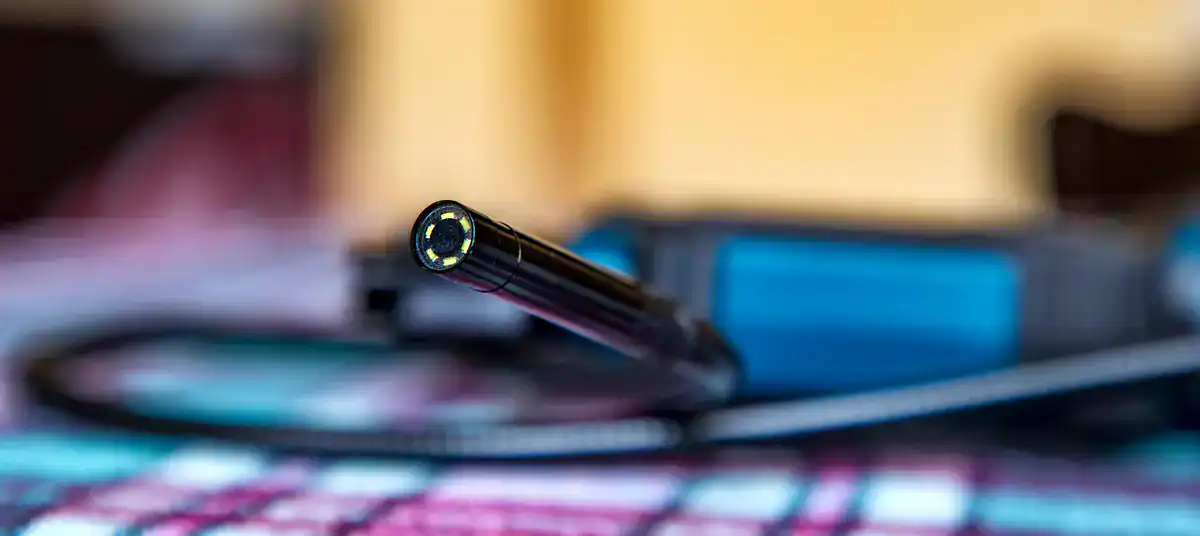
A camera inspection is exactly what it sounds like: a waterproof camera travels through your pipes and sends back real-time video of what’s inside. Cracks, root intrusion, blockages, collapsed sections, joint separations — whatever is in there, you see it. Not a technician’s verbal description of it. The actual footage.
The camera enters through an existing cleanout or access point, so there’s no digging, no disruption to your lawn or driveway, and no guesswork. A typical residential inspection takes 30 to 60 minutes. When it’s done, you have a clear picture of your system’s condition — and so does the technician explaining it to you.
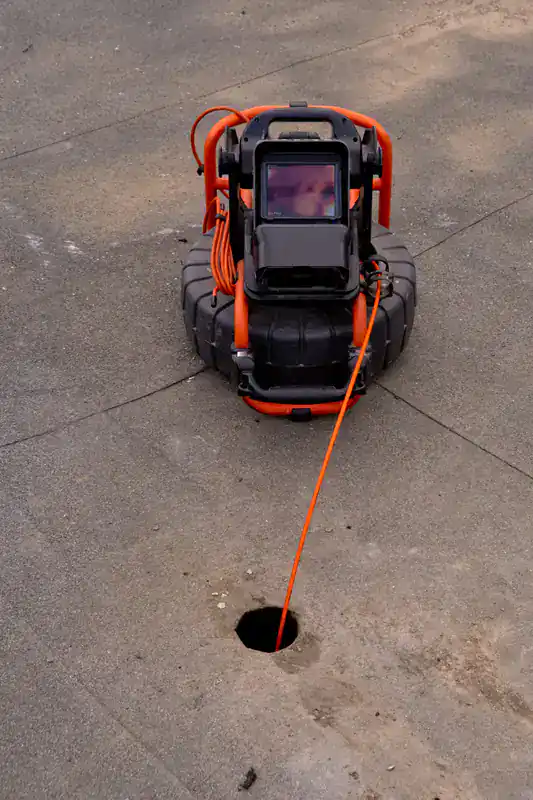
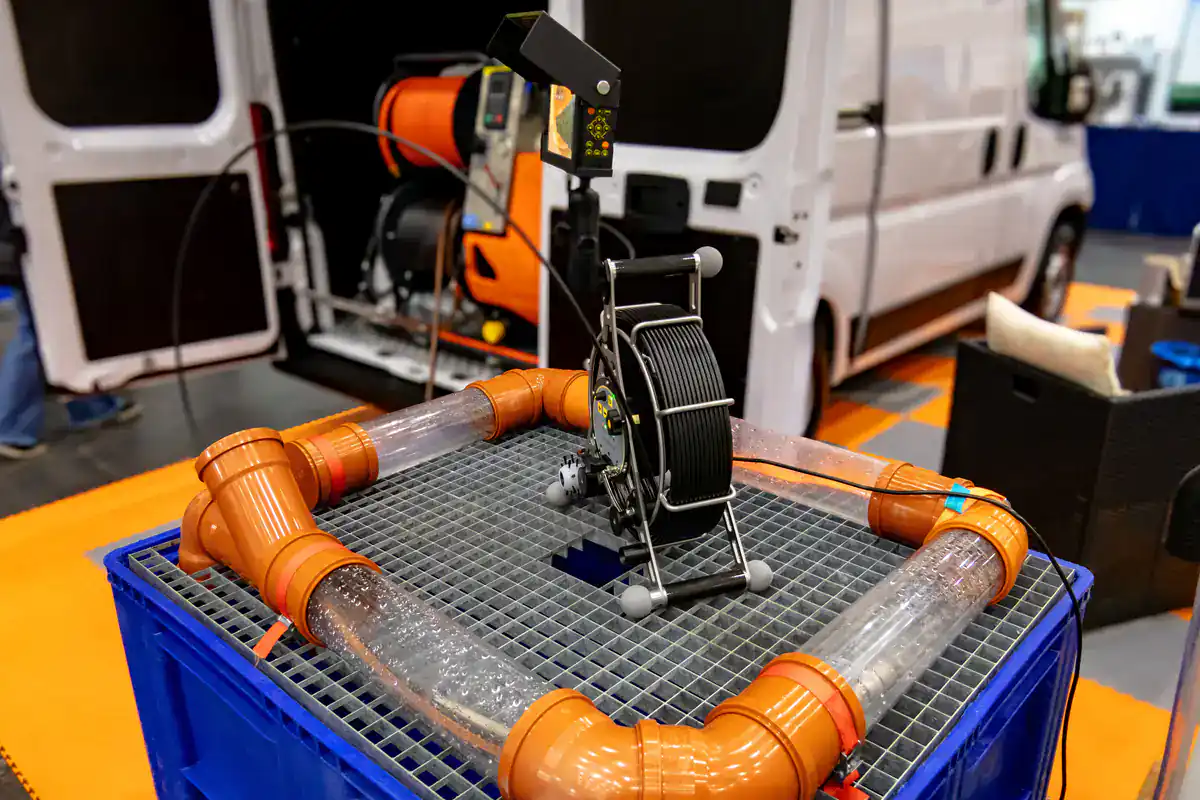
The process starts at an access point — usually a cleanout near your home’s foundation or a connection point along the line. The camera is fed into the pipe and pushed through the system while transmitting live video to a monitor. We watch the footage in real time, noting anything that looks abnormal: buildup, cracks, root growth, misaligned joints, or sections where the pipe has shifted or settled.
Modern inspection cameras also carry a radio transmitter that records the depth and precise physical location of any defect. That matters more than most homeowners realize. If a repair is needed, the crew knows exactly where to dig — not just “somewhere between the house and the street.” That precision is the difference between a targeted fix and tearing up half your property hoping to find the right spot.
In Bay Shore, a lot of homes were built in the 1940s through the 1960s, which means many of those underground pipes are now 60 to 80 years old. Clay tile was the standard material back then. While it can last a long time, it’s also prone to cracking under root pressure and the shifting soil conditions common throughout Suffolk County. A camera inspection on a home that age often turns up things the homeowner had no idea were there — not because anything was obviously wrong, but because these problems build slowly and quietly until they don’t.
The footage is recorded. You get a copy. That’s not a small thing. If another company ever tells you that you need an expensive repair, you have dated visual documentation of your system’s condition to compare against. That’s real protection.
Drain cleaning and camera inspection are not the same service, and one doesn’t replace the other. Drain cleaning clears a blockage. Camera inspection tells you what caused it, how bad it is, and whether clearing it is enough or whether there’s something structural going on underneath.
If your drain is slow, cleaning it might solve the problem. But if it keeps coming back, that’s a sign something else is happening. Root intrusion, a cracked pipe, or a section that’s shifted and is holding water and debris — none of those things get resolved by cleaning alone. The camera tells you which situation you’re actually in.
This distinction matters especially for Suffolk County homeowners because of the regulatory environment here. Since July 2019, cesspools in Suffolk County can no longer be replaced with cesspools. If your system needs to be replaced, it has to be upgraded to at minimum a conventional septic system — and for newer construction, an Innovative and Alternative Onsite Wastewater Treatment system that reduces nitrogen output. That’s a significantly more expensive outcome than a pipe repair.
Before you commit to any course of action, you want to know exactly what you’re dealing with. Is this a pipe problem — repairable, manageable, not a system-level issue? Or is it something structural that changes the conversation entirely? Camera inspection answers that question. It doesn’t trigger any regulatory obligation on its own. It just gives you the information to make a smart decision rather than a reactive one.
Want live answers?
Connect with a AAA Dependable Cesspool expert for fast, friendly support.
Once the ground freezes on Long Island — typically from late November through March — underground pipe repair becomes significantly harder to execute and more expensive to complete. Scheduling a camera inspection in October or early November means that if the inspection finds something that needs attention, there’s still time to address it while conditions are workable.
The flip side is also true. Waiting until spring means carrying whatever is in your pipes through an entire winter. Cold temperatures cause soil to contract and shift, which puts additional mechanical stress on pipes that already have cracks or compromised joints. A hairline crack in October can become a collapsed section by February.
If you’ve noticed any slow drains, gurgling sounds, or odors that come and go — yes, before winter is exactly the right time. But even if everything seems fine, there’s a reasonable case for a pre-winter inspection if your home is more than a few decades old and you’ve never had one done.
Bay Shore sits on the south shore of Suffolk County, right along the Great South Bay. It’s a community with a lot of character and a lot of history — and a lot of homes that were built when cesspool systems were the standard and no one was thinking about what those pipes would look like 60 or 70 years later. The soil conditions here, the proximity to the water table, and the age of the infrastructure all combine to make underground pipe problems more common than homeowners expect.
Approximately three-quarters of homes in Suffolk County rely on cesspools rather than municipal sewer systems. That means most Bay Shore homeowners are managing their own underground infrastructure, often without any documented record of its condition. A camera inspection changes that. It gives you a baseline — a recorded snapshot of what your system looks like right now — so you’re not flying blind when something eventually does go wrong.
The cost of a camera inspection is a fraction of what pipe repairs run. Root intrusion caught early, when it’s still a cleaning job, costs around $500. Left undetected until it causes structural damage, that same problem can climb to $15,000 or more in pipe replacement. The inspection isn’t an expense — it’s the thing that tells you whether you need to spend the big money or not.
The camera inspection industry has a reputation — not entirely undeserved — for being used as a sales funnel. A technician “finds” problems, describes them in alarming terms, and immediately pivots to an expensive repair quote. The homeowner has no way to verify what they were told, and the footage somehow never makes its way into their hands.
When we run a camera inspection, you see the footage in real time. We walk you through what we’re seeing and explain it in plain language — not jargon designed to make the situation sound worse than it is. You get a recorded copy when we’re done. If your pipes look clean, you’ll hear that. If there’s a problem, we’ll tell you exactly what it is, where it is, and what your options are — with no pressure to commit to anything on the spot.
We’ve been doing this in Suffolk County since 1998. That’s more than 25 years of working on Long Island systems — clay tile pipes from the 1950s, high water table infiltration, root intrusion from the mature trees that line streets throughout Bay Shore and the surrounding towns. We know what a real problem looks like and what doesn’t need immediate attention. Our job is to give you accurate information, not to manufacture urgency.
Our customers tend to use words like “honest” and “didn’t try to upsell me” when they describe their experience. That’s not an accident — it’s the standard we hold ourselves to on every job. We also offer military, first responder, and senior discounts, because the community we work in matters to us beyond the service call.
Fall doesn’t last long on Long Island. The window between “conditions are fine for underground work” and “the ground is frozen and we’re waiting until spring” closes faster than most homeowners expect. If something has been nagging at you — a slow drain, an occasional smell, a gurgle you’ve been ignoring — now is the time to get a clear answer rather than a winter full of wondering.
A camera inspection won’t commit you to anything. It gives you facts. From there, you decide what to do with them. That’s the whole point.
If you’re in Bay Shore or anywhere in Suffolk County and you want an honest look at what’s going on in your pipes before the season changes, reach out to AAA Dependable Cesspool Sewer & Drain. We’ll tell you exactly what we find — nothing more, nothing less.
Summary:
Article details:
Share: