Hear From Our Clients
No more sewage smells drifting across your yard. No puddles forming where they shouldn’t. No panic every time someone flushes a toilet or runs the washing machine.
A properly installed cesspool system in Medford, NY means your wastewater goes where it’s supposed to go and stays there. You’re not wondering if today’s the day something backs up into your basement. You’re not calling emergency services because your old system finally gave out at the worst possible time.
Suffolk County changed the rules in 2019, and now cesspool replacement means nitrogen-reducing systems that meet Article 6 standards. That sounds complicated, but here’s what it actually means for you: a system designed for your property’s soil conditions, engineered to handle your household’s wastewater output, and built to protect Long Island’s drinking water while keeping your home functional. The permitting gets handled. The health department inspections get scheduled. Your new system gets installed by people who’ve done this hundreds of times in Medford and know exactly what Suffolk County requires.
We’ve been handling cesspool installation in Medford, NY since 1998. That’s over 25 years working with Suffolk County’s health department, understanding Medford’s soil conditions, and installing systems that pass inspection the first time.
You’re not getting a crew that learned the regulations last month. You’re working with licensed installers who know which permits your property needs, what the soil testing will likely show based on your neighborhood, and how to navigate Article 6 requirements without making it more complicated than it needs to be. We’ve built relationships with the Suffolk County Department of Health Services because we’ve been doing this long enough to know the people reviewing your permit application.
Medford properties have specific challenges – soil composition varies, water table levels matter, and every installation needs to account for setback requirements from wells and property lines. That local experience makes the difference between a system that works and one that causes problems down the road.

First, we assess your property. That means evaluating your soil type, checking the water table level, measuring distances from your home to property boundaries, and determining what size system your household actually needs based on bedroom count and water usage. This isn’t guesswork – Suffolk County requires specific calculations and soil testing before any permit gets approved.
Next comes the permit application. We handle the paperwork, submit the engineering plans, and work directly with the health department to get your installation approved. You’ll know what’s happening at each step because we’ve done this enough times to anticipate questions before they become delays.
Then the installation happens. Excavation, system placement, proper backfilling, and connection to your home’s plumbing. The new cesspool system gets installed according to the approved plans, which means it’ll pass the required inspections. Suffolk County sends an inspector to verify everything meets code before the system goes into service.
After installation, you get a system that handles your household wastewater while meeting current environmental standards. The nitrogen-reducing technology is built in, so you’re not thinking about it – it just works. And if you need maintenance down the road, you’re calling people who already know your system because we installed it.

Ready to get started?
Every cesspool installation in Medford, NY starts with a site evaluation specific to your property. We’re testing soil percolation rates, identifying the water table depth, and mapping out where your system can legally go based on Suffolk County setback requirements. Your neighbor’s installation doesn’t determine yours – soil conditions change from lot to lot in Medford.
You get a system sized correctly for your home. That calculation factors in bedroom count, fixture count, and projected daily wastewater flow. Undersized systems fail early. Oversized systems waste your money. We’re designing for what your household actually produces.
The permit process gets managed completely. Application submission, plan review responses, inspection scheduling – all handled. Suffolk County requires nitrogen-reducing technology for new installations, so your system includes an innovative/alternative onsite wastewater treatment system (I/A OWTS) that removes up to 90% of nitrogen before it reaches the groundwater. This protects Long Island’s sole-source aquifer, which is where your drinking water comes from.
Installation includes excavation, system placement, connection to your existing plumbing, proper backfilling, and final grading. The health department inspects before we close everything up. Once approved, your system is operational and compliant with current Suffolk County regulations.
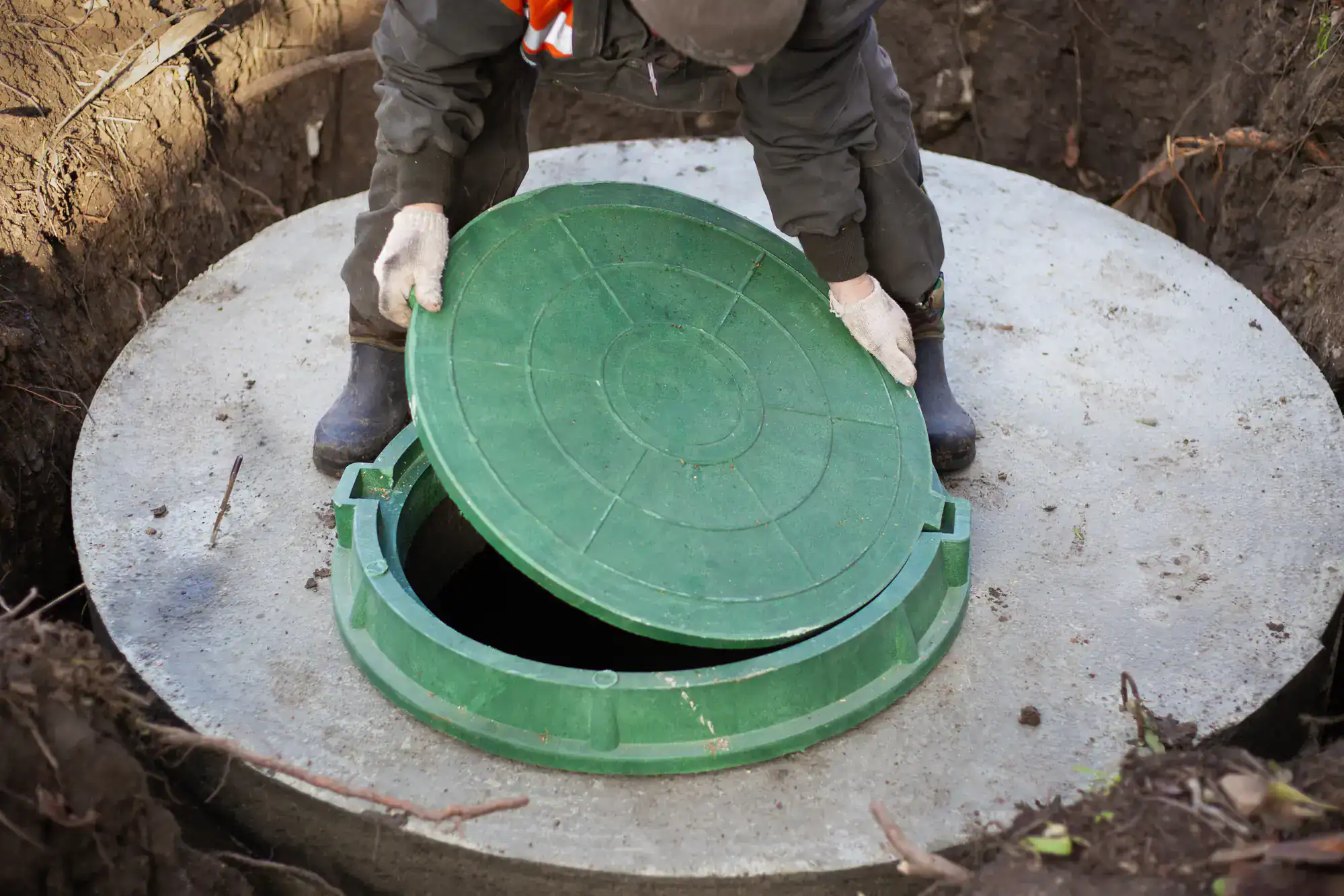
No. Suffolk County banned new cesspool installations in 2019. If you’re replacing a failed system, adding bedrooms, or doing major renovations that trigger Article 6 requirements, you need an innovative/alternative onsite wastewater treatment system.
Traditional cesspools allowed untreated wastewater to seep directly into the ground. The new systems include nitrogen-reducing technology that treats wastewater before it enters the soil. This change happened because Long Island’s drinking water comes from the aquifer beneath us, and decades of cesspool use created nitrogen contamination problems.
What this means practically: you’re not getting a simple concrete ring anymore. You’re getting a multi-chamber system with built-in treatment technology. It costs more upfront, but Suffolk County offers grants up to $10,000 to offset installation expenses. We can help you understand what grant programs you qualify for based on your property and situation.
The actual installation work typically takes two to three days once permits are approved. Getting those permits approved takes longer – usually four to eight weeks depending on health department review times and whether any plan revisions are needed.
Here’s the realistic timeline: soil testing and site evaluation happen first, usually within a week of your call. Engineering plans get submitted to Suffolk County for review. The health department reviews submissions in the order received, and review times vary based on their current workload. If they request changes to the plans, that adds time.
Once the permit is issued, we schedule your installation. Excavation, system installation, and backfilling happen over two to three days depending on site conditions and weather. The final inspection gets scheduled after installation is complete. You can’t use the new system until it passes that inspection, so we make sure everything is done right the first time to avoid delays.
System failures still require permits and proper installation, but we can expedite the process when you’re dealing with an emergency. Sewage backing up into your home or bubbling up in your yard can’t wait eight weeks for normal permit processing.
Suffolk County understands emergency situations and has provisions for expedited review when a failed system creates health hazards. We document the failure, submit emergency permit applications, and work directly with health department staff to get your replacement approved as quickly as possible.
While permits are processing, we can provide temporary solutions to manage the immediate problem – pumping the failed system more frequently or setting up temporary holding arrangements. These aren’t permanent fixes, but they keep sewage out of your home while the replacement system gets approved and installed. Emergency cesspool replacement in Medford, NY still means meeting current regulations, but the timeline compresses significantly when you’re facing an active failure.
Commercial cesspool installation in Medford, NY requires systems sized for higher wastewater volumes and designed for commercial use patterns. A restaurant produces different wastewater than an office building, and the system design needs to account for those differences.
Suffolk County regulations for commercial properties are stricter than residential requirements. You’re looking at more detailed engineering, potentially larger treatment capacity, and additional permitting steps. The health department wants to see calculations based on actual business operations – how many employees, how many customers, what type of fixtures, peak usage times.
We handle commercial installations differently than residential because the stakes are higher. A failed system at a business means you’re potentially shutting down operations, losing revenue, and dealing with health code violations. Commercial systems get designed with backup capacity and redundancy to minimize that risk. The installation process takes longer and requires more coordination, but you end up with a system built for commercial demands rather than trying to make a residential system work for business use.
Medford’s soil composition varies significantly from property to property, and that directly impacts how your cesspool system gets designed. Some areas have sandy, well-draining soil. Others have clay or dense soil that doesn’t percolate as well. The water table depth changes depending on where you are in town.
Before any installation, we conduct percolation testing to measure how quickly water moves through your soil. Suffolk County uses these results to determine what type of system your property needs and how large the leaching area must be. Poor percolation rates mean you need a bigger leaching field or enhanced treatment technology. High water tables require systems designed to work in saturated conditions.
This is why cookie-cutter installations don’t work. Your neighbor might have perfect soil conditions that allowed a straightforward installation. Your property might have clay layers that require a completely different system design. We test your specific lot, design for your actual conditions, and install a system that works with what your property gives us. Skipping proper soil evaluation leads to failed systems, and Suffolk County won’t approve permits without documented soil testing anyway.
Suffolk County offers grants up to $10,000 for residential cesspool replacement with nitrogen-reducing systems, with additional funding available in certain situations. These grants exist specifically to help homeowners upgrade from old cesspools to compliant treatment systems.
The grant application process runs separately from the installation permit process, but they overlap. You need approved engineering plans to apply for grants, and you need to use a licensed installer. We can walk you through what documentation the county requires and help you understand whether your property qualifies.
Grant funding availability changes based on county budget allocations, so timing matters. Some years the money runs out quickly. Other years funding lasts most of the year. If you’re planning a cesspool replacement in Medford, NY, it makes sense to explore grant options early in the process. The application adds some paperwork, but potentially covering a significant portion of your installation expense is worth the administrative time.
Other Services we provide in Medford