Hear From Our Clients
Your yard stays dry. Your plumbing drains like it should. And you stop wondering when the next backup is coming.
That’s what a properly installed cesspool system does. It handles your household wastewater without surfacing in your lawn, backing up into your home, or creating health hazards for your family.
When your current system fails—sewage pooling in the yard, slow drains throughout the house, or that unmistakable smell near your leach field—you’re facing a replacement, not a repair. Suffolk County regulations changed in 2019, and you can’t just drop in another old-style cesspool anymore. You need a system that meets current code, handles your household’s wastewater volume, and works with your property’s specific soil conditions.
A new cesspool system in Farmingville, NY means your property stays compliant, your home stays functional, and your family stays safe from exposure to untreated wastewater. The installation process handles everything from permit applications to final inspections, so your system passes county requirements without delays or failed inspections.
You get a system designed for your property’s soil type, your household size, and Suffolk County’s current standards. That means fewer problems down the road and a wastewater system that actually does its job.
We’ve handled residential cesspool installation across Farmingville, NY and surrounding Suffolk County towns since 1998. We’re licensed through Suffolk County Consumer Affairs, fully insured, and we’ve seen every soil condition and property challenge this area throws at installers.
Farmingville properties sit on soil that drains differently depending on which part of town you’re in. Some areas have sandy soil that percolates quickly. Others have denser composition that requires different system design. We test your specific site before we recommend a system, because what works two streets over might not work for your property.
We’re a small team. You’ll talk to the same people from estimate to final inspection. No call centers, no subcontractors showing up who’ve never seen your property before. Just straightforward work from people who’ve been installing systems in this county longer than some of our competitors have been in business.

First, we assess your property. That means soil testing to see how quickly water percolates through your ground, measuring distances to wells and property lines, and determining where your new system can legally go under Suffolk County code. Your soil’s percolation rate determines what type of system you need and how large your leach field has to be.
Next, we handle permits. Suffolk County requires health department approval before any installation starts. We submit your application, site plans, and soil test results. Once approved, we schedule inspections at three stages: excavation, tank placement, and backfill. The inspector needs to see each phase before we move to the next.
Then we install. We excavate to the required depth, set your tank and distribution box level (critical for proper flow), and install your leach field according to the approved plan. For properties requiring advanced treatment systems under current regulations, we install I/A OWTS technology that reduces nitrogen before wastewater reaches your soil.
Finally, we backfill, grade your yard to restore drainage patterns, and coordinate the final inspection. Once the health department signs off, your system is approved and you’re back to normal operations. The whole process typically takes one to two weeks depending on weather and inspection scheduling.

Ready to get started?
Your installation covers everything required to get your system approved and operational. That includes soil percolation testing, permit applications to Suffolk County Health Department, all required inspections, excavation, tank installation, leach field construction, and final grading.
For Farmingville properties, we’re installing systems that meet Article 6 of the Suffolk County Sanitary Code—the regulations that went into effect in 2019 and expanded in 2021. If you’re replacing a failed cesspool, you’re required to upgrade to at minimum a conventional septic system with a tank and leach field. Many properties now require advanced treatment systems that reduce nitrogen levels in wastewater.
Suffolk County is serious about protecting the aquifer. Farmingville, like the rest of the county, relies entirely on groundwater for drinking water. Old cesspools let untreated wastewater seep directly into the ground, carrying nitrogen that eventually reaches the aquifer and causes algae blooms in local waterways. New systems treat wastewater before it enters your soil, removing up to 70% of harmful nitrogen.
Your installation also accounts for your household size. A family of four generates different wastewater volume than a couple or a larger household. We size your system based on your home’s bedroom count (the county’s method for estimating occupancy) and your actual usage patterns. An undersized system fails quickly. An oversized system costs more than necessary. We match the system to your property’s real needs.
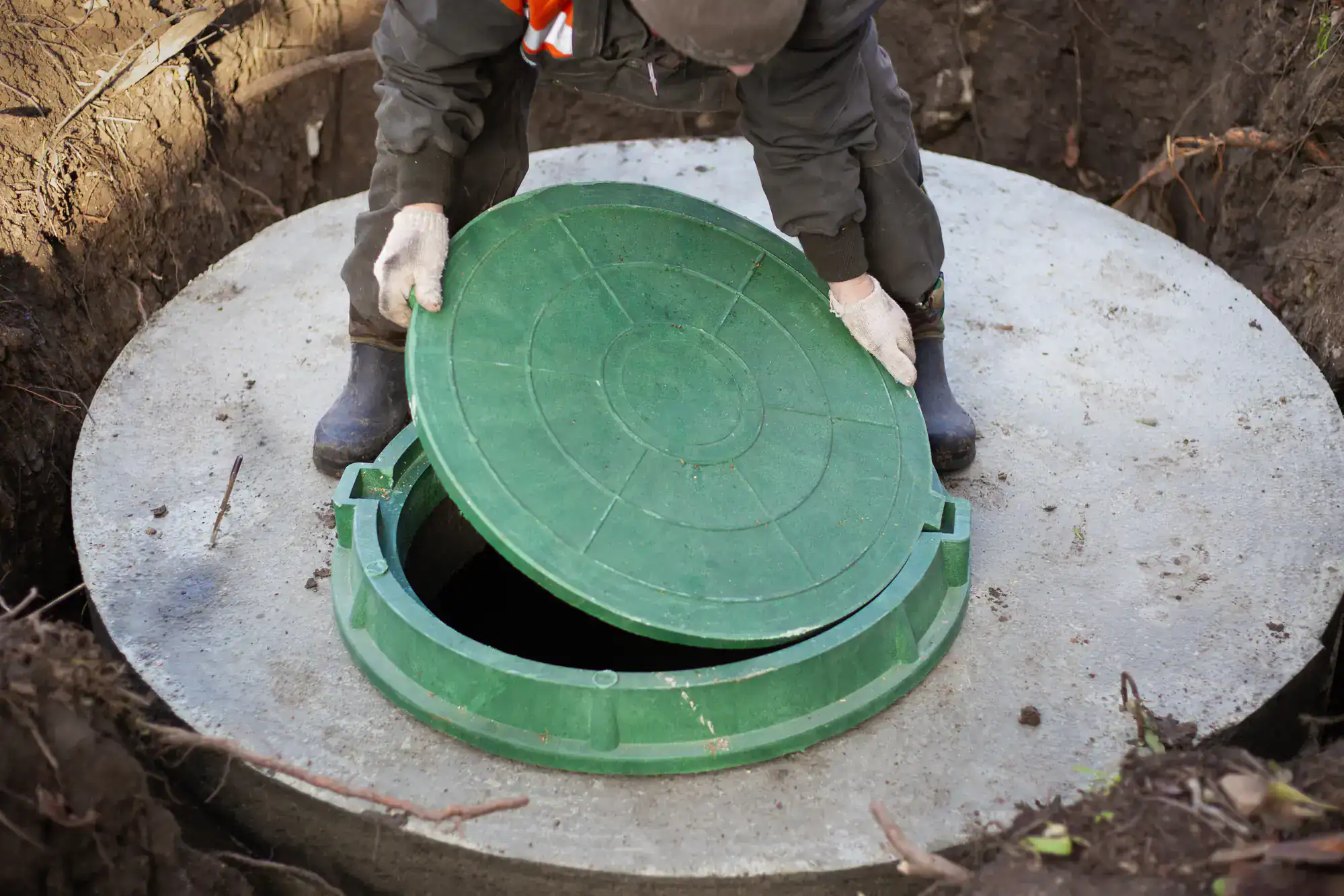
No. Suffolk County regulations that took effect in 2019 prohibit replacing a cesspool with another cesspool. When your system fails and needs replacement, you’re required to install at minimum a conventional septic system with a tank and leach field.
The regulation exists because old cesspools are basically just concrete rings in the ground with holes that let untreated wastewater seep into the soil. That wastewater carries nitrogen directly into the aquifer—the sole source of drinking water for everyone in Suffolk County. New systems treat wastewater before it reaches the ground, protecting water quality.
If you’re voluntarily upgrading a functioning cesspool, the same rules apply. You can’t install another cesspool. You upgrade to a septic system or advanced treatment system that meets current code. The county won’t issue permits for cesspool-to-cesspool replacements anymore.
Most residential cesspool installations in Farmingville, NY take one to two weeks from excavation to final approval. The timeline depends on three things: weather, inspection scheduling, and whether we hit any unexpected site conditions.
Weather matters because we can’t excavate or backfill in heavy rain. Wet soil doesn’t compact properly, and inspectors won’t approve work done in poor conditions. Inspection scheduling affects timeline because Suffolk County requires inspections at excavation, tank placement, and backfill stages. We can’t proceed to the next phase until the inspector signs off on the current one.
Unexpected conditions—like hitting groundwater at shallow depth, finding ledge rock, or discovering underground utilities that weren’t marked correctly—can add time. But for a straightforward residential installation on a property with normal soil conditions and clear access, you’re looking at about a week of actual work plus a few days for inspection scheduling.
You need a permit from the Suffolk County Department of Health Services before any installation work starts. This isn’t optional. Installing a cesspool or septic system without a permit violates county code and can result in fines, mandatory removal of the unpermitted system, and problems when you try to sell your property.
The permit application requires a site plan showing your property boundaries, existing structures, well locations (yours and your neighbors’), and the proposed system location. You’ll also need soil percolation test results that show how quickly water drains through your soil. The health department uses this data to determine what type of system your property can support and how large your leach field needs to be.
We handle the permit application as part of your installation. We conduct the required soil testing, prepare the site plan, submit the application, and coordinate all required inspections. The permit process typically takes two to three weeks, though timelines vary depending on the health department’s current workload. Once approved, the permit is valid for one year to complete installation.
It depends on when you’re installing and whether you’re connecting to county sewer in the future. As of 2025, Suffolk County requires advanced treatment systems (I/A OWTS) for most new installations and replacements. These systems reduce nitrogen in wastewater to 19 mg/l or less before it enters your leach field.
If your property is in an area scheduled for county sewer connection within a few years, you might qualify to install a conventional septic system instead of an advanced system. The county publishes maps showing sewer expansion areas and timelines. If you’re in one of those zones, you can potentially install a less expensive conventional system since you’ll be connecting to sewer before the system reaches the end of its service life.
For properties not connecting to sewer anytime soon, you’re installing an advanced treatment system. These systems cost more upfront than conventional septic, but they qualify for substantial grant funding through Suffolk County programs. Many homeowners receive grants that cover a significant portion of installation expenses. We can walk you through what applies to your specific property and what funding you might qualify for.
If your cesspool fails completely—sewage backing up into your home or surfacing in your yard—you’re dealing with a health hazard that needs immediate attention. First, stop using water in your home as much as possible. Every gallon you send down the drain is going somewhere it shouldn’t.
Call us for emergency service. We’ll assess the situation, determine if temporary pumping can buy you time, and start the replacement process. Even in emergencies, you still need health department permits before we can install a new system. We can expedite permit applications for failed systems, but there’s still a review and approval process.
In the meantime, you might need to limit water use, stay elsewhere temporarily if the backup is severe, or have the failed system pumped repeatedly to keep wastewater from surfacing. None of those are permanent solutions. A failed cesspool needs replacement, not repeated pumping. We move as quickly as permits and inspections allow to get your new system installed and your home back to normal operations. Emergency situations get priority scheduling, but we still have to follow county regulations for proper installation.
Suffolk County determines system size based on your home’s bedroom count, not your actual household size. A three-bedroom house requires a system sized for three bedrooms, even if only two people live there. The county uses bedrooms as a proxy for potential occupancy and wastewater volume.
Your soil’s percolation rate also affects system size. Soil that drains slowly needs a larger leach field to handle the same wastewater volume as soil that drains quickly. We test your soil’s perc rate during the site assessment, and that data determines your leach field dimensions.
During the assessment, we dig test pits, fill them with water, and measure how fast the water level drops. Fast percolation (sandy soil) means a smaller leach field. Slow percolation (dense or clay-heavy soil) means a larger leach field or possibly an engineered system with additional treatment. Your property’s specific conditions determine what you need. We size the system based on county requirements, your soil test results, and your home’s bedroom count—not guesswork or generic recommendations.
Other Services we provide in Farmingville