Hear From Our Clients

Your drains run faster. Your toilets flush without hesitation. That faint odor near the yard disappears completely.
More importantly, you’re not dealing with sewage backup in your basement during a holiday weekend. You’re not scrambling to find emergency septic pumping when guests are arriving. You’re not facing a complete system replacement because solids migrated into your drain field.
Suffolk County recommends pumping every three years for a reason. The sandy soil and high water table in East Hampton North mean your system works harder than tanks in other parts of the country. When you stay ahead of it, your septic tank cleaning becomes routine maintenance instead of crisis management.
Most systems last 20 to 40 years with proper care. Skip the maintenance, and you’re looking at failure within 10 to 15 years. That’s the difference between a functioning system and a failing one.
We’ve pumped thousands of septic tanks across Suffolk County. We know how systems behave in East Hampton North because we’ve serviced them through every season, every soil condition, and every regulatory change.
We’re licensed by Suffolk County Consumer Affairs. We dispose of waste at approved facilities. We show up when we say we will, and we don’t oversell services you don’t need yet.
This is a family-owned business, not a franchise. When you call, you’re talking to people who live here, work here, and understand what homeowners in East Hampton North are dealing with when it comes to septic system inspection and maintenance requirements.

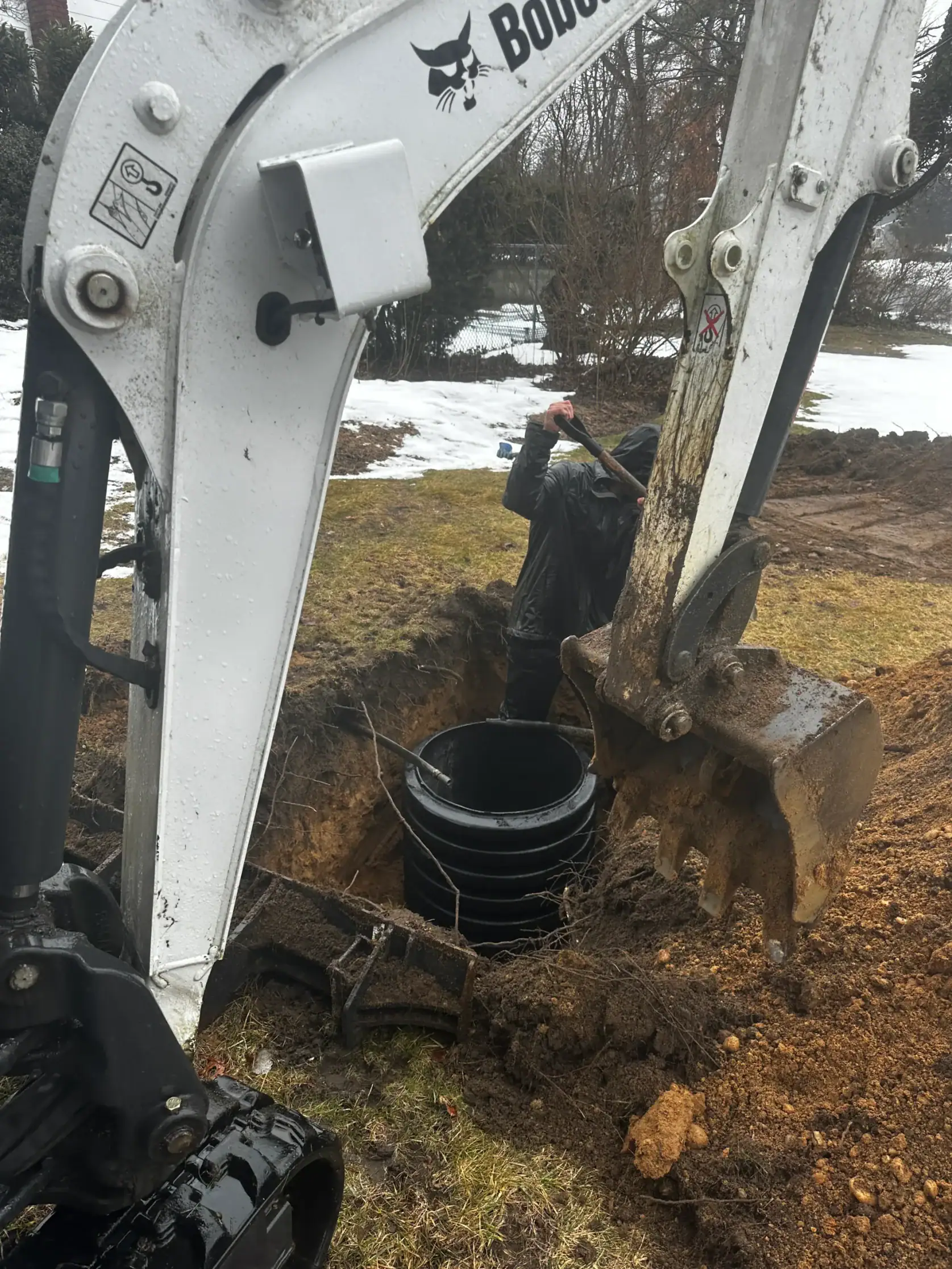
We locate your tank and expose the access lid. If it’s buried, we dig down to reach it. If you have risers installed, access is faster.
Once the tank is open, we pump out all liquids and solids using a vacuum truck. This isn’t a partial pump—we remove everything so you’re starting fresh. While the tank is empty, we inspect the baffles, check the inlet and outlet pipes, and look for cracks or structural issues.
If your system has a septic filter, we clean it. If there’s buildup in the lines leading to the tank, we can handle hydro jetting septic lines to clear blockages. We also check your lift station if you have one.
After pumping, we document what we found. If something needs attention—a damaged baffle, a failing filter, signs of drain field trouble—we’ll tell you what’s happening and what it means for your system. You’ll know whether you need a repair now or just something to watch.
The whole process takes about an hour for most residential septic pumping jobs. Commercial septic pumping or larger systems take longer depending on tank size and site conditions.

Ready to get started?
You get complete septic tank pumping—not a partial pump or a “top-off.” We remove all the sludge and scum layers so your tank can function the way it’s designed to.
You get a full visual inspection while the tank is empty. We check baffles, inlet and outlet tees, and the tank structure itself. If we see cracks, corrosion, or failing components, you’ll know before they become emergencies.
You get honest reporting. If your tank doesn’t need pumping yet, we’ll tell you. If you’re overdue and risking drain field damage, we’ll explain why waiting is a problem.
For East Hampton North properties, this matters more than you might think. Suffolk County has strict regulations around septic maintenance, and the new laws require inspections every three years. Staying compliant protects you during property sales and keeps you off the county’s radar for enforcement.
We also offer same-day septic tank pumping in most cases. If you’re dealing with slow drains, gurgling toilets, or sewage odors, waiting a week isn’t realistic. We prioritize emergencies and get to you fast.
Beyond standard pumping, we handle cesspool pumping, grease trap pumping for commercial properties, baffle inspection and repair, and drain field rejuvenation when systems are struggling. If your property has a lift station, we service those too.

Slow drains throughout the house are the first sign. If multiple fixtures are draining slower than usual—especially the ones farthest from the tank—your system is likely full.
Gurgling sounds from drains or toilets mean air is trapped in the lines because wastewater isn’t flowing properly. Sewage odors around your yard, especially near the drain field or tank location, indicate solids are building up or the system is backing up.
If you’re seeing wet spots or unusually green grass over your drain field, that’s a red flag. It means wastewater isn’t absorbing into the soil correctly, often because solids have migrated out of the tank.
The worst-case scenario is sewage backup in your lowest drains—usually basement toilets or floor drains. That’s an emergency. At that point, your tank is completely full and wastewater has nowhere to go except back into your house.
Suffolk County recommends pumping every three years regardless of symptoms. If you can’t remember the last time your tank was serviced, you’re overdue.
Solids build up in the tank until there’s no room for separation. When that happens, sludge and scum flow into your drain field, clogging the soil and preventing proper absorption.
Once your drain field is clogged, it can’t be pumped out. The damage is done. You’re looking at drain field replacement or rejuvenation treatments, and neither option is simple.
Waiting too long also increases the risk of baffle failure. Baffles prevent solids from leaving the tank, but when the tank is overfull, they’re under constant stress. If a baffle breaks, solids flow directly into your drain field every time you use water.
In East Hampton North, the high water table makes this worse. Your system doesn’t have as much margin for error compared to areas with deeper soil. When things go wrong here, they go wrong faster.
You also risk sewage backup into your home. That’s a health hazard and a contamination issue that requires professional cleanup. The longer you wait, the more likely you are to deal with an emergency instead of routine maintenance.
In most cases, yes. We prioritize same-day septic tank pumping in East Hampton North when you’re dealing with backups, slow drains, or other urgent issues.
If you’re calling for routine maintenance and your system is still functioning, we’ll schedule you as soon as possible—usually within a few days. But if you’re experiencing symptoms that indicate your tank is full or failing, we treat that as a priority.
We also offer 24/7 septic service for true emergencies. If you have sewage backing up into your home, that can’t wait until Monday morning. We’ll get someone out to assess the situation and pump your tank if that’s what’s needed to stop the problem.
For commercial properties, we understand downtime isn’t an option. Restaurants, offices, and other businesses need fast response times. We work around your schedule and get the job done without disrupting your operations more than necessary.
The key is calling as soon as you notice something’s wrong. The earlier you reach out, the more flexibility we have to get you on the schedule quickly.
A septic tank is a two-chamber system that separates solids from liquids before sending wastewater to a drain field. A cesspool is a single pit that holds wastewater and allows it to leach into the surrounding soil.
Septic tank pumping involves removing sludge and scum from the tank while leaving the bacterial environment intact. The goal is to restore capacity so the tank can continue treating wastewater effectively.
Cesspool pumping is simpler—you’re just removing the contents of the pit. There’s no separation process or bacterial treatment happening in a cesspool. It’s an older, less effective system, and Suffolk County is phasing them out.
East Hampton North has more than 12,500 parcels still using cesspools. If your property has one, you’ll eventually need to upgrade to a modern septic system or a low-nitrogen system to meet current regulations.
Both services involve the same basic process—pumping out wastewater and solids using a vacuum truck. But septic systems require more attention to detail because you’re maintaining a treatment process, not just emptying a hole.
If you’re not sure which system you have, we can identify it during the service call and explain what that means for your maintenance schedule.
Your drain field is designed to absorb liquid effluent, not solids. When you pump your septic tank regularly, you’re removing sludge before it has a chance to flow into the drain field and clog the soil.
Once solids enter the drain field, they create a biomat—a layer of organic material that blocks water absorption. The soil becomes saturated, and wastewater starts pooling on the surface or backing up into your house.
Drain field failure is one of the most serious septic problems you can face. The soil is permanently damaged in many cases, and the only solution is replacement or rejuvenation treatments that may or may not work.
In East Hampton North, the sandy soil and high water table mean your drain field is already working harder than systems in other areas. You don’t have the same buffer. When solids reach the drain field here, the damage happens faster.
Regular septic tank cleaning keeps solids where they belong—in the tank. That’s the entire point of the system. The tank is designed to hold sludge so the drain field only receives clarified liquid. When you maintain that separation, your drain field can last for decades.
If you’re selling your property or refinancing, yes. Suffolk County requires a septic system inspection as part of most real estate transactions. The inspection confirms your system is functioning and meets current health department standards.
Even if you’re not selling, an inspection during pumping is smart. When the tank is empty, we can see things that aren’t visible when it’s full—cracks in the tank walls, damaged baffles, deteriorating inlet or outlet pipes.
Suffolk County’s new regulations also require inspections every three years for all systems. You’ll need to submit reports to the county showing your system is being maintained. Combining your inspection with your pumping appointment makes compliance easier.
During the inspection, we check the tank structure, baffles, filters, and distribution box. We also assess the drain field for signs of failure—wet spots, odors, or surfacing wastewater. If we find issues, you’ll get a clear explanation of what needs repair and why.
For properties in East Hampton North, staying ahead of inspections protects your property value and keeps you compliant with local regulations. It’s not just about passing a test—it’s about knowing your system is actually working the way it should.
Other Services we provide in East Hampton North