Hear From Our Clients

You’re not dealing with slow drains anymore. No sewage smell drifting across your yard when you’re trying to enjoy your property. No standing water near the drain field that makes you wonder how long before something fails completely.
Regular septic pumping in Water Mill, NY means your system handles what you put into it without backing up into your home or surfacing in your lawn. Sandy soil here doesn’t give you much margin for error. Water moves through it fast, and if your tank’s full of sludge, you’re not getting the treatment time you need before wastewater hits groundwater.
A properly maintained septic system lasts decades. One that gets ignored fails gradually, then all at once. You’ll see the signs first as minor annoyances. Then as real problems. Then as something that requires excavation, permits, and a full replacement.
Pumping your tank every few years removes the buildup before it clogs your drain field or backs up into your house. It’s straightforward maintenance that keeps everything else from becoming your problem.
We’re a family-owned business that’s been handling septic and cesspool pumping in Water Mill, NY and throughout Suffolk County for over 25 years. We’re licensed, insured, and we know how systems behave in sandy soil with high water tables.
You’re not getting a sales pitch when you call. You’re talking to someone who understands what’s happening with your system and what actually needs to happen next. We pump tanks completely, inspect as we go, and dispose of waste at licensed treatment facilities.
We also offer discounts for military members, first responders, and seniors because we’re part of this community. We support veteran organizations like Paws of War, and we show up when we say we will. That’s how we’ve stayed in business this long.

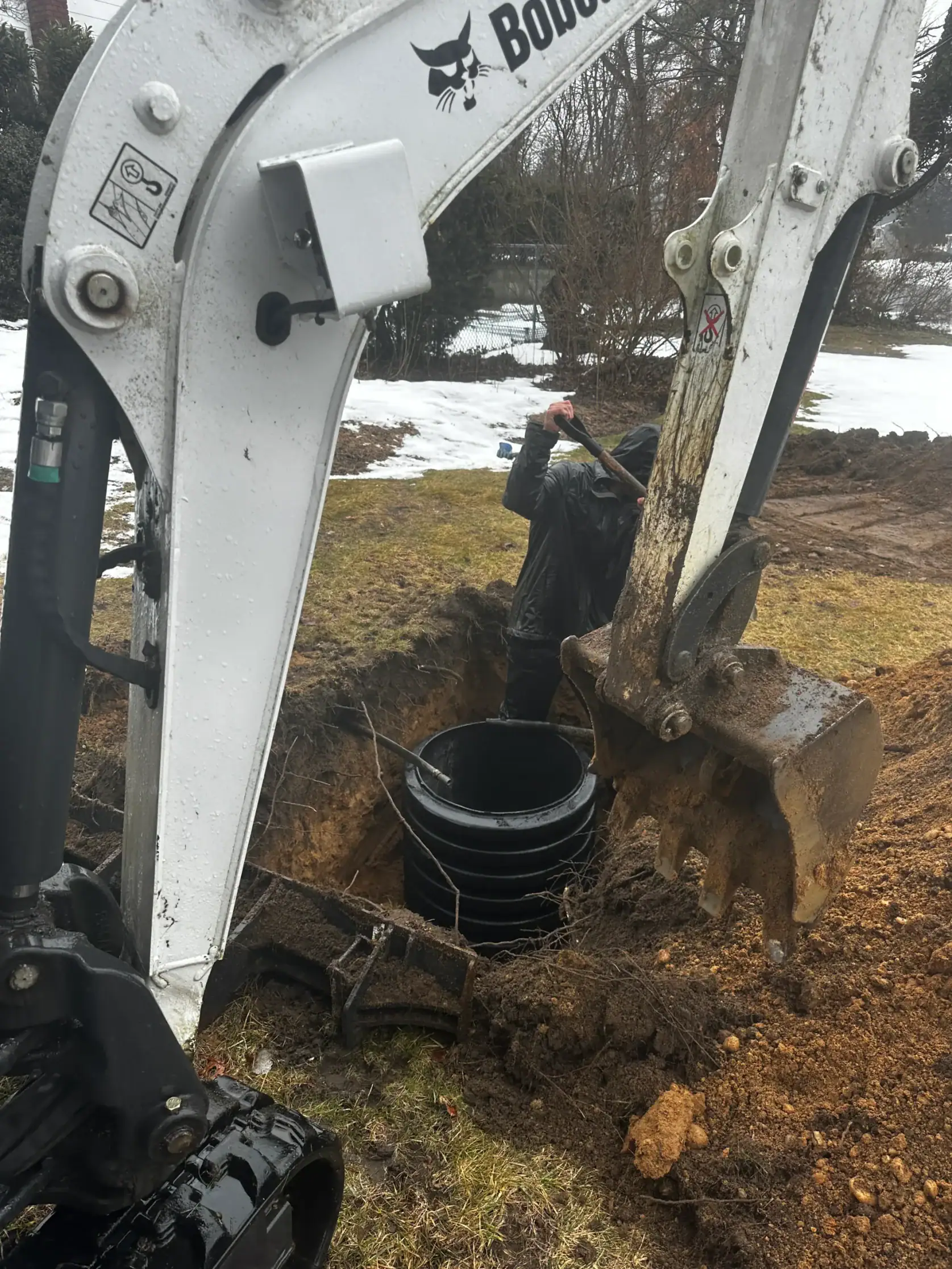
First, we locate your tank and access the lid. Sometimes that means digging down a bit if it’s buried, but we use equipment mats to protect your lawn and keep disruption minimal.
Once we’re in, we use a vacuum truck to pump out all the liquid, sludge, and scum layers. Not just the easy stuff on top—everything. That’s the only way to actually reset your system and give it room to work properly again.
While we’re pumping, we’re also looking. We check your baffles, your inlet and outlet pipes, and the overall condition of the tank. If something’s starting to fail, you want to know before it becomes an emergency. We’ll tell you what we see and what it means.
After the tank’s empty, we make sure the waste gets transported to a licensed wastewater treatment facility where it’s processed legally and safely. Then we close everything back up, and your system’s ready to handle another few years of normal use.
If your property has a cesspool instead of a septic tank, the process is similar. Cesspool pumping in Water Mill, NY requires the same equipment and the same attention to complete waste removal.

Ready to get started?
When we pump your septic tank or cesspool, you’re getting full waste removal, not a partial job. We also inspect the system while we’re there—checking baffles, filters, and the structural condition of the tank itself.
If you need additional services like hydro jetting septic lines to clear buildup in your pipes, or a septic system inspection to assess overall health, we handle that too. Some properties also have lift stations or grease traps that need regular pumping and maintenance.
Water Mill’s proximity to the coast means stricter environmental standards and more attention to how systems are maintained. Suffolk County banned new cesspool installations back in 2019, and regulations around septic system upgrades continue to tighten. Keeping your system properly maintained helps you stay compliant and protects the groundwater that supplies all our drinking water here on Long Island.
We also offer emergency septic pumping in Water Mill, NY when something goes wrong outside of regular maintenance schedules. Backups don’t wait for business hours, and neither do we.

Most residential septic systems in Water Mill, NY need pumping every two to three years. That’s faster than the national average of three to five years, and it’s because of the sandy soil and high water table conditions here.
Household size matters too. A family of five puts more strain on a system than a couple who only uses the property seasonally. Tank size also plays a role—smaller tanks fill up faster and need more frequent service.
If you’re seeing slow drains, hearing gurgling sounds, or smelling sewage near your drain field, don’t wait for your regular schedule. Those are signs your tank’s already too full and you’re risking a backup or drain field failure. Pumping it now prevents a much bigger problem later.
Sludge and scum layers build up over time. When they get too thick, there’s not enough room in the tank for solids to settle and liquids to separate properly. That means partially treated wastewater starts flowing into your drain field.
Your drain field isn’t designed to handle solids. When it gets clogged with sludge, it stops absorbing water. You’ll see wet spots in your yard, smell sewage, and eventually experience backups inside your home.
In Water Mill’s sandy soil, a failing drain field also means untreated wastewater can reach groundwater quickly. That’s a health hazard and an environmental violation. Replacing a failed drain field or full septic system can require permits, excavation, and significant disruption to your property. Regular pumping avoids all of that.
You need specialized vacuum equipment, proper safety training, and a licensed facility to dispose of the waste. Most homeowners don’t have access to any of that.
Septic tanks contain toxic gases like methane and hydrogen sulfide. They’re also confined spaces with serious drowning and asphyxiation risks. Professional septic pumpers have the equipment and training to handle those hazards safely.
There’s also the question of what to do with the waste once it’s out. You can’t just dump it somewhere. It has to go to a licensed wastewater treatment facility, and you need documentation proving proper disposal. Hiring a licensed septic tank pumping service in Water Mill, NY means the job gets done safely, legally, and completely.
Slow drains throughout your house—not just one sink or toilet—usually mean your septic tank is full. If water’s draining slowly from multiple fixtures, the tank doesn’t have room to accept more wastewater.
Sewage odors in your yard, especially near the drain field, indicate that your system’s overwhelmed and wastewater isn’t being treated properly. You might also see standing water or unusually green, lush grass in one area of your lawn where the drain field is located.
Gurgling sounds in your pipes when you flush or run water suggest air’s getting trapped because wastewater isn’t flowing through the system like it should. If you’re noticing any of these signs, your tank’s likely overdue for pumping. Waiting just increases the chance of a backup or system failure.
Cesspools actually need more frequent attention than septic tanks. They’re basically large pits that let wastewater seep directly into surrounding soil without the treatment process a septic tank provides.
In Water Mill’s sandy soil, cesspools can fail faster because sand doesn’t filter contaminants effectively before they reach groundwater. That’s why Suffolk County stopped allowing new cesspool installations—they’re not great for water quality.
If you still have a cesspool on your property, regular cesspool pumping in Water Mill, NY is critical. You’re looking at pumping every one to two years in most cases, and you should also be thinking about whether it makes sense to upgrade to a proper septic system, especially with tightening county regulations around wastewater treatment.
We’ll locate your tank, uncover the access lid, and set up our vacuum truck. If your tank’s buried and we need to dig down to reach it, we use mats to protect your grass and minimize damage to your lawn.
The actual pumping takes about 30 to 60 minutes depending on tank size and how full it is. We remove all the liquid, sludge, and scum—not just a partial pump-out. While we’re working, we inspect the baffles, check for cracks or damage, and look at the overall condition of your system.
After everything’s pumped and inspected, we’ll let you know what we found. If there’s an issue that needs attention, we’ll explain what it is and what happens if you don’t address it. Then we close up the tank, clean up the work area, and haul the waste to a licensed treatment facility for proper disposal.
Other Services we provide in Water Mill