Hear From Our Clients

Your drains flow the way they should. Showers, sinks, toilets—everything works without hesitation or that slow gurgle that makes you wonder if something’s building up below.
You’re not dealing with standing water in the yard or that unmistakable smell that tells you the system is struggling. Regular septic pumping in North Bay Shore, NY means your household keeps running without the kind of interruption that forces everyone out of the house.
Long Island’s sandy soil drains fast, but that also means your septic system works harder to treat wastewater before it reaches the groundwater. Most residential septic pumping schedules fall between two and three years here, depending on household size and how much water moves through your home. Staying ahead of that timeline keeps your system from reaching capacity when you least expect it.
We’ve served Suffolk County since 1998. That’s over two decades of septic tank pumping service across North Bay Shore and the surrounding areas, working with systems installed in the ’50s and ’60s that are still holding up—and some that aren’t.
We’re a small, family-owned operation. You’re not getting a different crew every time or someone reading from a script. Same team, same trucks, same approach: show up, assess the system, pump it properly, and tell you what’s actually going on underground.
Suffolk County’s regulations shifted in 2019, requiring reporting to the Department of Health Services for every septic pumping. We handle that documentation automatically. You get copies for your records, which matters during property transfers or permit applications. North Bay Shore homeowners rely on private septic systems more than most areas, and keeping those systems compliant isn’t optional anymore.

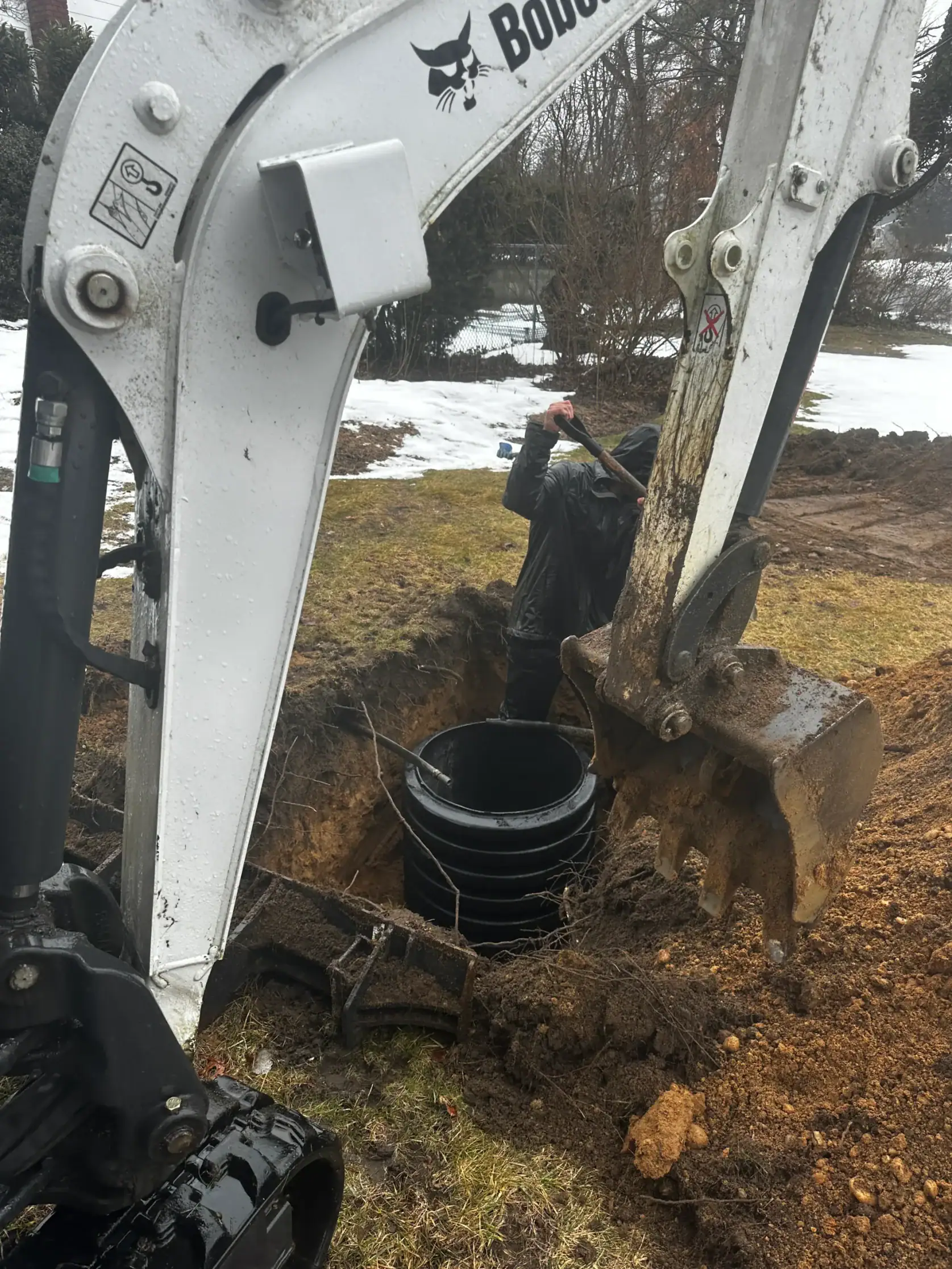
First, we locate your tank. Some North Bay Shore properties have clear access—others don’t. We use electronic detection when needed, because digging randomly across your yard wastes time and tears up landscaping.
Once we’re in, we pump out all the liquid and solid waste. Not just the liquid layer—the entire tank gets emptied. That includes the sludge layer at the bottom, which is where most of the buildup happens and where problems start if it’s left too long.
While the tank is empty, we inspect the interior. Cracks, shifting, baffle condition, inlet and outlet functionality—we’re looking for anything that signals a bigger issue. Tree roots work their way into older systems. Baffles deteriorate. Concrete tanks crack after decades in Long Island’s soil conditions.
You get a full report on what we found. If something needs attention, we’ll tell you what it is and why it matters. If the system looks solid, you’ll know that too. Then we close it up, handle the Suffolk County reporting, and give you a timeline for the next service based on your household size and usage patterns.

Ready to get started?
Every residential septic pumping includes a full system inspection. That means checking the tank structure, baffles, inlet and outlet pipes, and looking for signs of failure before they become expensive problems.
We also inspect your drain field condition when accessible. North Bay Shore’s high water table and sandy soil create unique vulnerabilities. Systems that work fine in other regions struggle here because wastewater moves through sand faster than the system can treat it properly. That’s why cesspool pumping schedules are tighter on Long Island than the generic three-to-five-year recommendations you’ll find online.
Baffle inspection and repair happens during the same visit if needed. Baffles prevent solids from entering your drain field, and when they fail, your system’s lifespan drops significantly. We also clean septic filters when present—newer systems have them, older ones don’t.
If you’re on a lift station or have a grease trap, we handle that too. Commercial septic pumping covers restaurants and businesses across North Bay Shore, but residential properties with certain configurations need the same attention. Suffolk County’s push toward nitrogen-reducing systems means more homeowners are dealing with advanced components that require specialized maintenance.

Most residential systems in North Bay Shore need septic pumping every two to three years. That’s shorter than the national average because Long Island’s sandy soil and high water table put more stress on septic systems than clay-heavy soils in other regions.
Household size matters. A two-person home might stretch to three years. A family of five might need service closer to every two years, especially if you’re running dishwashers, laundry, and showers daily. The tank only holds so much, and once the sludge layer builds to a certain point, solids start moving into your drain field—which is exactly what you’re trying to avoid.
We recommend tracking your last service date and scheduling before you hit that threshold. Waiting until you notice slow drains or backups means you’re already past the point where pumping prevents damage. At that stage, you’re managing a problem instead of preventing one.
The sludge layer at the bottom of your tank keeps building. Eventually, it takes up so much space that solids escape into your drain field. Once that happens, the soil around your drain field pipes clogs with waste, and the system stops absorbing water properly.
You’ll notice slow drains first. Then standing water in the yard above the drain field. Then sewage backing up into your home, usually starting with the lowest drains—basement sinks, floor drains, sometimes toilets. At that point, pumping the tank doesn’t fix the problem because the damage is in the drain field, not the tank.
Drain field replacement involves excavation, new piping, new stone, and meeting current Suffolk County regulations. That’s a full system overhaul. Regular septic tank pumping service in North Bay Shore prevents that scenario entirely. The tank is designed to be pumped. The drain field isn’t designed to be replaced, but it will need to be if solids reach it repeatedly.
Yes. Septic pumping in North Bay Shore, NY happens year-round. Cold weather doesn’t stop the process, but it does make your system more vulnerable if you’re overdue for service.
Winter slows bacterial activity inside the tank. Waste that would normally break down in days during warmer months sits longer when temperatures drop. That means sludge builds faster, and your tank reaches capacity sooner than it would in summer. If you’re already close to needing service, winter pushes you over the edge quicker.
Frozen ground can make access harder, but we work with that. The bigger issue is homeowners who don’t realize their system is fuller than they think. Holiday guests, more time spent indoors, extra laundry—winter usage patterns spike right when the system is least efficient. Scheduling your septic tank pumping service before winter hits keeps you ahead of that combination.
We inspect every time we pump. It’s part of the service, not an add-on. When the tank is empty, we can see the interior condition clearly—cracks, baffle wear, structural shifting, root intrusion. That’s information you need, and it doesn’t make sense to pump a tank without looking at what’s happening inside.
Most problems show up during inspections, not during normal use. Homeowners don’t know a baffle is deteriorating until solids hit the drain field. They don’t know the tank has a crack until the system fails. Catching those issues early means repairing a baffle or sealing a crack instead of replacing a drain field.
Suffolk County also requires documentation for septic system inspections during property transfers. If you’re selling a home in North Bay Shore, having records from regular inspections proves the system was maintained properly. Buyers ask for that information, and it affects how smoothly the sale moves forward.
A cesspool is a single underground chamber that collects wastewater and lets it leach directly into the surrounding soil. There’s no separation of solids and liquids, no real treatment process—just a holding pit that drains into the ground. Most cesspools in North Bay Shore were installed decades ago, and Suffolk County banned new installations in 2019.
A septic tank separates solids from liquids. Wastewater enters the tank, solids settle to the bottom, liquids flow out to a drain field where soil bacteria treat the effluent before it reaches groundwater. It’s a two-stage system designed to protect the aquifer, which is critical on Long Island since all drinking water comes from underground.
Cesspool pumping still happens across Suffolk County because thousands of older systems are still in use. But when a cesspool fails, it has to be replaced with a modern septic system that meets current standards. That’s a significant upgrade, and it’s why maintaining an existing cesspool properly matters—you’re extending its lifespan until replacement becomes necessary.
Slow drains are the first signal. If multiple fixtures drain slowly at the same time—especially after you haven’t used much water—that’s a sign the system is struggling. One slow drain usually means a clog in that pipe. Multiple slow drains point to the septic system.
Standing water or soggy ground above the drain field means wastewater isn’t absorbing properly. You might also notice a sewage odor outside near the tank or drain field, or inside near drains. That smell indicates waste is sitting where it shouldn’t be, either because the tank is full or the drain field is saturated.
Sewage backing up into your home is the final stage. That’s a full system failure, and it requires immediate attention. If you’re noticing early signs—slow drains, odors, wet spots—scheduling a septic system inspection in North Bay Shore before it escalates keeps a manageable situation from becoming an emergency. Most failures don’t happen overnight. The system gives you warnings, and responding to those warnings is the difference between routine maintenance and a complete shutdown.
Other Services we provide in North Bay Shore