Hear From Our Clients

Your drains flow the way they should. Your toilets flush without hesitation. You’re not wondering if that slow drain means something bigger is brewing underneath your yard.
Most Huntington homeowners don’t think about their septic system until something goes wrong. By then, you’re dealing with backups, standing water in your yard, or worse—sewage coming back into your home.
Regular septic tank pumping service in Huntington, NY keeps solids from building up and migrating into your drain field. It’s what prevents the kind of failure that costs thousands to fix and weeks to repair. When you pump on schedule, your system handles what you put into it without pushing back.
Suffolk County’s high water table and sandy soil mean your system works harder than most. It needs room to process waste properly, especially during wet seasons when groundwater levels rise. That room disappears when sludge and scum take over your tank.
Pumping every three to five years—depending on your household size and water usage—keeps your system in the range where it can do its job. It’s not glamorous, but it’s what separates homes with reliable systems from homes with emergency service calls.
We’ve served Suffolk County families for over 25 years. We’re licensed, insured, and local—not a franchise operation that treats your address like a route number.
When you call, you’re talking to people who know Huntington’s soil conditions, water table fluctuations, and the septic systems common in neighborhoods built decades ago. We’ve pumped tanks in every part of town, from older homes near Huntington Harbor to newer developments further inland.
We handle the Suffolk County Health Department reporting automatically. Every pump gets documented properly, so you’re covered if you ever need proof of maintenance for a home sale or inspection. We don’t oversell services you don’t need, and we don’t disappear when the job is done.

We locate your tank, uncover the access lids, and pump out all the liquid, sludge, and scum that’s accumulated since your last service. The truck removes everything—we’re not leaving partially full tanks that’ll need attention again in six months.
While the tank is empty, we inspect the baffles, check for cracks or structural issues, and look at your inlet and outlet pipes. If your filter needs cleaning, we handle that too. If something looks off, we’ll tell you what we found and what it means for your system.
The whole process takes about an hour for a standard residential tank. We’re not rushing through to hit a quota. We’re making sure your system is actually in good shape before we leave.
After we’re done, we provide documentation of the service and let you know when you should schedule your next pump based on your household size and usage patterns. If you’ve got a garbage disposal or you’re running more water than average, that timeline might be shorter.

Ready to get started?
Complete waste removal from your septic tank. Full inspection of baffles, lids, and structural integrity. Filter cleaning if your system has one. A written report of what we found and what you should watch for.
We also handle all the Suffolk County reporting requirements. The county mandates that every pump gets logged with the Department of Health Services, and we submit that paperwork as part of the service. You don’t have to track it down later.
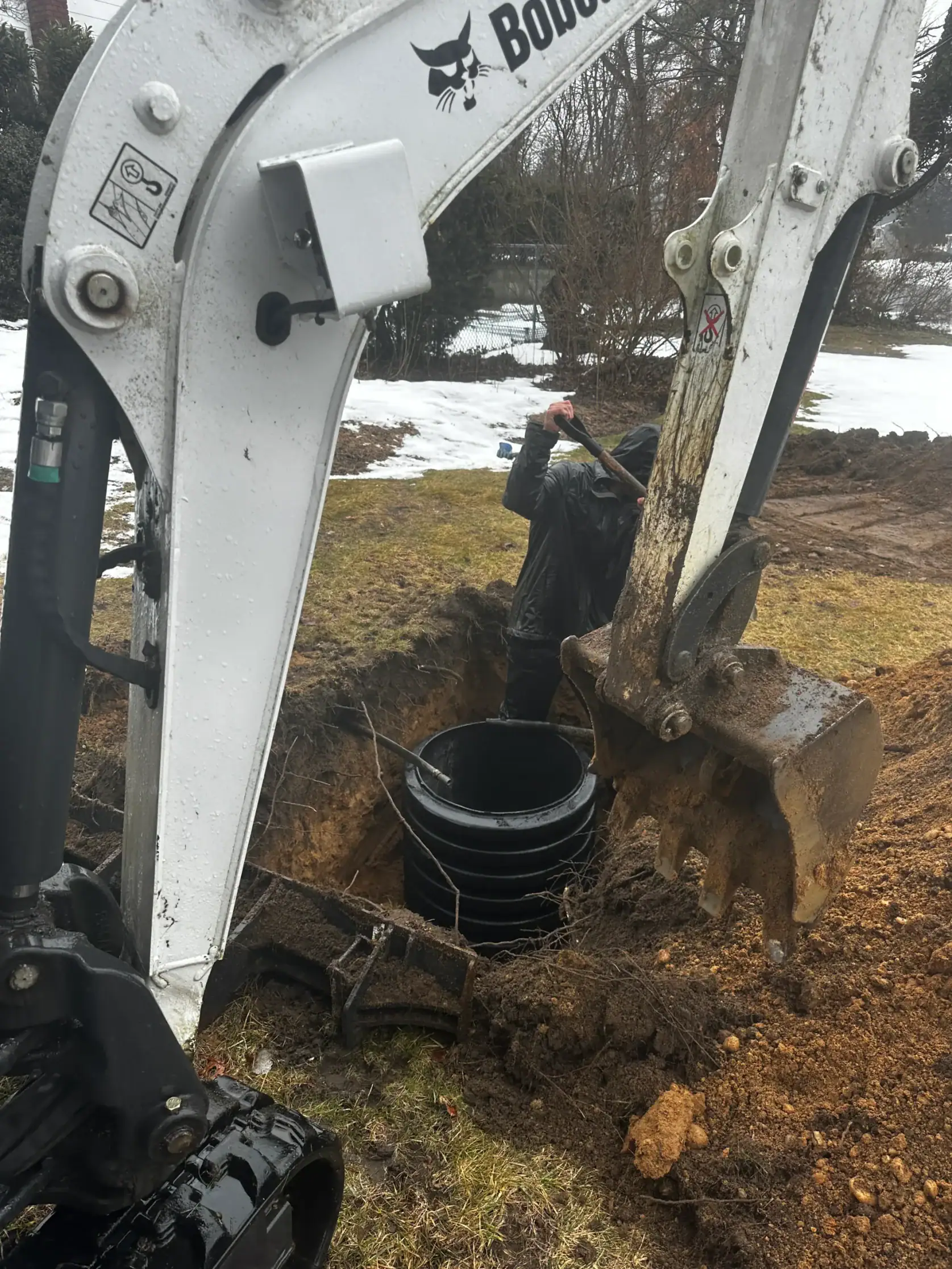
For Huntington homes on larger properties or with challenging access, we’ve got the equipment to reach tanks that aren’t right next to the driveway. If your tank is buried under landscaping or located in a tight spot, we’ll figure out how to get to it without tearing up your yard.
We offer 24/7 emergency septic service in Huntington, NY for backups and overflows that can’t wait until Monday morning. If your system fails on a weekend or holiday, you’re not stuck waiting days for help. Same-day response is standard when you’ve got sewage threatening your home.
Lift station pumping, grease trap pumping for commercial properties, and hydro jetting septic lines when roots or buildup are causing blockages—we handle the full range of septic system maintenance, not just routine pumping.

Most residential septic tanks in Huntington need pumping every three to five years. The exact timeline depends on your tank size, how many people live in your home, and how much water you use daily.
A family of four with a 1,000-gallon tank typically needs service every three years. Smaller households might stretch to four or five years. If you’ve got a garbage disposal, do a lot of laundry, or run water heavily, you’re on the shorter end of that range.
Suffolk County’s high water table also affects how your system performs. During wet seasons, groundwater can saturate your drain field and reduce your system’s capacity to process waste. That puts more demand on your tank and means you might need more frequent pumping than someone in a drier climate.
If you’re not sure when your tank was last pumped, get it done now. Then set a schedule based on your household’s actual usage patterns.
Slow drains throughout your house—not just one sink or toilet—usually mean your tank is full. If water is backing up into your lowest drains or you’re seeing sewage surfacing in your yard near the tank or drain field, you’re past due.
Strong sewage odors inside or outside your home are another clear signal. When your tank is overloaded, gases have nowhere to go except back through your plumbing or up through the ground.
Gurgling sounds when you flush toilets or run water indicate air trapped in your lines because wastewater isn’t flowing out of your tank properly. Lush, extra-green grass over your drain field—especially when the rest of your lawn looks normal—means effluent is saturating that area instead of being absorbed.
These aren’t minor inconveniences. They’re warnings that your system is failing. Waiting makes the problem worse and turns a routine pump into an emergency repair situation.
Technically, yes. Practically, it’s a bad idea for several reasons.
First, you need specialized equipment—a pump truck with enough capacity and suction power to fully empty your tank. Renting that equipment and operating it without experience usually costs more than hiring a professional, and you’re still left with the problem of where to legally dispose of several hundred gallons of sewage.
Second, Suffolk County requires all septic pumping to be reported to the Department of Health Services. If you do it yourself, you’re responsible for that documentation. Miss it, and you’ve got no proof of maintenance when you need it for a home sale or inspection.
Third, the inspection that happens during a professional pump is where you catch problems early. Cracked baffles, damaged lids, failing inlet pipes—these issues get spotted while the tank is empty and accessible. If you’re just pumping without inspecting, you’re missing half the value of the service.
The health risks alone make DIY septic pumping a poor choice. Raw sewage contains pathogens that cause serious illness. One mistake during the process, and you’re exposed to bacteria and viruses that’ll put you in the hospital.
Solids build up until they overflow into your drain field. Once that happens, the soil in your drain field gets clogged with sludge and stops absorbing effluent. Your system backs up into your house, or sewage surfaces in your yard.
Replacing a failed drain field costs thousands of dollars and requires excavating a significant portion of your property. It’s not a repair—it’s a full replacement that takes weeks and leaves your yard torn up.
Before you get to that point, you’ll deal with chronic backups, slow drains, and sewage odors that make your home unlivable. Every time you run water or flush a toilet, you’re gambling on whether it’ll go down or come back up.
In Suffolk County, untreated wastewater seeping into the ground also threatens the aquifer that supplies your drinking water. The nitrogen and pathogens in sewage don’t just disappear—they contaminate groundwater and feed algae blooms in local bays.
Skipping septic pumping doesn’t save you anything. It just delays the inevitable and makes the eventual failure far worse than it needed to be.
Yes. If you call in the morning with an urgent situation, we’ll get to you the same day in most cases. Backups and overflows don’t wait for convenient scheduling, and neither do we.
Emergency septic pumping in Huntington, NY is part of what we do. We keep trucks ready and crews available specifically for situations where your system has failed and you need immediate help.
That said, same-day service works best when you’re already a customer or when you call early in the day. If you wait until evening or call during a stretch of bad weather when everyone’s systems are struggling, response times can stretch.
The better approach is scheduling routine pumping before you’re in crisis mode. When you stay ahead of maintenance, you’re not competing with actual emergencies for service slots. You pick a time that works for your schedule, and we show up without the urgency premium that comes with last-minute calls.
Cesspools are older systems—basically large pits that collect wastewater and let it leach into surrounding soil. Septic tanks are newer, more sophisticated systems with separate tanks and drain fields that treat wastewater before it enters the ground.
Suffolk County banned new cesspool installations in 2019 because they don’t treat wastewater effectively. If you’ve got a cesspool, you’re either grandfathered in with an older system or you’re required to upgrade to a septic system or advanced treatment unit.
The pumping process is similar for both—we remove accumulated solids and liquids so the system can keep functioning. But cesspools typically need more frequent pumping because they don’t separate solids and liquids the way septic tanks do.
If you’re not sure which system you have, we can identify it during a service call. Cesspools are more common in older Huntington neighborhoods where homes were built before modern septic regulations took effect. Knowing which system you have affects your maintenance schedule and your long-term planning if the county eventually requires you to upgrade.
Other Services we provide in Huntington