Your complete walkthrough of cesspool installation in Suffolk County, from initial soil testing through final backfill and inspection approval.
Suffolk County dropped the hammer on traditional cesspool installation effective July 1, 2019, completely revolutionizing how waste management systems operate in the area. New I/A OWTS requirements kicked in July 1, 2021, mandating nitrogen-reducing systems for various construction and reconstruction projects.
These aren’t just paper-pushing changes. The cutting-edge technologies slash nitrogen in residential wastewater by up to 70%, protecting Long Island’s sole-source aquifer that millions count on for drinking water. Homeowners who opt to replace existing systems must satisfy the same minimum standards required for new systems since 1973, and replacement requires registration with the Department of Health Services.

Every cesspool installation kicks off with decoding your property’s soil conditions. The nature of soil must be determined by excavation of test holes or borings at the site of the proposed system, with test holes in the vicinity of proposed leaching structures.
Soils in test holes must be classified using the ASTM Unified Soil Classification System, with test holes carried to a depth of six feet in excess of the proposed leaching structure bottom or until a strata of six feet of sand and gravel is reached. Test holes must be a minimum of seventeen feet deep or six feet into groundwater.
The installation process includes soil percolation testing to nail down proper system sizing and placement, with surgical precision excavation to dodge utility lines and installation of distribution systems that maximize treatment area. Soil percolation testing reveals absorption rates that impact system sizing, with sandy soils demanding larger distribution systems and clay soils needing modified designs to stop backup dead in its tracks.
At least two percolation tests for up to 1,000 square feet of absorption area should be performed in holes spaced uniformly throughout the site, with more tests required if soil conditions are wildly variable. We tackle this testing as part of our site assessment, guaranteeing your system will perform flawlessly in your specific soil conditions.
Installation of a sewage disposal system is prohibited unless a permit to construct has been issued by the Commissioner, and occupancy is prohibited without final approval of constructed works. Cesspool installation demands permits from local health departments in both Suffolk and Nassau Counties, with permit costs typically ranging from $200-500 depending on system size and local requirements, and processing taking 2-4 weeks for approval.
The process includes site assessment with soil percolation testing, distance verification to wells and buildings (minimum 100 ft), groundwater depth checking, securing all Suffolk permits, and submitting system design to county health department. Suffolk County mandates minimum setbacks of 100 feet from water wells and 20 feet from property lines for new cesspool installations, with Nassau County having similar requirements plus additional restrictions near sensitive environmental areas.
We coordinate with local health departments to schedule required inspections at excavation, tank placement, and backfill stages. Our battle-tested team secures all required permits and schedules inspections to keep installations moving forward and compliant. The Department must be notified at least twenty-four hours in advance of inspections, and failure to contact for inspection prior to backfilling may result in re-excavation, with no approval issued unless there’s compliance with requirements.
Working with contractors who master these requirements prevents expensive delays and guarantees your project stays compliant throughout the installation process.
Want live answers?
Connect with a AAA Dependable Cesspool expert for fast, friendly support.
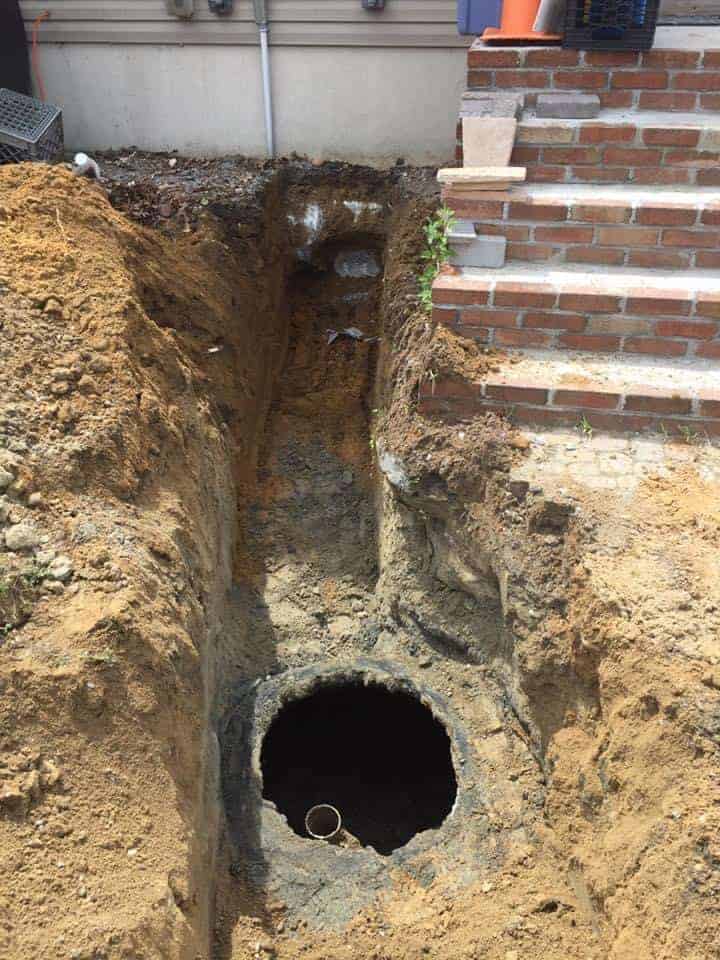
The installation process follows a specific sequence that we’ve perfected down to a science, with the first step being strategic excavation of the area where the cesspool will be located. A hole large enough to house the cesspool and tracks for drainage pipes in the drain field must be excavated using construction equipment, and once the site is prepared, the cesspool and all associated plumbing and drainage pipes are installed.
Modern systems require more than just digging a hole. Modern cesspool systems include multiple components that work together for powerful waste treatment, with precast concrete tanks providing bulletproof waste collection with engineered baffles that separate solids from liquids, and distribution boxes directing effluent flow to absorption areas sized for soil conditions and household capacity.

Professional excavation goes far beyond just digging. We excavate with laser precision to avoid utility lines and install distribution systems that maximize treatment area while crushing setback requirements from wells and property lines. Soil conditions, drainage patterns, and utility locations affect placement options, requiring site evaluations to identify the best locations that meet all regulatory requirements while minimizing installation costs and future maintenance access.
If you have an old cesspool, it needs to be removed before the new system can be installed, with additional work potentially needed to accommodate your new tank and pipes, and drainage pipes in the drain field excavated using construction equipment according to approved plans. The installation process begins with comprehensive property assessment, including evaluating location, soil composition, and local regulations to determine the most powerful system for the site.
Safety considerations during excavation include proper shoring of deep excavations, utility location verification, and coordination with local inspectors. New cesspool installations typically take 1-2 days for residential properties, depending on soil conditions and system complexity, with coordination with local health departments to schedule required inspections during construction phases.
The excavation phase sets the foundation for everything that follows, making precision and attention to detail absolutely critical for long-term system performance.
Once the site has been prepared, the cesspool and all associated plumbing and drainage pipes are installed. Gravel may be packed around drainpipes to provide rock-solid stability, with pipes pitched at one degree or more to allow water in and out through the gravel to be reabsorbed by surrounding soil.
We use only approved materials that meet Long Island environmental standards, with concrete tanks that resist cracking and settling that cause system failure, and PVC distribution pipes that resist root intrusion and chemical damage. Proper installation includes graded stone backfill around distribution lines and geotextile fabric that prevents soil infiltration while maintaining drainage, with testing of all connections and verification of proper slopes before final backfill.
Once the site has been prepared, the cesspool and all associated plumbing and drainage pipes are installed, gravel is packed around drainpipes to provide stability, and when installation is complete, the excavated area is filled in and the entire system is inspected before it’s put into use. Following installation, rigorous testing confirms the system is firing on all cylinders, including checking for leaks, verifying proper drainage, and guaranteeing compliance with safety standards, with guidance provided on maintenance practices.
The final backfill process requires careful attention to compaction levels and material selection to prevent settling that could damage pipes or create access problems later. Installation is complete when the excavated area is filled in and the entire septic system is inspected before it’s put into use, making sure your new system will deliver rock-solid service for decades to come.
Cesspool installation in Suffolk County requires navigating complex regulations, but the right contractor transforms the process into smooth sailing. From initial soil testing through final inspection approval, each step builds toward a system that will serve your property reliably for 20-30 years.
With grants of up to $30,000 available from Suffolk County and New York State, the financial burden of upgrading to new nitrogen-reducing systems becomes refreshingly manageable. The key is working with experienced contractors who understand current requirements and can guide you through both the technical and administrative aspects of your project.
When you’re ready to move forward with your cesspool installation project, we bring the expertise and local knowledge needed to get your system installed perfectly the first time.
Summary:
Article details:
Share: