Hear From Our Clients

Regular cesspool pumping in Holbrook costs more. Skipping it costs you a lot more than money.
When solids build up in your cesspool, they eventually clog the surrounding soil. Slow drains turn into sewage backups. Standing water appears in your yard. That smell hits you before you even open the front door.
Suffolk County recommends pumping every three years for good reason. The cesspools here in Holbrook don’t have the biological treatment component that modern septic systems use to break down waste. Everything that goes down your drains stays in that tank until it’s pumped out or overflows into the drain field.
Most homeowners who call us for emergency service haven’t had their system pumped in five or six years. By then, the damage is done. You’re not just paying for pumping anymore—you’re looking at soil remediation, drain field replacement, or a full system upgrade that Suffolk County now requires to meet nitrogen-reduction standards.
Pumping your cesspool on schedule keeps your system working. It protects your property value. And it saves you from writing a check with way too many zeros on it.
AAA Dependable Cesspool is a family-owned business that’s been serving Holbrook and Suffolk County for over 25 years. We’re licensed with Suffolk County Consumer Affairs, fully insured, and we’ve built our reputation on doing exactly what we say we’ll do.
Holbrook sits right in the middle of Suffolk County’s sole-source aquifer zone. That means every cesspool system here impacts the drinking water for everyone on Long Island. We take that seriously, and we know the local regulations inside and out—especially since the county tightened requirements back in 2019.
We’re not the biggest cesspool company in Suffolk County. We’re small, we’re local, and we show up when we say we will. Our trucks are in Holbrook every week, and chances are good we’ve already worked on a system on your street.
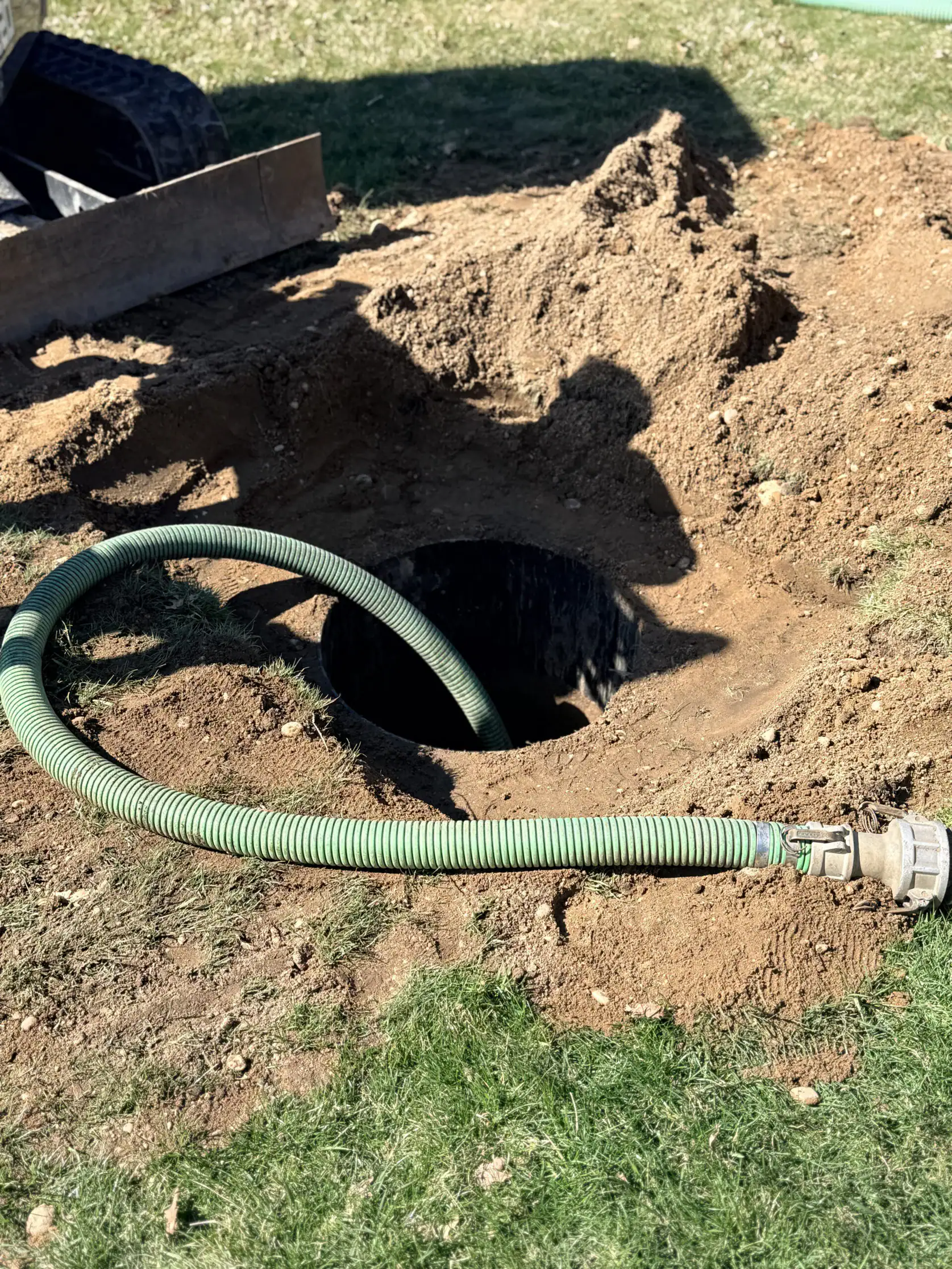
First, we locate your cesspool. Most Holbrook homes have the access cover buried under a few inches of soil or grass. We dig it out carefully and remove the lid so we can access the tank.
Next, we lower the vacuum hose into the cesspool and pump out all the liquid and solid waste. This isn’t a quick five-minute job—we’re removing everything in that tank, including the sludge layer at the bottom that causes most of the problems. Our trucks hold up to 3,000 gallons, which handles most residential cesspools in one trip.
While we’re pumping, we’re also looking. We check the tank walls for cracks, inspect the inlet and outlet pipes, and look for signs of structural damage or soil intrusion. If something’s wrong, we’ll tell you what we found and what it means for your system.
After the tank is empty, we rinse the walls to remove any remaining buildup, replace the cover, and backfill the access area. The whole process usually takes 45 minutes to an hour, depending on how full your system is and how long it’s been since the last pumping.
Before we leave, we give you a receipt with the pumping date and volume removed. Keep that paperwork—you’ll need it if you ever sell your home or apply for a building permit in Suffolk County.
Ready to get started?
Every cesspool pumping service in Holbrook includes locating and uncovering your access lid, complete tank pumping with sludge removal, a basic visual inspection of your system’s condition, and proper disposal of waste at a licensed facility. We also provide documentation of service for your records.
We don’t charge extra to dig up your cover or “trip fees” for driving to your house. Those costs are already built into our pricing, which we give you upfront before we start any work.
Suffolk County has specific requirements for how cesspool waste must be handled and disposed of. We’re licensed to transport and dispose of septage, and we only use approved facilities. That’s not something every company bothers with, but it matters—both legally and environmentally.
If we spot a problem during pumping—cracks in the tank, a damaged baffle, roots growing into the system—we’ll explain what we found and what your options are. Sometimes it’s a simple fix. Sometimes it’s not. Either way, you’ll know exactly where you stand before you make any decisions.
We also offer 24-hour emergency cesspool service for backups that can’t wait until Monday morning. Sewage doesn’t care what time it is, and neither do we. If your system fails on a Saturday night, we’ll get someone to your Holbrook property as fast as we can.

Suffolk County recommends pumping your cesspool every three years. That’s not just a suggestion—it’s based on how these systems work and how quickly solids accumulate in a typical household.
Cesspools in Holbrook don’t have the same biological treatment process that modern septic systems use. Everything that goes down your drains—shower water, laundry detergent, food particles, toilet waste—ends up in that underground tank. The liquids drain out into the surrounding soil, but the solids stay put. Over time, those solids build up and reduce the tank’s capacity.
If you have a larger family, use a garbage disposal, or do a lot of laundry, you might need pumping every two years instead of three. The same goes if your cesspool is older or undersized for your home. A four-bedroom house with five people living in it puts a lot more strain on a cesspool than a two-bedroom house with one or two occupants.
Most cesspool pumping jobs in Holbrook cost depending on the size of your tank, how full it is, and how easy it is to access. That price includes everything—locating the cover, pumping the tank, basic inspection, and proper waste disposal.
If your cesspool hasn’t been pumped in years and it’s completely full, or if the access cover is buried under a concrete patio, the cost might be higher. Same thing if we need to bring in extra equipment or make multiple trips because your tank is larger than average.
We give you the price before we start work. No surprises, no “oh by the way” charges after the job is done. If there’s something that will cost extra—like excavating a cover that’s buried three feet down—we’ll tell you upfront and let you decide if you want to proceed.
Emergency service costs more than scheduled maintenance, especially if you’re calling at 2 a.m. on a Sunday. That’s just reality. But even then, we’ll tell you the price before we send a truck to your house.
The clearest sign is slow drains throughout your house—toilets that take forever to flush, sinks that back up when you run the dishwasher, showers that pool water around your feet. When your cesspool gets full, there’s nowhere for new wastewater to go, so it backs up into your plumbing.
You might also notice foul odors near your cesspool location or inside your house, especially around drains. That’s sewage gas escaping because the system is overloaded. Some Holbrook homeowners also see standing water or unusually green, lush grass in the area above their cesspool—that’s wastewater leaking into the soil.
If you’re hearing gurgling sounds when you flush the toilet or run water, that’s another warning sign. It means air is trapped in your plumbing because the cesspool isn’t draining properly.
The best approach is to pump on a schedule rather than waiting for these symptoms. By the time you notice slow drains or odors, your system is already in trouble. Regular maintenance every two to three years prevents these problems from happening in the first place.
Technically, yes—but it’s not a good idea, and here’s why. First, you need a vacuum truck that can handle thousands of gallons of sewage, plus the equipment to properly dispose of it at a licensed facility. Renting that equipment costs almost as much as hiring a professional, and you still have to know how to operate it safely.
Second, Suffolk County has strict regulations about septage disposal. Dumping cesspool waste anywhere other than an approved treatment facility is illegal and comes with serious fines. Even if you have the truck, you can’t just drive to the woods and empty it.
Third, working around an open cesspool is dangerous. The gases inside the tank—methane, hydrogen sulfide, carbon dioxide—can kill you if you breathe them in concentrated amounts. People have died falling into cesspool tanks or passing out from fumes while working on them. It’s not worth the risk.
Finally, a professional pumping service includes inspection. We’re looking for cracks, leaks, damaged pipes, and other problems that you might not notice until they cause a major failure. Catching those issues early saves you money and prevents bigger headaches down the road.
No, you don’t need a permit just to pump your cesspool in Holbrook. Routine maintenance pumping is considered normal homeowner upkeep, and Suffolk County doesn’t require permits for it.
However, you do need to keep records of when your cesspool was pumped and by whom. If you ever sell your property, the buyer or their lender might ask for proof that the system has been maintained. Suffolk County also requires pumping records if you apply for certain building permits or renovations that affect your plumbing.
If your cesspool needs repairs or replacement, that’s a different story. Any structural work on your cesspool system requires a permit from the Suffolk County Department of Health Services. And if you’re replacing a failed cesspool, current regulations require you to install an advanced nitrogen-reducing system instead of a traditional cesspool—those systems cost significantly more and involve a much more complex permitting process.
That’s another reason to keep up with regular pumping. A well-maintained cesspool can last decades. A neglected one fails, and then you’re looking at a replacement project with permits, inspections, and all the headaches that come with major construction work.
They’re basically the same service, just different terminology. Cesspool pumping and septic tank pumping both refer to removing the liquid and solid waste from your underground tank. Some companies use “cleaning” to describe the same process, especially when they include rinsing the tank walls after pumping out the contents.
The confusion comes from the fact that Long Island has both cesspools and septic systems, and people often use the terms interchangeably even though they’re technically different. A true septic system has a tank plus a drain field with distribution pipes. A cesspool is just a large underground tank with perforated walls that lets wastewater seep into the surrounding soil.
Most older homes in Holbrook have cesspools, not septic systems. But whether you call it cesspool pumping, septic tank pumping, or cesspool cleaning, the actual work is the same—we’re emptying your tank, removing the sludge, and checking for problems.
What matters more than the terminology is finding a licensed company that does the job right. That means complete pumping, not just skimming the top layer. It means proper disposal at an approved facility. And it means honest communication about what we find when we open up your tank.
Other Services we provide in Holbrook