
That rotten egg smell isn't just unpleasant — it could be a sign of something genuinely dangerous. Here's what Suffolk County homeowners need to know.

You noticed a smell — something like rotten eggs, maybe coming from a drain, the basement, or near a toilet. It might come and go. You’re wondering if it’s actually dangerous or just unpleasant.
The honest answer: it depends on the concentration, how long you’ve been exposed, and where it’s coming from. But sewer gas isn’t something to shrug off. It contains gases that can cause real harm — and one of the trickiest parts is that your nose isn’t a reliable warning system. We’ll explain why that matters, what the actual risks are, and what you should know about where this gas tends to come from in Suffolk County homes.
Sewer gas is a mixture of gases produced when organic waste breaks down in drain lines, cesspools, and septic systems. It’s not just one thing — it’s a blend of hydrogen sulfide, methane, ammonia, carbon dioxide, and sometimes traces of other compounds depending on what’s gone into the system over the years.
Hydrogen sulfide is the one that gets most of the attention, and for good reason. It’s the gas responsible for that rotten egg smell, and it’s toxic even at relatively low concentrations. Methane is odorless, which makes it harder to detect, and it’s flammable — a real concern in enclosed spaces. Ammonia causes immediate irritation to the eyes, nose, and throat. None of these are gases you want building up inside your home.

This is where it gets specific — and where most people are surprised by the numbers.
Hydrogen sulfide becomes detectable by smell at concentrations as low as 0.47 parts per billion. That’s an almost unbelievably small amount, which is why the smell hits you so fast. But here’s the part that matters most: at around 100 to 150 parts per million, your nose stops working. The olfactory nerves become overwhelmed and shut down. The smell disappears entirely — not because the gas is gone, but because your body can no longer register it. That threshold is also right around where NIOSH classifies hydrogen sulfide as Immediately Dangerous to Life or Health, meaning exposure above that level can cause irreversible damage or death within 30 minutes.
Below that, the effects are graduated. At 10 ppm, eye irritation begins. At 50 ppm, you’re looking at real eye damage and significant respiratory irritation. At 200 to 300 ppm, pulmonary edema — fluid in the lungs — becomes a possibility. At 700 to 1,000 ppm, a person can lose consciousness within one or two breaths. OSHA refers to this as “knockdown.” At concentrations above 1,000 ppm, death can occur almost immediately.
Most residential sewer gas situations don’t reach those extreme levels. But the lower end of the scale still matters. Chronic exposure to low concentrations — the kind that produces a smell that comes and goes — is associated with persistent headaches, fatigue, nausea, memory problems, and irritability. These symptoms are easy to dismiss as unrelated to a plumbing issue, which is part of why prolonged exposure often goes unaddressed. OSHA’s permissible exposure limit for hydrogen sulfide is just 20 ppm as a ceiling — a number that can realistically be reached in a poorly ventilated basement with an underlying sewer or cesspool problem.
Methane adds a different layer of risk. It’s odorless, so you won’t smell it. In enclosed spaces, it can accumulate to concentrations within the explosive range. A spark from an appliance, a light switch, or a water heater igniter in a methane-heavy environment can have serious consequences.
The bottom line is that sewer gas isn’t dangerous in a theoretical sense — it’s dangerous in a measurable, documented, dose-dependent way. And the fact that you stop smelling it when it’s most dangerous is the detail that makes professional assessment genuinely important, not just a precaution.
One of the more frustrating things about sewer gas exposure is how easy it is to attribute the symptoms to something else entirely. Headache after spending time in the basement? Could be anything. Feeling tired and off for a few days? Probably stress. Mild nausea that comes and goes? Maybe something you ate.
But if those symptoms correlate with time spent near a drain, in a basement, or in a room where you’ve occasionally noticed an odor, the connection is worth taking seriously. Hydrogen sulfide at low concentrations is well-documented as a cause of fatigue, loss of appetite, headaches, irritability, and difficulty concentrating. These aren’t dramatic, emergency-room symptoms — they’re the kind that quietly affect your quality of life while the underlying problem continues to worsen.
At higher concentrations, the symptoms become more acute: burning eyes, coughing, shortness of breath, dizziness, and in serious cases, loss of consciousness. One detail from ATSDR’s medical guidelines that most people don’t know: pulmonary effects from a moderate hydrogen sulfide exposure event may not show up for up to 72 hours afterward. You can feel relatively fine in the immediate aftermath and develop significant respiratory symptoms days later.
Children, older adults, and people with asthma or other respiratory conditions are more sensitive to sewer gas at lower concentration thresholds. If anyone in your household falls into those categories and you’ve been noticing an intermittent odor, that’s a reason to act sooner rather than later.
If the smell is strong, persistent, or accompanied by any of the acute symptoms above — get everyone out of the house, ventilate if you can do so quickly, and call for help. Don’t go back in to investigate. Don’t assume it will clear on its own.
Want live answers?
Connect with a AAA Dependable Cesspool expert for fast, friendly support.
Understanding the health risk is one part of this. Understanding why it’s happening in your specific home is the other — and in Suffolk County, the answer is often different from what national health pages describe.
Most general resources focus on plumbing causes: dry P-traps in unused fixtures, cracked wax seals under toilets, blocked vent pipes. Those are real sources and worth knowing about. But here in Suffolk County, where roughly 360,000 homes are on private cesspools or septic systems rather than municipal sewer connections, the more common and more serious cause is cesspool failure.
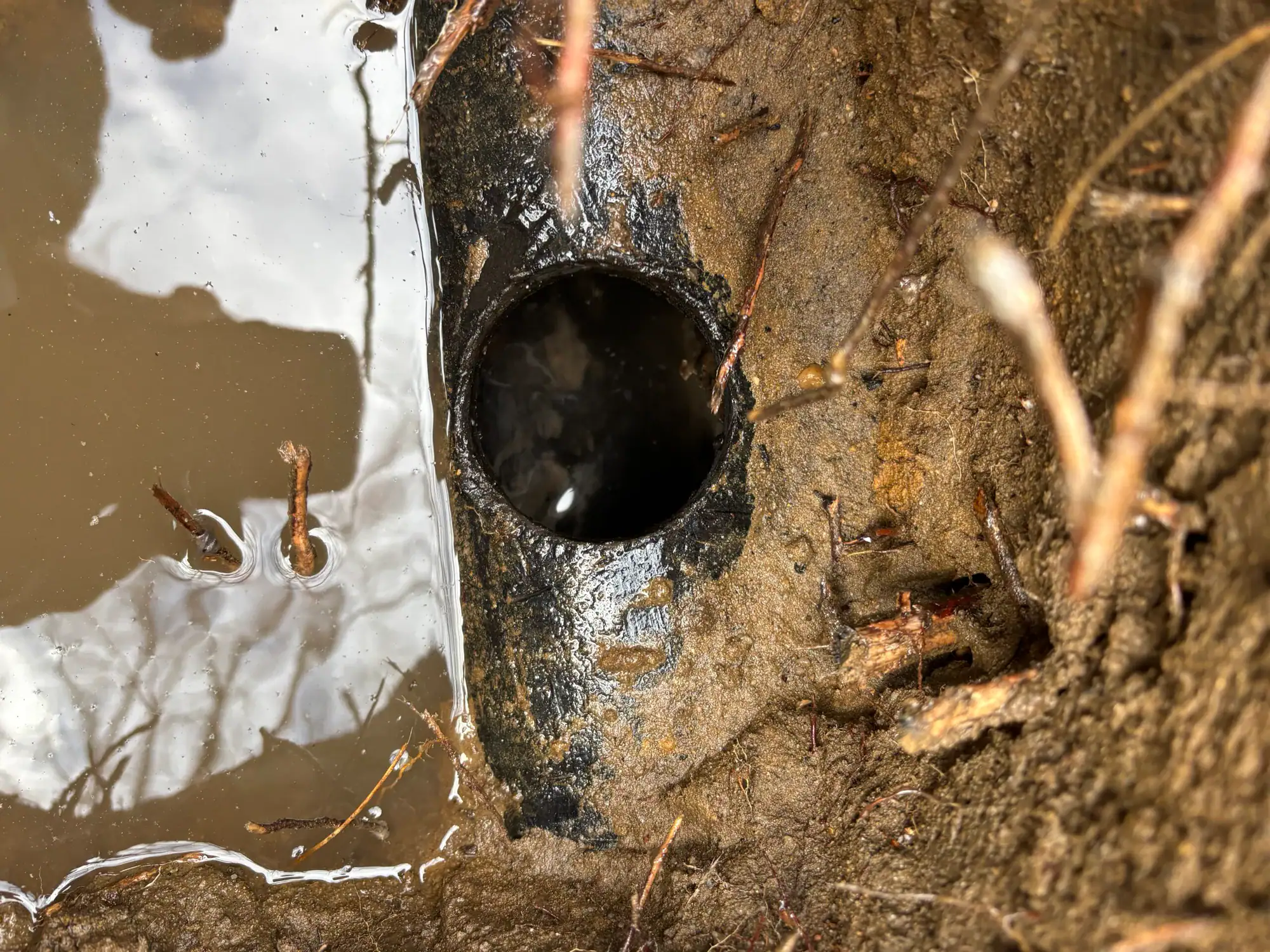
Long Island’s suburban housing boom ran from the 1950s through the 1970s. A lot of those homes — in Ronkonkoma, Bay Shore, Brentwood, Babylon, Central Islip, and communities across western and central Suffolk County — were built with cesspool systems that are now 50 to 70 years old. Concrete degrades. Rings crack. Covers settle or fail. And when the structural integrity of a cesspool is compromised, the gases produced inside it have a path back into the home through drain lines, floor drains, and any fixture where the water seal has weakened.
Suffolk County’s sandy soil — a product of Long Island’s glacial geology — drains quickly, which is why cesspools worked well here for decades. But that same sandy soil provides less structural support for aging concrete components, which accelerates deterioration compared to other regions. High water table conditions in low-lying coastal and bay-adjacent communities add another variable: when the water table rises after heavy rain or spring snowmelt, it can flood cesspool systems and force gases upward through drain lines and into living spaces.
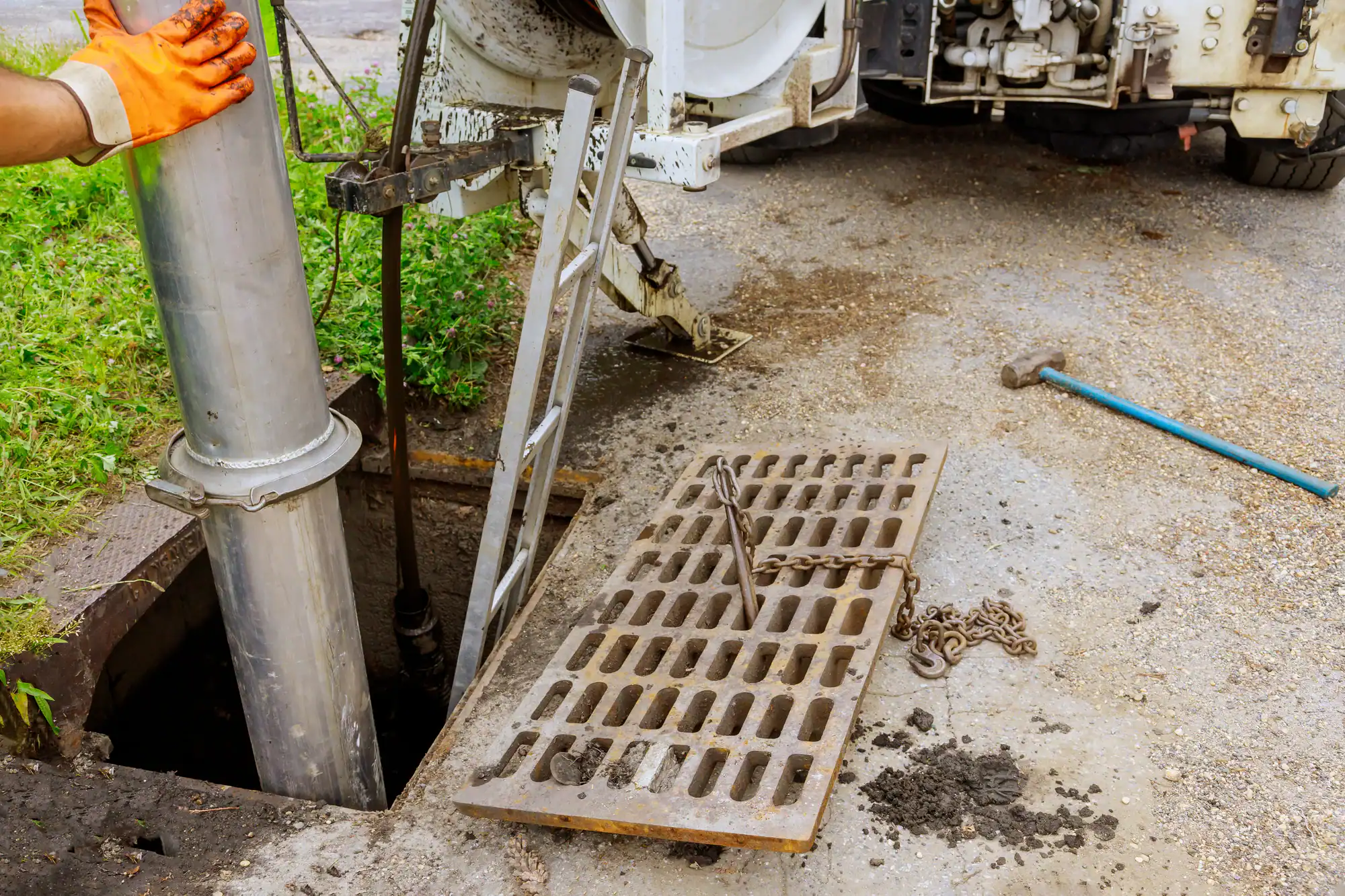
This is why a sewer gas problem in a Suffolk County home isn’t always a plumbing issue — it’s often a signal that the cesspool itself needs attention. A camera inspection of the sewer line and a proper cesspool assessment can identify exactly where the gas is originating. That’s a different scope of work than a plumber handles, and it’s the reason calling a licensed cesspool service provider is the right first call for most homeowners here.
Suffolk County’s sole-source aquifer — the only drinking water source for Long Island’s residents — is also worth mentioning in this context. A failing cesspool doesn’t just create a gas problem inside your home. It contributes to the nitrogen contamination that has increased significantly in the county’s groundwater. Addressing a cesspool problem early isn’t just about your family’s health inside the house — it’s about the water quality that everyone on Long Island depends on.
**Is smelling sewer gas in your house dangerous?** It can be, yes — but the level of risk depends on concentration and duration. A brief, faint whiff near an infrequently used drain is usually a sign of a dry P-trap, which is a minor fix. A persistent or strong smell, especially in a basement or enclosed space, is a different situation. Hydrogen sulfide becomes toxic at concentrations that are realistically achievable in poorly ventilated areas, and the fact that your nose stops detecting it at higher concentrations means you can’t rely on smell alone to gauge how serious the situation is. If the smell is strong or you’re experiencing symptoms, treat it as urgent.
**What should I do right now if I smell sewer gas in my house?** Open windows and doors to ventilate if you can do so quickly and safely. Don’t use electrical switches or create any ignition source if the smell is strong — methane is flammable. Get everyone out if the smell is intense or if anyone is feeling symptoms. Then call a professional to identify the source. Don’t go back in to investigate on your own.
**Can sewer gas make you sick even at low levels?** Yes. Chronic low-level exposure to hydrogen sulfide is associated with headaches, fatigue, nausea, and cognitive symptoms that are easy to attribute to other causes. If you’ve been having recurring headaches or feeling run-down and you’ve noticed an intermittent odor in your home, the connection is worth investigating. A professional inspection can confirm or rule out sewer gas as the cause.
**Why does the smell come and go?** Sewer gas pressure inside drain lines and cesspools fluctuates with temperature, atmospheric pressure, and system activity. In Suffolk County, seasonal factors like spring water table rises and winter-frozen vent pipes can make the pattern more pronounced. The smell may be more noticeable in the morning, after heavy rain, or during certain weather conditions. The intermittent nature of the smell does not mean the problem is minor or resolving on its own — the underlying source remains, and the smell will return.
**Do I need a plumber or a cesspool company?** In Suffolk County, where the majority of homes are on private cesspool or septic systems, the right first call is usually a licensed cesspool service provider. If the source is a dry trap or a blocked vent pipe, a plumber can handle it. But if the problem is connected to your cesspool — cracked rings, system overload, a compromised sewer line — that’s outside a plumber’s scope. We can assess the full picture with camera inspection capability and tell you exactly what’s going on.
Sewer gas is one of those problems that’s easy to put off because the smell comes and goes and nothing dramatic has happened yet. But the health risks are real, the underlying causes don’t fix themselves, and the one thing you genuinely can’t rely on — your ability to smell the gas — is also the thing that tends to give people false reassurance.
If you’ve noticed a persistent or recurring sewer odor in your home, especially in a basement or near floor drains, it’s worth having someone take a proper look. Not to create urgency where there isn’t any — but because finding out it’s a dry trap is a five-minute fix, and finding out it’s a failing cesspool is something you want to know sooner rather than when you’re dealing with a backup or a health event.
We’ve been doing this work in Suffolk County since 1998. We know what aging Long Island systems look like, what causes sewer gas in this specific housing stock, and how to find the source without guessing. If something smells off in your home, we’ll tell you exactly what’s going on — and exactly what it will take to fix it.
Summary:
Article details:
Share:
