Wondering what happens during septic pumping? This guide walks Suffolk County homeowners through the actual service day—from start to finish.
You know your septic tank needs pumping. Maybe you’re on a regular schedule, or maybe you’re seeing signs that it’s time. Either way, if you’ve never actually watched the process or understood what happens during those couple hours, you’re not alone.
Most homeowners have questions about what the technician is doing, what they’re checking for, and whether everything looks normal. This guide breaks down the actual septic pumping process—what happens when the truck pulls up, how the vacuum system works, what gets inspected, and why each step matters for keeping your Suffolk County system running right.
The work starts before anyone shows up at your property. Locating your septic tank is the first step, and it’s not always straightforward. Some Suffolk County homes have tanks buried under 12 to 24 inches of soil, hidden beneath grass that’s grown over the access lids for years.
If you know where your tank is, mark it. If you don’t, look for clues—a dead patch of grass, a slight depression in the yard, or check your property records. Many homeowners install septic tank risers to bring access lids to ground level, eliminating the need to dig every time service is needed.
Clearing the area around your tank makes the job faster. Move patio furniture, potted plants, or anything blocking the path between the service truck and your tank. The vacuum hose can reach 100 to 200 feet, but closer access means quicker work and less disruption to your yard.

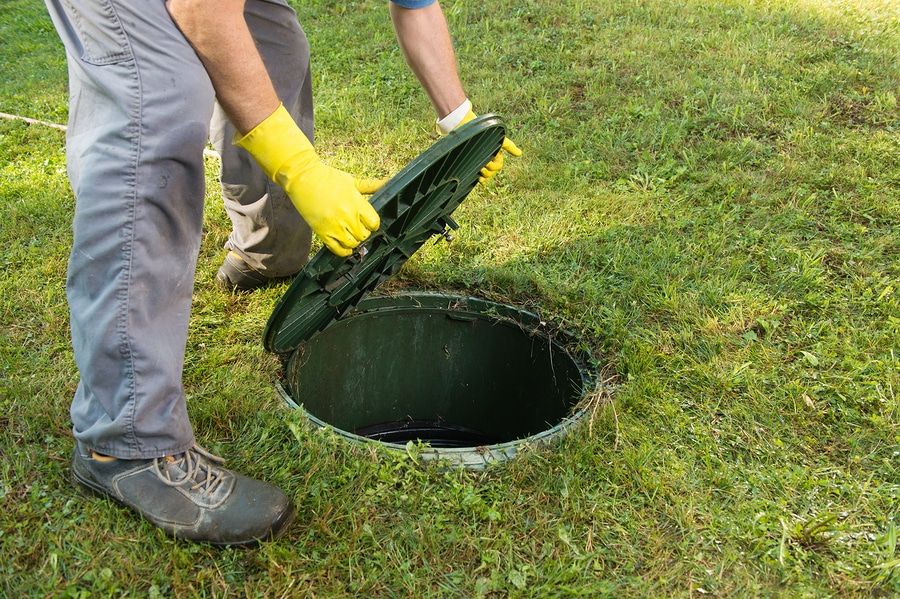
Once the technician arrives, the first task is accessing your septic tank. If you don’t have a riser installed, this means digging down to uncover the lid. Depending on how deep your tank is buried, this can take anywhere from a few minutes to half an hour.
Suffolk County soil conditions vary. Sandy soil is easier to dig through, but it also shifts and settles over time, which can make lids harder to locate. Some older tanks have concrete lids that are heavy and require careful handling. Modern tanks often have lighter plastic or fiberglass lids that are easier to remove.
The technician will remove the lid carefully, checking for any cracks or damage. A damaged lid isn’t just a cosmetic issue—it can allow groundwater to seep into your tank, overloading your system. It can also create a safety hazard if someone or something accidentally steps on a weakened cover.
Before starting the pumping process, the technician will visually inspect the tank’s interior. This quick look reveals the levels of scum floating on top, the clear effluent layer in the middle, and the sludge layer settled at the bottom. These three layers tell a story about how your system is functioning.
The scum layer consists of fats, oils, and lighter materials that float. The sludge layer at the bottom is made up of heavier solids that have settled and partially broken down by anaerobic bacteria—microorganisms that thrive in the oxygen-free environment inside your sealed tank. The middle layer is relatively clear liquid that eventually flows out to your drain field.
If the sludge and scum layers are too thick—typically when they reach within 6 to 12 inches of the outlet pipe—it’s time to pump. Waiting too long means solids can escape into your drain field, clogging the soil and causing expensive damage. Most Suffolk County homes need septic pumping every 2 to 3 years, though this varies based on household size and water usage.
The technician will also check your inlet and outlet baffles during this inspection. These T-shaped pipes or walls direct wastewater flow and prevent solids from leaving the tank. The inlet baffle guides incoming wastewater downward into the middle layer, preventing turbulence that would disturb the settled sludge. The outlet baffle blocks floating scum and unsettled solids from escaping to your drain field.
Damaged or missing septic tank baffles are a serious problem. Without them, solids flow directly into your drain field, where they clog the soil and create a biomat that prevents proper drainage. Replacing a baffle costs a few hundred dollars. Replacing a failed drain field costs $15,000 or more. Catching baffle damage early during a routine pumping can save you thousands.
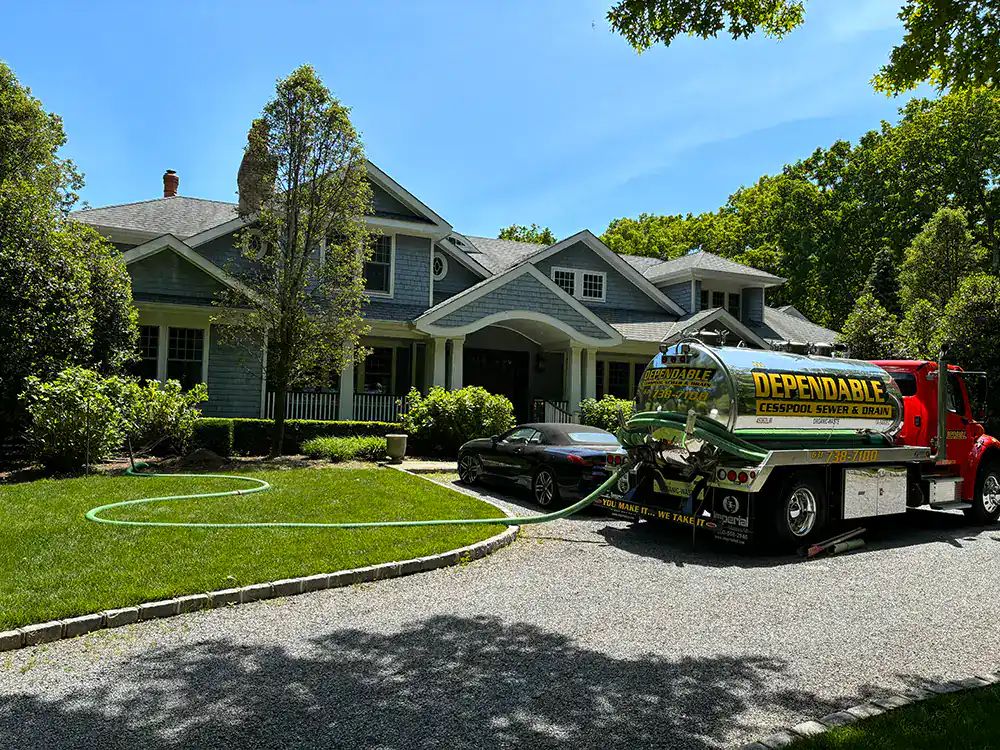
The actual pumping process is straightforward but thorough. The service truck is equipped with a large vacuum pump and a storage tank, typically holding 3,000 to 5,000 gallons. A thick hose—usually 3 to 4 inches in diameter—connects from the truck to your septic tank.
The technician lowers the hose into the tank, positioning it to remove both liquid and solid waste. The vacuum creates powerful suction that pulls everything out—sludge from the bottom, effluent from the middle, and scum from the top. The goal isn’t just to remove some of the waste. Complete pumping means removing as much material as possible so your tank can function properly until the next service.
For most residential tanks in Suffolk County, the pumping process takes 30 minutes to an hour, depending on tank size and how full it is. A standard 1,000-gallon tank is common for a three-bedroom home, while larger homes may have 1,500-gallon or bigger tanks. The more volume, the longer it takes to pump.
During pumping, the technician may move the hose around inside the tank to reach all areas. Sludge settles unevenly, and some spots accumulate more buildup than others. Thorough pumping means getting into corners and ensuring the bottom of the tank is as clean as possible.
You might hear the vacuum pump running and see waste flowing through the hose into the truck’s holding tank. The material being removed is a mix of solid and liquid waste that’s been sitting in your tank for months or years, depending on your pumping schedule. It doesn’t smell pleasant, but our technicians work efficiently to minimize odors and mess.
We’ll also agitate or break up hardened sludge to ensure complete removal. This is especially important if your tank hasn’t been pumped in several years. Compacted sludge at the bottom can be difficult to remove with suction alone, so our technicians may use tools or water jets to loosen it before pumping.
Once the tank is empty, the technician will inspect the tank walls, floor, and baffles more closely. With the waste removed, it’s easier to spot cracks, corrosion, or structural damage that might need attention. Concrete tanks can deteriorate over time due to hydrogen sulfide gas produced by anaerobic bacteria. This gas is corrosive and can eat away at concrete and steel components.
The technician will also check your effluent filter if your system has one. These filters sit in the outlet baffle and catch suspended solids before they can flow to your drain field. Effluent filter cleaning is a critical part of septic maintenance. A clogged filter restricts flow and can cause backups into your home. Most filters should be cleaned every time you pump your tank, which is typically every 2 to 3 years in Suffolk County.
After cleaning the filter, the technician rinses it and reinstalls it. Some systems don’t have effluent filters—especially older installations—but adding one is a smart upgrade. Filters cost a few hundred dollars and can significantly extend your drain field’s lifespan by preventing solids from escaping the tank.
Want live answers?
Connect with a AAA Dependable Cesspool expert for fast, friendly support.
With the tank empty and components checked, the technician performs a final inspection. This is your opportunity to ask questions about what we found. Did the sludge layer depth look normal? Are the baffles in good shape? Is there any structural damage that needs attention?
We’ll explain what we saw and offer recommendations based on the tank’s condition. If everything looks fine, you’ll know your system is healthy. If there are concerns—a crack in the tank wall, a deteriorating baffle, or signs that your drain field may be struggling—you’ll have time to address them before they become emergencies.
We’ll also document the service, noting the date, sludge levels, any repairs needed, and when your next pumping should be scheduled. Keeping records helps you stay on top of maintenance and provides documentation if you ever sell your home or apply for septic system grants available in Suffolk County.

To really understand what’s happening during septic pumping, it helps to know what each component does. Your septic tank isn’t just a holding container—it’s a treatment system designed to separate solids from liquids and begin the breakdown process before wastewater reaches your drain field.
Anaerobic bacteria are the workhorses of your septic tank. These microorganisms don’t need oxygen to survive, which is perfect for the sealed environment inside your tank. They digest organic matter, breaking down solid waste into simpler compounds. This process produces gases like methane and carbon dioxide, which vent through your home’s plumbing system.
The bacteria work slowly but steadily, converting some solids into liquids and gases. However, they can’t break down everything. Non-biodegradable items like plastics, paper towels, and feminine hygiene products don’t decompose and will accumulate in your tank. That’s why what you flush matters—putting the wrong things down your drains means more frequent pumping and potential clogs.
Your inlet and outlet pipes are the entry and exit points for wastewater. The inlet pipe brings wastewater from your home into the tank. The outlet pipe carries treated effluent out to your drain field. Both pipes work with the baffles to maintain proper flow and prevent solids from escaping.
The septic tank riser is an upgrade many Suffolk County homeowners install to make future service easier. A riser is a pipe that extends from your tank’s access lid up to ground level. Instead of digging every time you need service, the technician simply removes the riser lid and accesses the tank immediately. Risers typically cost $300 to $400 to install but pay for themselves quickly by eliminating excavation fees.
Understanding hydraulic load is also important. This refers to the volume of water your system needs to process. Every time you flush a toilet, run the dishwasher, or take a shower, you’re adding to the hydraulic load. Systems are designed to handle a certain daily volume based on your home’s size—typically 400 gallons for a three-bedroom home, plus 100 gallons for each additional bedroom.
Overloading your system with too much water at once can cause problems. Doing multiple loads of laundry in one day, hosting a large gathering, or having a leak can overwhelm your tank and drain field. Spreading out water use and fixing leaks helps your system function properly and extends the time between pumpings.
Your effluent filter, if you have one, is a small component that makes a big difference. It sits in the outlet baffle and catches fine particles that would otherwise flow to your drain field. Regular effluent filter cleaning—typically during each pumping—prevents these particles from clogging your drain field soil. A clogged drain field is one of the most expensive septic repairs, often requiring complete replacement.
Once the inspection is complete and everything checks out, we’ll replace the tank lid and cover it back up with soil if necessary. If you have a riser, we’ll secure the riser lid. The area should look roughly the same as it did before service, though you may need to reseed grass if the lid was buried.
The waste removed from your tank doesn’t just disappear. It’s transported to a wastewater treatment facility or approved disposal site where it’s processed according to environmental regulations. Suffolk County has strict rules about septage disposal to protect the sole-source aquifer that provides drinking water to the region.
After pumping, your system should function normally right away. You might notice slightly faster drains or better toilet flushing if your tank was getting full. The empty tank now has maximum capacity to separate solids and liquids again, starting the process fresh.
We’ll recommend your next pumping date based on your household size and usage. For Suffolk County homes, the typical recommendation is 2 to 3 years. Larger families or homes with garbage disposals may need more frequent service. Smaller households or vacation homes used seasonally might stretch it to 3 to 4 years.
Keeping a maintenance schedule prevents problems. Regular pumping costs $300 to $500 depending on your tank size and location. Emergency service when your system backs up costs significantly more—often 60% to 100% more than scheduled maintenance. And if neglected pumping leads to drain field failure, you’re looking at $15,000 to $30,000 for replacement.
Between pumpings, watch for warning signs that something’s wrong. Slow drains, gurgling sounds from toilets or sinks, sewage odors in your yard, or soggy areas near your drain field all indicate problems. Catching issues early means simpler, less expensive fixes.
Suffolk County homeowners also have access to grant programs for septic system upgrades. If your system is old or failing, you may qualify for up to $30,000 in combined state and county grants to install nitrogen-reducing systems. These advanced systems protect Long Island’s groundwater and are required in many areas. Regular pumping and maintenance documentation can help when applying for these programs.
Taking care of your septic system isn’t complicated, but it does require attention. Understanding what happens during pumping helps you make informed decisions about your system’s care. You’ll know what questions to ask, what to look for, and when to schedule service.
Septic pumping isn’t mysterious once you understand what’s actually happening. The process is straightforward—uncover the tank, pump out the waste, inspect the components, and close it back up. But each step serves a purpose, and knowing what technicians are checking for helps you stay on top of your system’s health.
Regular maintenance protects your investment. Your septic system is one of the most expensive components of your home, and proper care extends its lifespan by decades. Pumping every 2 to 3 years, watching what goes down your drains, and addressing small problems before they become big ones keeps everything running smoothly.
If you’re in Suffolk County and your system is due for service, we bring over 25 years of local experience to every job. We’ll walk you through what we find, answer your questions, and make sure you understand your system’s condition—no overselling, just honest service.
Summary:

Article details:
Share: