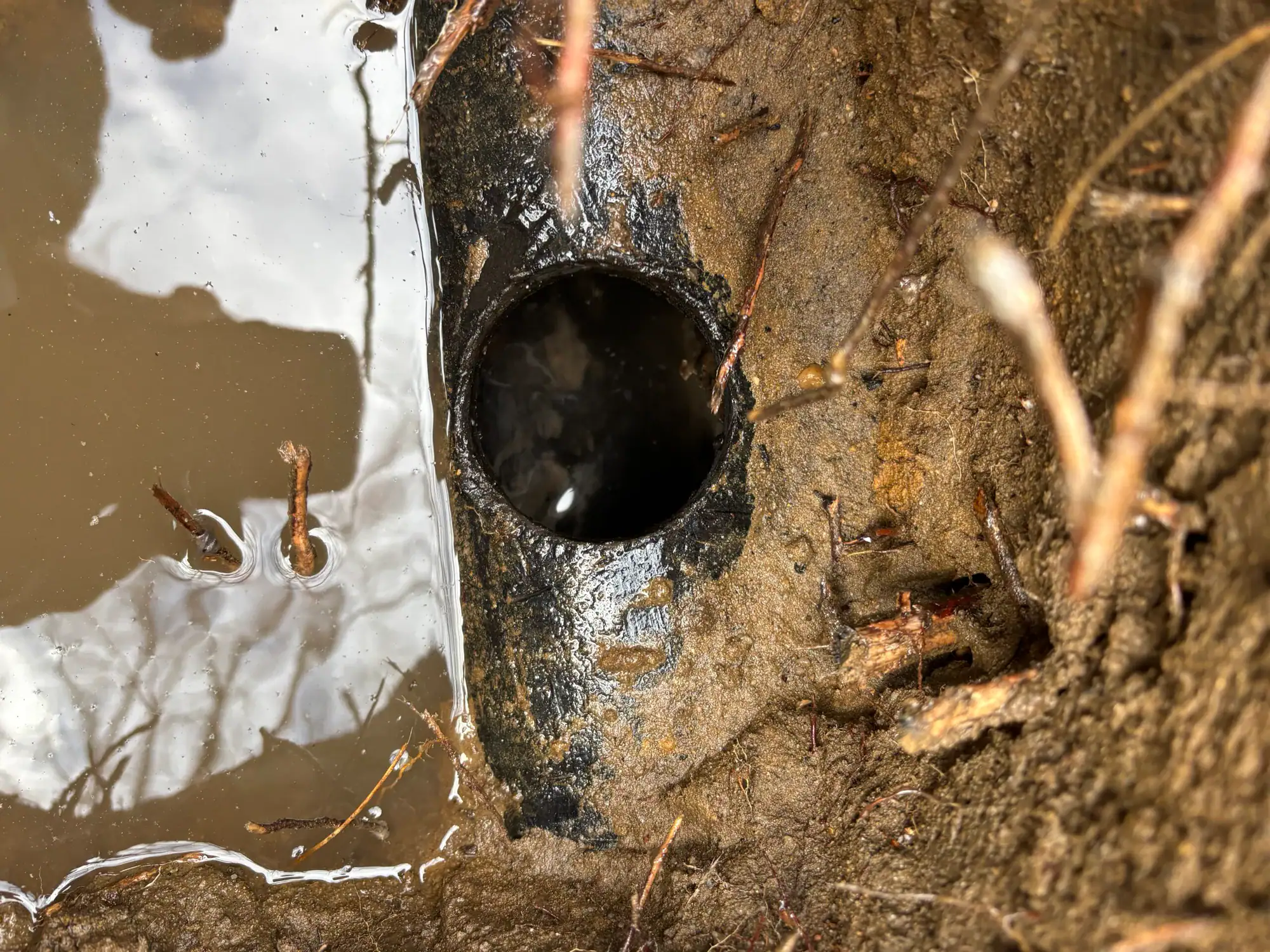
What's actually happening inside your catch basin — and why ignoring it could cost you far more than a service call.
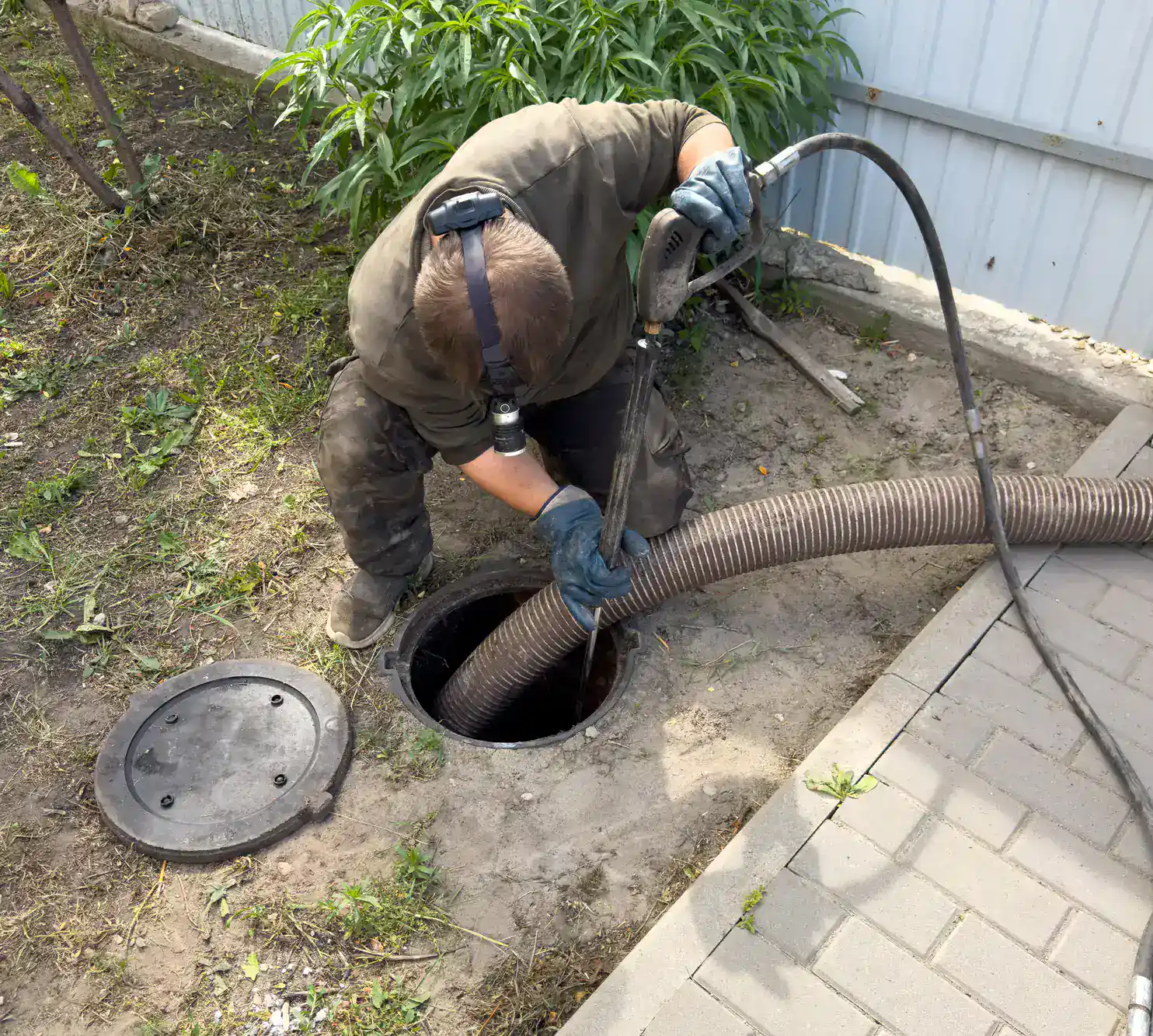
Your indoor drains get attention when something goes wrong. Your storm drains? They mostly get ignored — until the backyard turns into a pond or water starts finding its way toward the house. In Suffolk County, that moment can come fast. The August 2024 storm dropped over nine inches of rain in a single day across towns like Centereach, Smithtown, and Ronkonkoma. Properties with clear, functioning drainage systems handled it. Properties with blocked catch basins and clogged outdoor drains didn’t. Understanding what storm drain cleaning actually involves — and why it matters before the next storm rolls in — is the first step toward protecting what you’ve built.
Storm drain cleaning is the process of removing debris, sediment, and buildup from the drainage systems that carry rainwater away from your property. That includes the catch basins in your yard or driveway, the pipes connecting them, and any trench or yard drains that direct runoff away from your home’s foundation.
These systems work quietly in the background — until they don’t. Sediment accumulates at the bottom of catch basins over time. Leaves, grass clippings, and silt pack into the inlet. Roots find their way into the pipes. None of it is dramatic until you get a hard rain and suddenly the water has nowhere to go.
The consequences aren’t just a soggy yard. Standing water near your foundation puts real stress on the structure. It can seep into basements, accelerate soil erosion, and — in Suffolk County, where most homes still rely on cesspools — push your underground system to the edge during the exact moments it’s already under pressure.
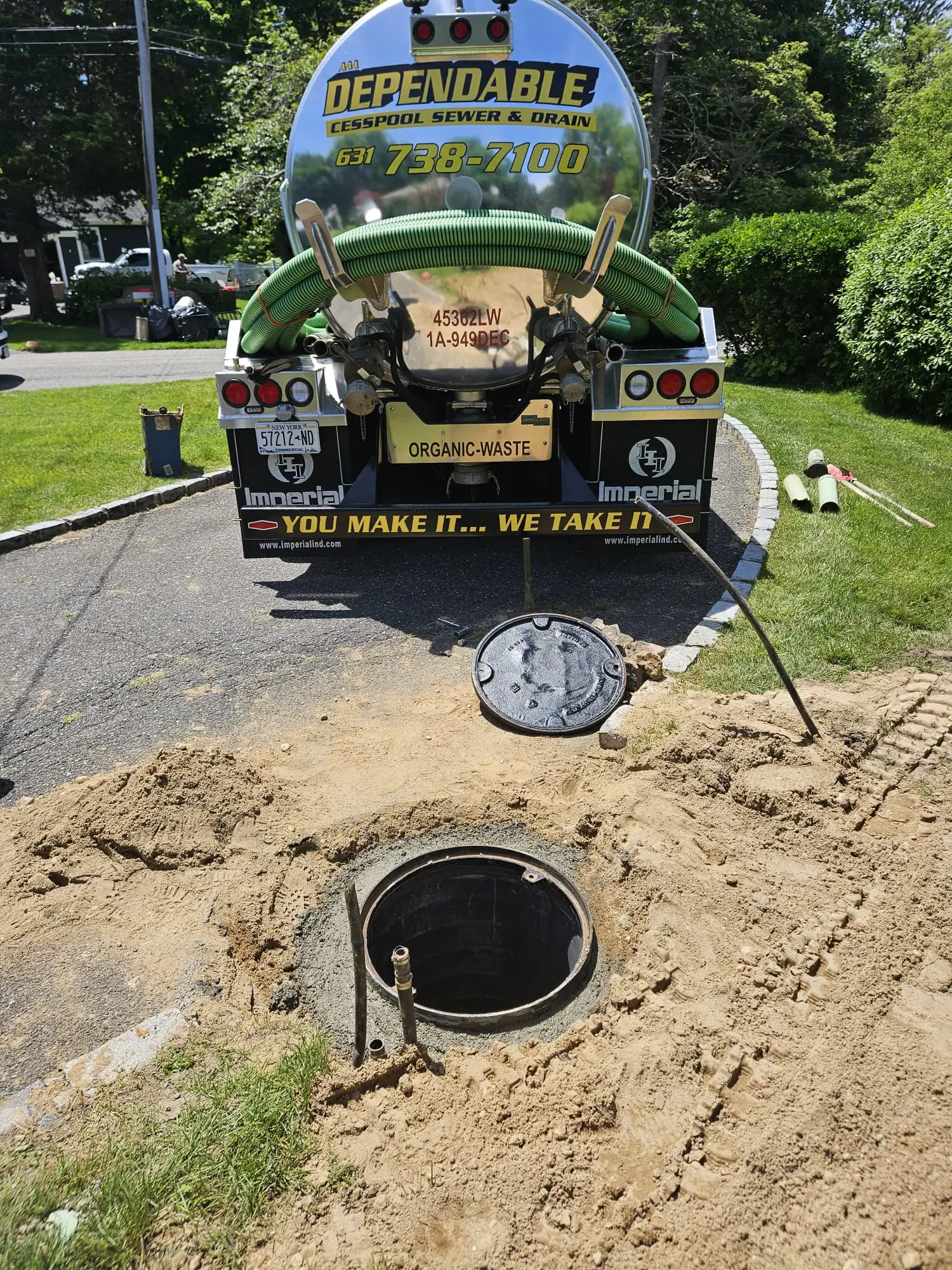
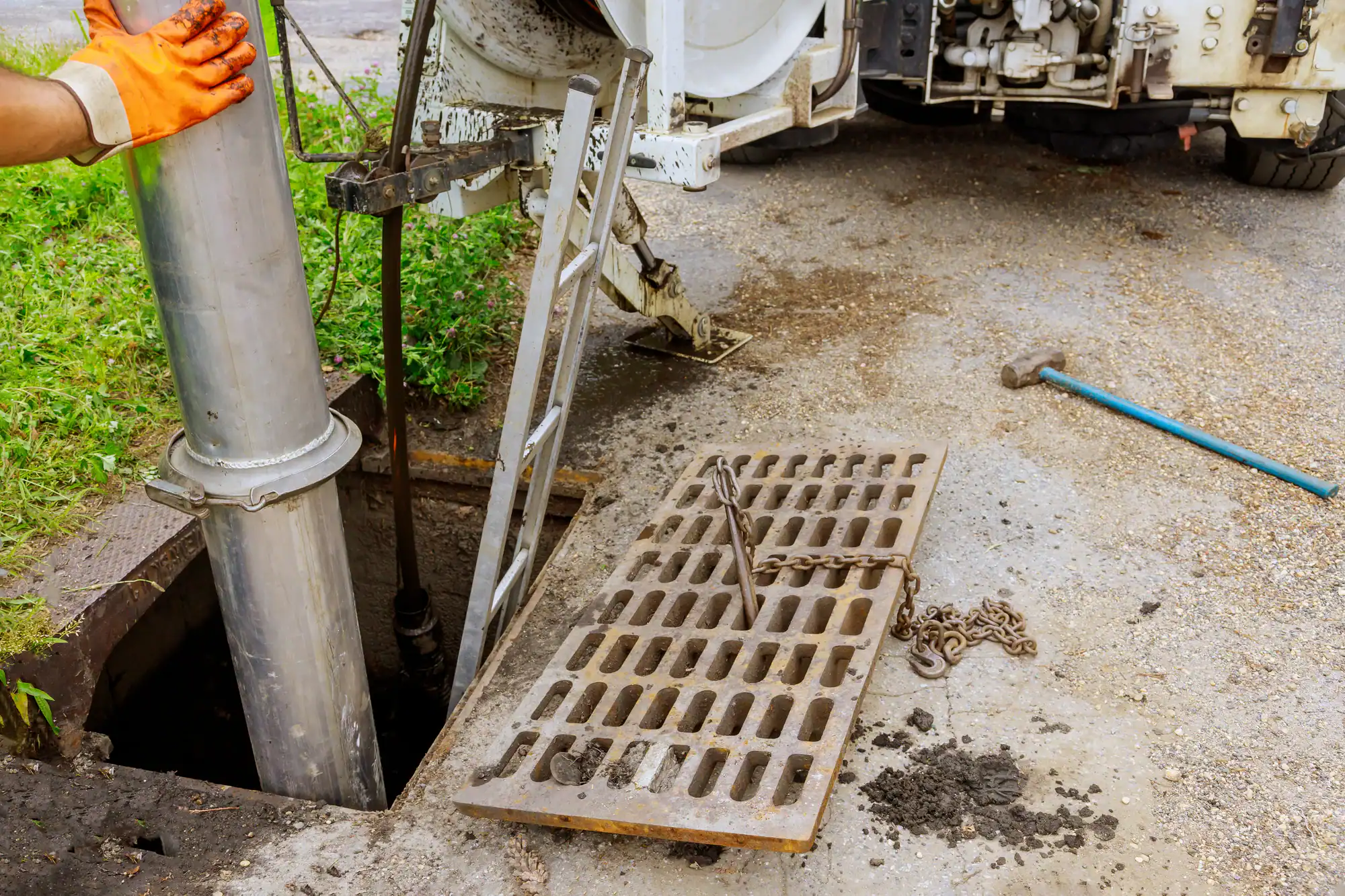
A catch basin is the entry point to your drainage system. It’s a box-like structure, usually located in your yard, driveway, or near the curb of your property, with a grate on top that allows water in while blocking larger debris. Below the grate, there’s a sump — a deeper chamber where sediment, silt, and smaller debris collect over time. When that sump fills up, the catch basin stops doing its job.
Clearing the grate yourself removes surface leaves and visible debris, but it doesn’t touch what’s built up inside the basin or further down the pipe. That’s where professional catch basin cleaning comes in. We use a vacuum truck to pull out the accumulated sediment, sludge, and debris from inside the basin. High-pressure water jetting clears the connecting pipes of compacted buildup and root intrusion. In some cases, we use a camera inspection to check for cracks, offsets, or blockages deeper in the line that wouldn’t be visible from the surface.
The whole process is more involved than most homeowners expect — and that’s exactly why it gets deferred. It’s not a garden hose and a pair of gloves job. The equipment required is industrial, and the process involves handling material that needs to be properly disposed of.
In Suffolk County, where mature oaks and maples line neighborhoods like Dix Hills, Commack, and Stony Brook, fall leaf drop alone can overwhelm a catch basin that hasn’t been serviced in a year or two. Add a heavy storm on top of that, and you’re looking at a system that simply can’t keep up. Annual cleaning — ideally in late fall after the leaves are down, or in early spring before peak storm season — keeps the system ready when it’s actually needed.
One thing worth understanding: catch basin cleaning and storm drain cleaning are related but not identical. The catch basin is the collection point. The storm drain is the pipe network it feeds into. Both need attention. Servicing one without the other is like cleaning the sink but leaving the pipe behind it packed with debris.
Outdoor drain cleaning covers more ground than most people realize. Beyond catch basins, a typical property might have trench drains along the driveway, yard drains in low-lying areas of the lawn, or French drains installed to redirect groundwater away from the foundation. Each of these can develop blockages, and each requires a different approach to clear properly.
Trench drains — the long, narrow grated channels often installed across driveways or at the base of slopes — collect an enormous amount of debris. Dirt, gravel, and organic material wash into them constantly. Over time, the channel fills and the drain becomes decorative rather than functional. We clear a trench drain through mechanical cleaning followed by a high-pressure flush to restore full flow through the channel and into the connecting pipe.
Yard drains are often the most overlooked. They sit flush with the lawn, easy to mow over and easy to forget. But when they’re blocked, the water they’re supposed to capture just sits on the surface instead — and in Long Island’s sandy soil, that standing water can saturate the ground quickly, raising the water table around your foundation and increasing pressure on your cesspool’s leach field at the same time.
That connection between outdoor drainage and your underground cesspool system is something most homeowners never think about — and most drain companies never mention. When heavy rain hits and your storm drains are blocked, the water doesn’t just pool on the surface. It saturates the soil, which raises the water table, which puts direct pressure on your cesspool from below. In Suffolk County, where the water table is already relatively high in low-lying areas near the South Shore and coastal communities, that combination can push a cesspool to failure during the same storm that’s flooding your yard.
This is why handling outdoor drain cleaning and cesspool maintenance through the same team makes practical sense. When we service a property, we’re looking at the full picture — not just the drain in front of us. If we notice signs that the drainage issue is affecting the cesspool, or vice versa, we tell you. That’s the kind of thing you miss when you’re calling three different companies and nobody’s talking to each other.
Want live answers?
Connect with a AAA Dependable Cesspool expert for fast, friendly support.
The standard recommendation from stormwater professionals is to clean residential catch basins and storm drains at least once a year. In areas with heavy tree cover, frequent storms, or properties near waterways, twice a year is more realistic.
Suffolk County checks most of those boxes. The tree canopy in towns like Smithtown, Hauppauge, and Setauket is dense. The storm history is serious — the 2014 Islip flood set the New York State 24-hour rainfall record at 13.57 inches, and the 2024 storm that hit Ronkonkoma, Stony Brook, and surrounding areas was classified as a one-in-a-thousand-year event by the National Weather Service. These aren’t anomalies anymore. They’re the conditions we plan around.
Getting your storm drains cleaned before those events — not after — is what makes the difference.

Timing matters more than most people think. Scheduling storm drain cleaning at the right point in the year means your system is in its best condition when the weather is most likely to test it.
Late fall is the most important window for most properties. Once the leaves are down — typically by mid-November across most of Suffolk County — is the right time to clear catch basins and outdoor drains before winter. Leaves are the single biggest contributor to catch basin blockages in suburban Long Island. If they’re sitting in your basin when the ground freezes, they’ll be there in the spring, compressed and packed even tighter.
Early spring is the second critical window. Snowmelt combined with March and April rain creates significant runoff, and if your drains weren’t cleaned in the fall, that’s when you’ll find out. Properties that skipped fall service and head into spring with partially blocked drains are the ones most likely to see basement seepage or yard flooding during the first heavy rain of the season.
Pre-hurricane season — roughly May through June — is worth considering for properties in coastal communities like Bay Shore, Babylon, Patchogue, and East Islip. Storm surge and heavy tropical rainfall put drainage systems under a different kind of stress than a standard nor’easter, and having clean, clear drains going into that season reduces risk significantly.
The honest answer is that most properties would benefit from a fall cleaning as a baseline, with a spring check added if the property has a history of drainage problems, heavy tree cover, or sits in a low-lying area. If you’re not sure what your property needs, a quick inspection can answer that without any commitment to additional work.
**Is my storm drain my responsibility, or does the town handle it?**
If the drain is on your property, it’s your responsibility. Municipal storm drains — the ones in the street and public rights-of-way — are maintained by the town or county. But the catch basins in your yard, the trench drain in your driveway, and the drainage pipes on your property are yours to maintain. This is one of the most common misconceptions we run into across Suffolk County, and it’s the reason a lot of homeowners wait too long to call.
**How do I know if my storm drain is clogged?**
The most obvious sign is standing water that doesn’t drain within a few hours after rain. Other indicators include water pooling near your foundation, slow drainage from yard drains after moderate rain, visible debris buildup around the drain grate, or a musty odor near outdoor drains. In some cases, you won’t see any warning signs until a heavy storm hits — which is exactly why preventive cleaning matters.
**Can I just clean the grate myself?**
You can remove surface debris from the grate, and that’s worth doing. But the actual blockage is almost always deeper — inside the catch basin sump or further down the connecting pipe. The equipment needed to clear that properly is industrial: vacuum trucks, hydro-jetters, and in some cases a camera to inspect the line. What you can do at home is maintenance between our professional cleanings, not a replacement for them.
**How does this affect my cesspool?**
In Suffolk County, this connection is real and worth understanding. When storm drains are blocked and water saturates the soil around your property, the water table rises. That puts direct pressure on your cesspool’s leach field from below — exactly when it’s already working hard to handle the increased load from rain infiltration. Properties with both a drainage problem and an aging cesspool are at higher risk of system failure during major storms. Handling both through us means nothing gets missed.
**How much does storm drain cleaning cost?**
Costs vary depending on the size of the system, the degree of buildup, and whether additional services like hydro-jetting or camera inspection are needed. Basic residential catch basin cleaning starts at a few hundred dollars for straightforward jobs. More complex situations — significant sediment accumulation, root intrusion, or multiple connected drains — run higher. We offer free estimates, so you know exactly what you’re looking at before any work begins.
The short version: storm drains and catch basins need regular attention, most homeowners in Suffolk County aren’t giving them any, and the cost of ignoring them shows up fast when the next serious storm arrives. The August 2024 flooding wasn’t a fluke. It was a reminder that this county’s drainage systems — private and public — get pushed hard, and the properties that hold up are the ones that were maintained.
Annual cleaning is the baseline. Fall is the best time to do it. If your property has a history of yard flooding, sits near a waterway, or has heavy tree cover, more frequent service makes sense.
We’ve been handling storm drains, catch basins, and cesspools across Suffolk County since 1998. We’re licensed with Suffolk County Consumer Affairs, fully insured, and we don’t recommend work you don’t need. If you want to know where your drainage system actually stands, reach out to us for a free estimate — no pressure, just a straight answer.
Summary:
Article details:
Share: