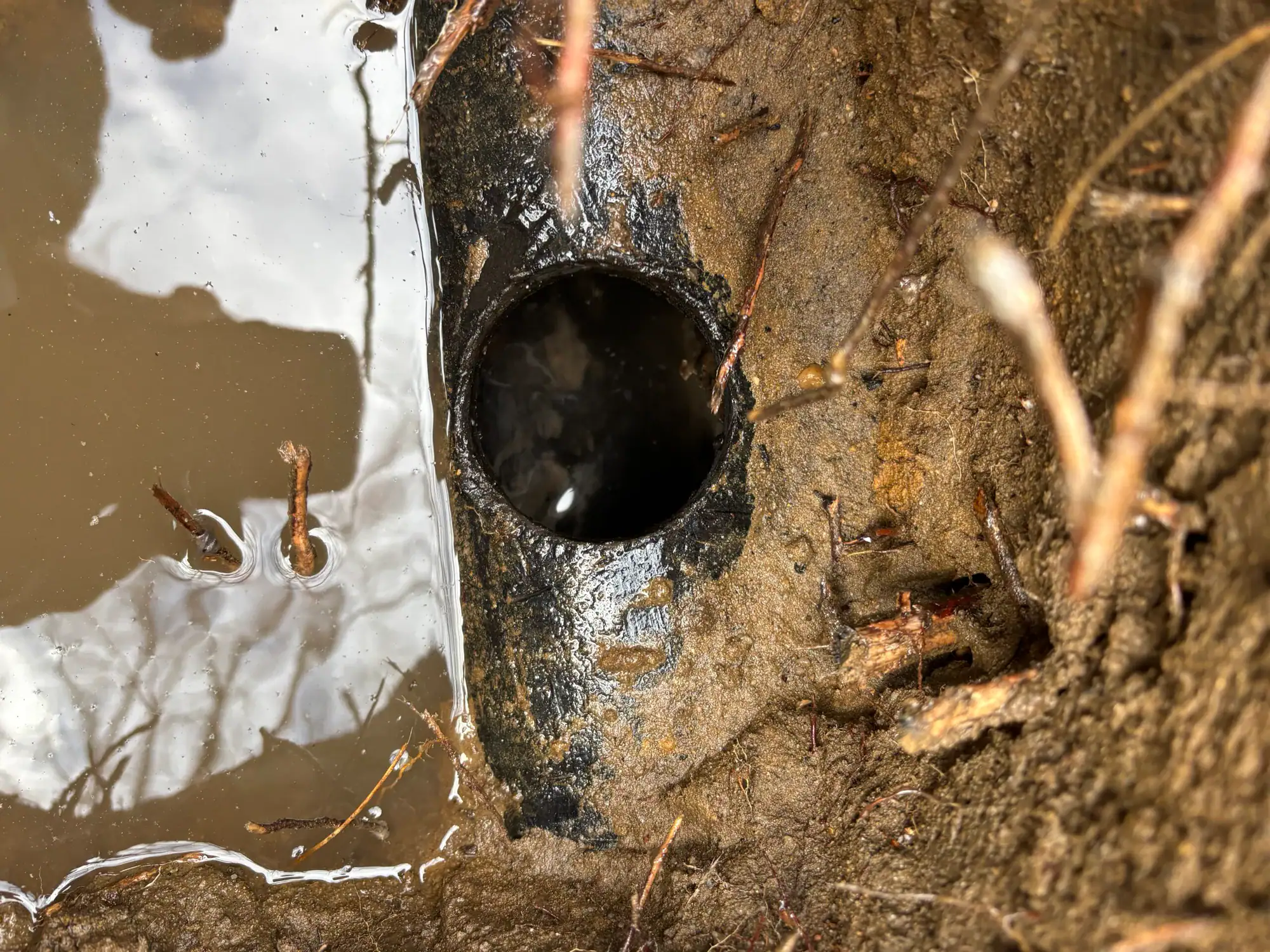
Not every blocked drain needs a plumber — but some absolutely do. Here's how to tell the difference before you make it worse.

You’ve tried the plunger. Maybe you poured something down the drain. It’s still not clearing, and now you’re wondering whether this is a ten-dollar fix or a call-a-professional situation. That uncertainty is exactly where most homeowners in Suffolk County find themselves — and it’s a fair place to be. Some clogs really are minor enough to handle on your own. Others look minor on the surface but point to something much bigger underneath. The trick is knowing which one you’re dealing with before you make it worse. Let’s start with the type of blockage, because that changes everything.
A plunger and some patience can clear a surprising number of minor clogs — hair buildup in a bathroom drain, a small grease deposit near the kitchen sink opening, soap scum that’s accumulated just below the drain cover. These are surface-level problems, and for those, you don’t need to call anyone.
Where things go sideways is when homeowners reach for a store-bought blocked drain cleaner and assume it’ll handle anything. Products like Drano work on light, shallow clogs — they’re not built for anything deeper. And if your pipes are older cast iron, repeated use of sodium hydroxide-based cleaners will corrode them over time. More importantly, if your home runs on a cesspool rather than a public sewer — which describes roughly 75% of properties in Suffolk County — you should never use chemical drain cleaners at all. They kill the beneficial bacteria your cesspool depends on to function.
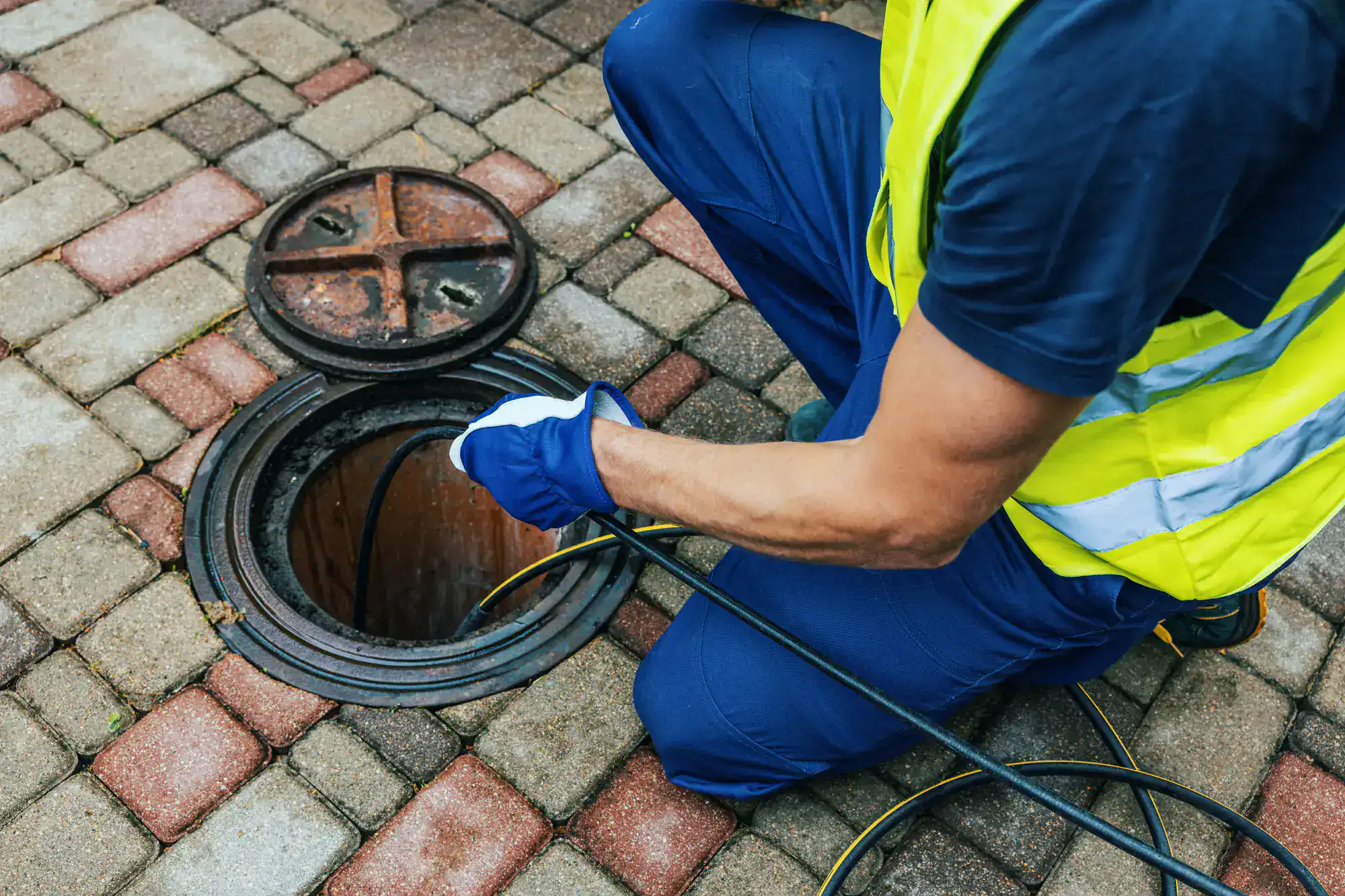
The clearest signal that you’re past DIY territory is when more than one drain in the house is slow or backed up at the same time. A single clogged bathroom sink is probably a localized blockage — hair, soap, something that got washed down. But when the kitchen sink, the bathroom, and the tub are all draining slowly within the same week? That’s not three separate clogs. That’s your main line telling you something is wrong.
Gurgling sounds coming from drains you’re not using is another one. If you flush the toilet and the shower drain gurgles, that’s air being pushed back through the system — which means there’s a blockage somewhere downstream that’s trapping pressure. Same with sewage odors coming up through drains. That smell means wastewater isn’t moving the way it should, and the source is usually deeper than any household tool can reach.
Here’s the part that’s specific to Suffolk County and doesn’t get talked about enough: a blockage that seems like a simple clog might actually be a cesspool that’s full or failing. When a cesspool reaches capacity, wastewater has nowhere to go — so it backs up into the house through the drain lines. If you’re snaking your kitchen drain and it clears temporarily but backs up again within a day or two, the drain itself may not be the problem. The cesspool may be. A plumber to unclog drain lines can clear the pipe, but if the root cause is a full cesspool, the problem comes back until the system gets pumped and inspected.
This is why diagnosis matters more than the fix. Clearing a symptom without identifying the cause is how homeowners end up paying for the same service call three times in a year.
A handheld drain snake from the hardware store is a legitimate tool for minor interior clogs, and it’s worth having one at home. For a bathroom drain clogged with hair, it works well. You feed it in, catch what’s blocking the drain, pull it out, done. That’s a reasonable DIY job.
The problem comes when homeowners use a drain snake on a blockage they haven’t diagnosed. If the clog is caused by tree root intrusion — which is one of the most common causes of main sewer line blockages in Suffolk County’s older neighborhoods — a consumer-grade snake won’t clear it. Roots grow into pipes through hairline cracks and expand over time. A snake might punch through temporarily, but the roots grow back, and the blockage returns. Worse, if the snake catches on a root mass or a damaged section of pipe and you force it, you can break the snake inside the line. Extracting a broken snake from a drain pipe is a professional job, and it costs significantly more than the original clog would have.
Tree root intrusion is especially common in established communities — Huntington, Smithtown, Northport, parts of Babylon — where mature oaks and maples have had decades to send roots toward the moisture in aging sewer lines. If you’ve had recurring drain problems and you live near large trees, root intrusion should be on your radar. A video camera inspection is the only way to know for certain, and that’s a tool no hardware store rents out. It’s also how we can tell you whether you need a drain clearing, a hydro-jet service, or something more involved — before any work starts.
Want live answers?
Connect with a AAA Dependable Cesspool expert for fast, friendly support.
An outdoor drain backing up feels different from a clogged kitchen sink — and it should, because it usually is a different problem. Exterior area drains, the main sewer line connection, and outdoor drain covers near your foundation are all part of a system that runs deeper and is more directly connected to your cesspool or sewer line than anything inside the house.
When an outdoor drain backs up, the cause is rarely something you can clear with a plunger or a store-bought product. It’s usually debris accumulation, root intrusion, a collapsed section of pipe, or — in Suffolk County — a cesspool that’s reached capacity and is pushing wastewater back toward the surface.

Outdoor drain blockages tend to develop gradually. Leaves, sediment, and debris accumulate in area drains over time. Older clay or cast iron pipes — common in homes built before the 1980s — crack and shift, creating spots where roots can enter and debris can catch. In low-lying areas along the South Shore, a high water table during heavy spring rains can push back against drain systems, causing backups that have nothing to do with a clog and everything to do with hydrostatic pressure.
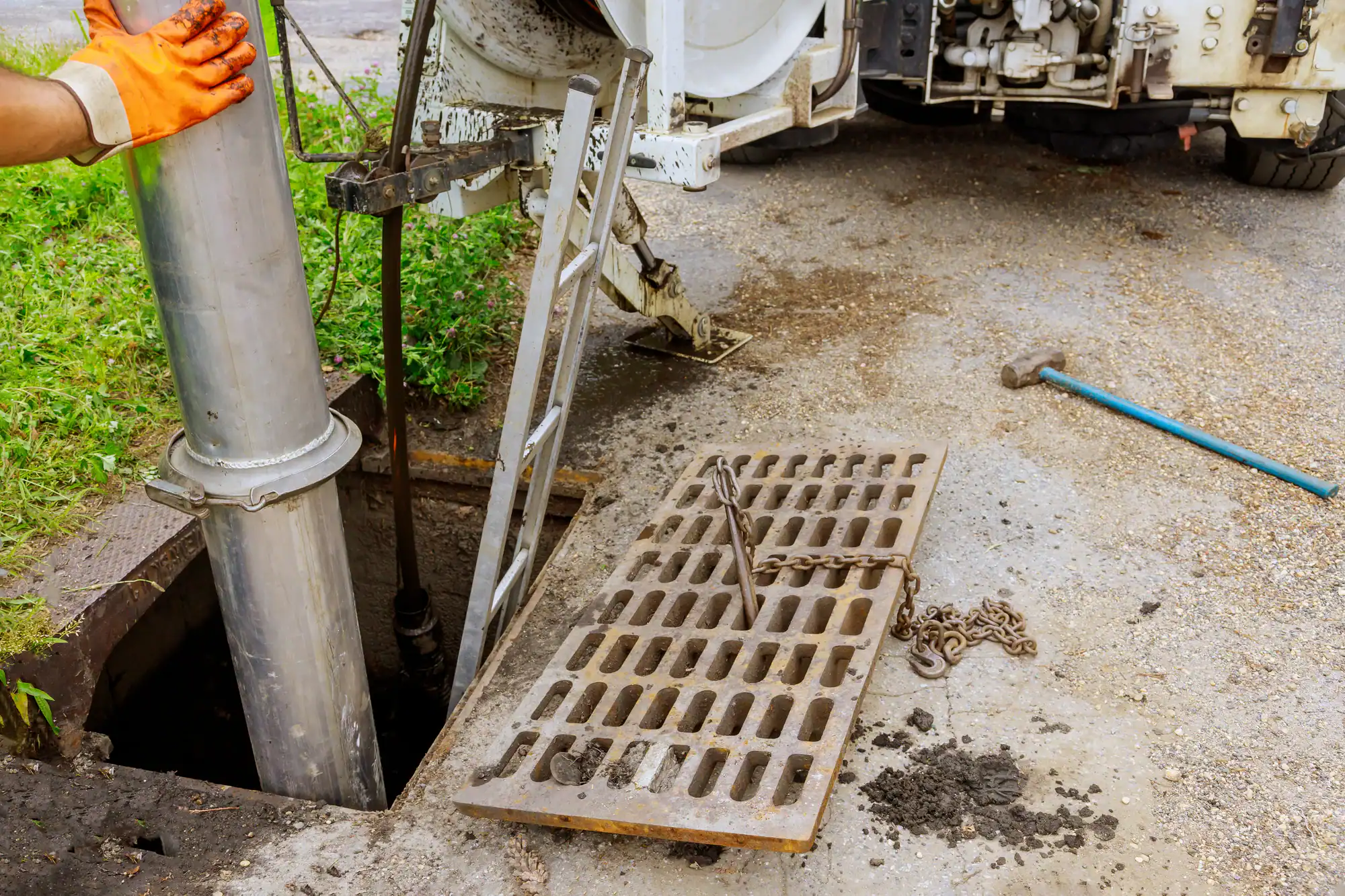
The reason outdoor blockages almost always require a professional is depth and access. The pipes involved are buried, and you can’t see what’s happening without a camera. You also can’t clear a root-infested main line or a collapsed pipe section with anything available at a hardware store. Hydro-jetting — which pushes water through the line at up to 4,000 PSI — is the standard professional method for clearing stubborn outdoor blockages. It’s effective on grease, debris, and even moderate root intrusion in a way that a consumer snake simply isn’t.
There’s also the cesspool connection to consider. In Suffolk County, where cesspools have been the dominant wastewater system for decades, a blocked drain outside can be a direct sign that the cesspool is full, the inlet baffle is damaged, or the connection between the drain line and the cesspool has failed. These aren’t drain problems — they’re system problems, and treating them like drain problems delays the real fix. If you’re seeing wet spots in your yard, sewage odors near your foundation, or outdoor drains that back up after rain, those are signs worth taking seriously and getting properly diagnosed.
The difference between a professional drain service and a guessing game is the camera. Before any work starts, we run a video camera through the line to see exactly what’s causing the blockage, where it is, and what condition the pipe is in. That information determines whether the right solution is a mechanical snake, hydro-jetting, cesspool pumping, or a pipe repair.
This matters more in Suffolk County than in most markets. With roughly 360,000 homes relying on cesspools and aging septic systems, a drain backup here has more possible root causes than it does in a municipality with public sewer. A company that skips the diagnosis and goes straight to clearing the line is treating a symptom. We inspect first — and tell you honestly what we find — so we’re solving the actual problem.
We’ve been doing this work in Suffolk County since 1998, and the diagnostic step is the one we never skip. It’s also how we avoid recommending services you don’t need. If the camera shows a simple clog that a snake will clear, we clear it and tell you what caused it. If it shows root intrusion that requires jetting, we explain that before we quote it. If it shows the drain is clear and the problem is actually a full cesspool, we tell you that too — because sending you a drain cleaning bill for a cesspool problem would be a waste of your money and a short-term fix at best.
For homeowners in communities like Lindenhurst, Islip, Brentwood, or Babylon — where the housing stock is older and cesspools have been in the ground for fifty or sixty years — this kind of thorough, honest assessment isn’t just good service. It’s the difference between a $400 maintenance call and a $20,000 system replacement down the road.
If it’s a single, slow drain and you haven’t tried a plunger yet — try the plunger. If it’s a recurring problem, multiple drains are affected, there’s a gurgling sound or a sewage smell, or you’re dealing with anything outside the house, stop there and call us. The longer a main line blockage or cesspool issue sits, the more it costs to fix.
In Suffolk County, the stakes are a little higher than in most places. You can’t replace a failed cesspool with another cesspool — the county banned that in 2019. Keeping what you have in working order is the most cost-effective path, and catching problems early is how you do that.
If you’re ready to get a straight answer about what’s going on with your drains, we’ve been giving Suffolk County homeowners exactly that since 1998. No upsells, no surprises — just an honest look at what’s happening and what it actually takes to fix it.
Summary:
Article details:
Share: