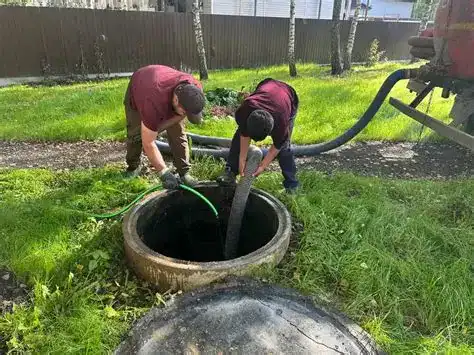
Suffolk County soil conditions cause pre-cast cesspool rings to shift and separate. When gaps form between rings, your yard develops sinkholes and your system fails—often without warning.
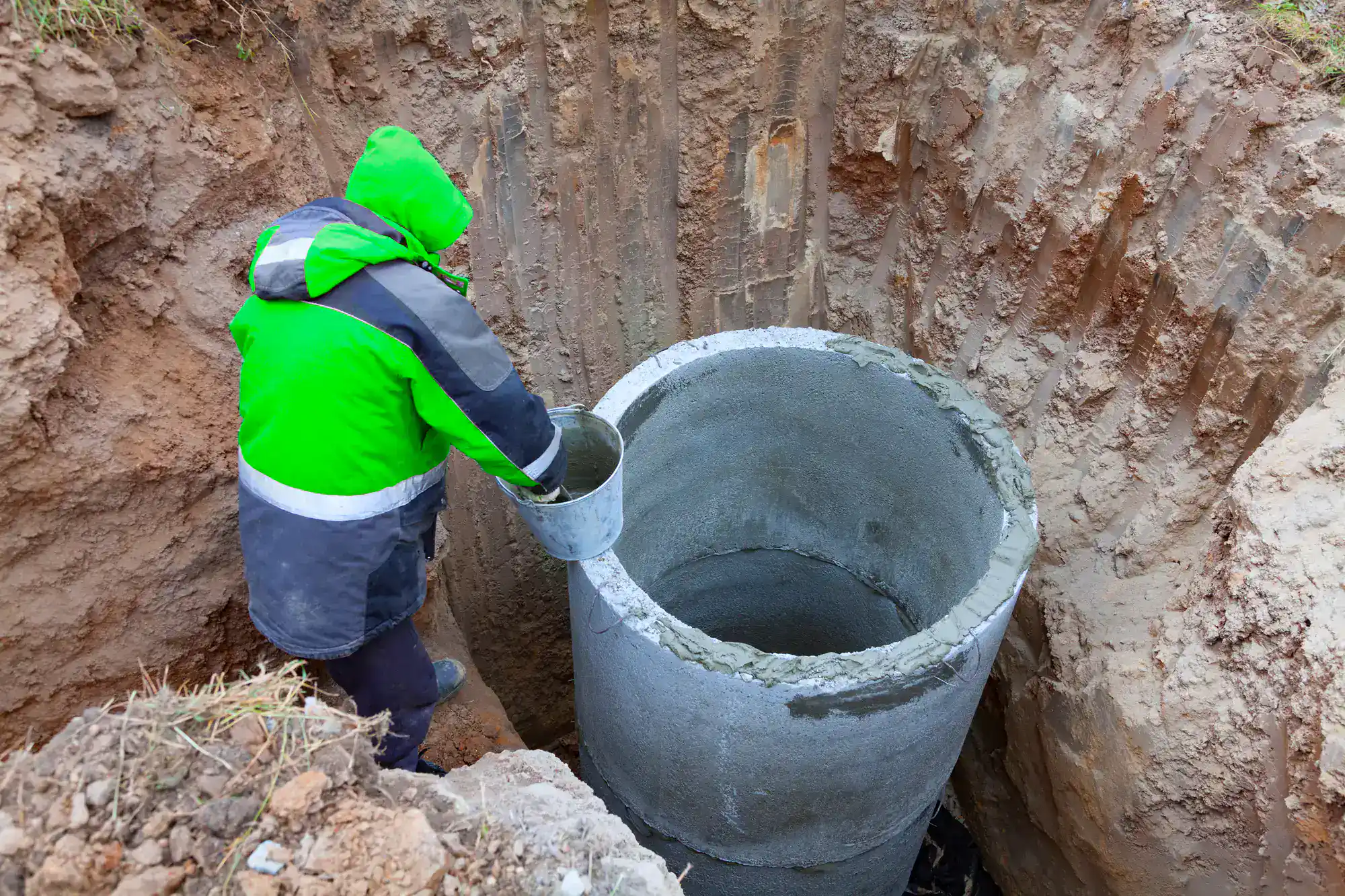
Pre-cast concrete rings don’t move on their own. Something underneath or around them changes first.
Suffolk County, NY sits on a mix of soil types that behave differently under pressure. Sandy soil on the South Shore drains fast but doesn’t provide stable support. Clay-heavy soil in areas like Montauk holds water, creating pressure that pushes against concrete. When the ground around your cesspool gets saturated from heavy rain or a high water table, it softens. Concrete rings that once sat firmly in place start to settle unevenly.
Older installations make cesspool ring shifting worse. Many cesspools built before the 1970s used dry-stacked methods without proper backfill or stabilization. The rings were simply placed in a hole and surrounded with whatever soil came out. Over time, that soil compacts, erodes, or washes away through the perforations in the concrete. Each ring loses support from below or beside it. Gaps appear between rings. The structure starts to lean, tilt, or separate—creating the structural septic issues Suffolk County homeowners dread.

Suffolk County isn’t one uniform soil type. What works in Ronkonkoma doesn’t necessarily work in Montauk or the Hamptons. That’s why cesspool ring shifting happens differently depending on where you live.
Sandy soil dominates much of Long Island. Water moves through it quickly, which sounds good for drainage but creates its own problems. When water flows fast, it carries fine soil particles with it. Over years, this erosion creates voids around your cesspool rings. The concrete that once had solid earth supporting it now has gaps underneath. Rings settle into these voids unevenly, tilting or dropping on one side.
Clay and silt loam appear in pockets across Suffolk County, NY, especially on the North Fork and in eastern areas. These soils don’t drain well. Water sits around your cesspool, creating hydrostatic pressure—basically, water pushing against the concrete from all sides. During wet seasons or after heavy storms, this pressure intensifies. If your cesspool wasn’t designed to handle that constant force, the rings can shift outward or separate at the joints.
The water table matters too. Suffolk County has areas with high water tables where groundwater sits close to the surface. When your cesspool rings are partially submerged in groundwater, the buoyancy effect can actually lift lighter rings or create uneven pressure. Combine that with soil erosion and you’ve got structural septic issues that worsen with every rain.
Freeze-thaw cycles add another layer of damage. Water that seeps into small cracks or gaps between rings freezes in winter, expanding and pushing the concrete apart. When it thaws, the gap remains. This cycle repeats every winter, gradually widening separations between rings until they’re no longer structurally sound. That’s when you start seeing a sinkhole in your yard in Long Island—the visible sign that cesspool ring shifting has progressed to failure.
Not all cesspools are created equal. The type of construction determines how long your system lasts and how it fails when cesspool ring shifting begins.
Block cesspools—common in homes built before 1959—were constructed on-site using concrete blocks stacked and mortared together. The mortar between blocks was never meant to last forever. Water constantly moving through the system breaks down that mortar over time. Once the mortar fails, blocks lose their connection to each other. The entire structure becomes unstable. One failed block can trigger a cascading collapse of the whole cesspool, leaving you with a massive sinkhole in your yard in Long Island.
Pre-cast concrete rings are stronger for cesspool repair. These rings come from a factory, poured as single pieces with reinforcement. They don’t have the weak mortar joints that block cesspools do. But they’re not invincible. The connection between rings—where one sits on top of another—is still a potential failure point. If the rings weren’t installed with proper tongue-and-groove connections or if they’ve shifted over time, gaps open up at these joints.
Here’s what makes pre-cast cesspool rings safer but still vulnerable: they rely on weight and friction to stay in place. When soil conditions change and support disappears from underneath or beside a ring, gravity and ground pressure can push them out of alignment. You end up with rings that are individually intact but collectively unstable because they’re no longer stacked properly. This is the most common form of structural septic issues in Suffolk County.
Pumping out a block cesspool can actually cause it to collapse. The sudden loss of internal pressure from the liquid inside removes the support holding the walls together. The surrounding soil pushes inward and the whole thing caves in. Pre-cast rings handle pumping better because they’re solid pieces, but even they can fail if the surrounding soil has eroded significantly. The rings might drop or tilt when the internal pressure changes during routine maintenance.
This is why you can’t just pump out an old cesspool and expect it to keep working. The structural integrity depends on more than just the concrete. It depends on stable soil support, proper installation, and the condition of the connections between rings. When those factors fail, cesspool ring shifting accelerates until repair or replacement becomes unavoidable.
Want live answers?
Connect with a AAA Dependable Cesspool expert for fast, friendly support.
Cesspool ring problems don’t announce themselves with sirens. They start small and get worse until something obvious breaks—usually your yard or your drainage system.
The first sign most Suffolk County, NY homeowners notice is a depression or “dip” in the yard above the cesspool. This happens when soil falls into gaps between shifted rings or when a ring settles lower than it should. The ground above it sinks to fill the void. If you can see a visible dip, the cesspool ring shifting underneath has been happening for a while.
Greener grass in one spot tells you something different. When rings separate and sewage escapes through the gaps, it acts as fertilizer. That patch of lawn gets nutrients the rest of your yard doesn’t. It grows faster and greener. This isn’t a good thing—it means untreated sewage is reaching the surface soil, and you’re looking at the early stages of a sinkhole in your yard in Long Island.
Slow drains throughout your house suggest your cesspool isn’t accepting water like it used to. When rings shift and gaps appear, soil can wash into the cesspool, reducing its capacity. Or the shifting creates blockages in the inlet pipe. Either way, water backs up because it has nowhere to go. This is when most people finally call for cesspool repair—but by then, the structural damage may be extensive.

That small depression in your lawn isn’t just a cosmetic issue. It’s a red flag that cesspool ring shifting has progressed to structural failure, and something underground has collapsed or is collapsing right now.
Sinkholes from cesspool failure start small. You might notice the ground feels soft when you walk over it. Maybe there’s a slight indentation that wasn’t there before. This happens when soil falls into voids created by shifting cesspool rings. As rings separate or tilt, gaps open up. Soil from above trickles down into these gaps. The ground surface settles to fill the space. Each day, more soil disappears into the void below.
Here’s what makes this dangerous: the process doesn’t stop on its own. Once soil starts falling into gaps, more will follow. Rain accelerates it. Water washes fine particles down into the voids faster than gravity alone. Each rainfall makes the depression bigger and deeper. What started as a barely noticeable dip can become a crater in a matter of months. This is how structural septic issues in Suffolk County progress from minor to catastrophic.
Suffolk County has documented cases of cesspool collapses creating sinkholes large enough to swallow vehicles. In 2017, a cesspool collapse in Huntington created a major sinkhole that killed a worker. These aren’t freak accidents. They’re the predictable result of ignoring early warning signs of cesspool ring shifting. When the concrete rings have shifted enough that major gaps exist, and when enough soil has eroded away, the remaining structure can’t support the weight above it. It collapses inward suddenly.
The risk to people and pets is real. A child playing in the yard could step on ground that looks solid but is actually a thin layer of grass and topsoil covering a void. The ground gives way. They fall into a cesspool filled with sewage. This has happened on Long Island. People have died from cesspool collapses. The danger isn’t theoretical—it’s a documented hazard of ignoring sinkhole warnings in your yard.
If you see any depression in your yard near where your cesspool should be, don’t wait to investigate. Don’t let kids or pets near the area. Don’t drive or park equipment over it. The ground might look stable but be one step away from complete collapse. You need a professional assessment immediately to determine if cesspool ring shifting has compromised the structure and what needs to happen to make the area safe.
Not every case of cesspool ring shifting means you need a complete replacement. But you can’t make that call by looking at your yard. You need to know what’s happening underground to determine if pre-cast cesspool repair is possible or if replacement is your only safe option.
A camera inspection shows the actual condition inside your cesspool. We lower a waterproof camera down through the access point and record video of the interior. You can see if rings have separated, if gaps exist between them, if the structure is tilting, and how much soil has washed in. This visual evidence tells you whether cesspool repair is possible or if the system has reached the end of its life. No guessing. No assumptions. Just facts about your structural septic issues.
Minor cesspool ring shifting might be repairable. If one ring has settled slightly but the others remain stable, and if the gaps are small, it might be possible to stabilize the structure. This involves excavating around the affected area, repositioning the ring, and properly backfilling with engineered material that won’t erode. It’s not a simple job, but it’s less expensive than full replacement. Pre-cast cesspool repair works when you catch the problem early.
Major separation or multiple shifted rings usually mean replacement. When several rings have moved out of alignment, or when large gaps exist that have allowed significant soil infiltration, the structural integrity is compromised. Trying to repair that is like putting a bandaid on a broken bone. The system won’t function properly and will continue to fail. At that point, you’re better off replacing the entire cesspool with a properly installed system that meets current Suffolk County, NY regulations.
Age matters in this decision. If your cesspool is 40 or 50 years old and showing signs of shifting, replacement makes more sense than repair. You’re dealing with concrete that’s been underground for decades, exposed to constant moisture and chemical exposure from sewage. Even if you fix today’s cesspool ring shifting problem, another will appear soon. Replacement gives you a modern system designed to last another 30-40 years without the structural septic issues that plague older installations.
Suffolk County regulations have changed significantly. As of July 2019, any cesspool replacement must include a septic tank before the leaching structure. You can’t just replace a cesspool with another cesspool. This requirement means replacement costs more than it used to, but it also means your new system will treat wastewater better and last longer. The regulations exist to protect Long Island’s sole source aquifer from contamination caused by failing cesspools.
Funding helps offset replacement costs. Suffolk County, NY offers grants up to $10,000 for homeowners who need to upgrade their systems. The state provides additional funding. In some cases, you can get up to $25,000 in combined grants that cover most or all of the installation cost. These programs make replacement affordable even when cesspool repair seems like the cheaper option. When you factor in grants, replacing a failing system with cesspool ring shifting often costs less out-of-pocket than you’d expect.
Cesspool ring shifting isn’t something that fixes itself. The longer you wait after noticing warning signs, the more expensive and dangerous the problem becomes. What starts as minor settling turns into structural septic issues that threaten your property value, your family’s safety, and your wallet.
Suffolk County, NY soil conditions—whether sandy, clay-heavy, or somewhere in between—create ongoing pressure on cesspool structures. Pre-cast concrete rings are strong, but they need stable support to function properly. When that support erodes or shifts, the rings move. Gaps form. Soil washes in. Sinkholes develop in your yard. What started as a minor settlement issue becomes a structural failure that can collapse without warning.
Regular inspections catch cesspool ring shifting early. A professional assessment every few years identifies problems before they become critical. Camera inspections show you exactly what’s happening underground. You get real information to make informed decisions about pre-cast cesspool repair or replacement. You’re not guessing based on a dip in the yard or slow drains. You know the actual condition of your system and what it needs.
If you’re seeing any warning signs—depressions in your lawn, unusually green patches of grass, slow drainage, or soggy areas near your cesspool—don’t wait for a sinkhole in your yard in Long Island to force your hand. We’ve been serving Suffolk County since 1998, helping homeowners understand and solve cesspool problems before they become disasters. Three generations of local experience means we understand how Long Island soil behaves, why cesspool ring shifting happens, and what it takes to fix structural septic issues properly the first time.
Summary:
Article details:
Share: