Hear From Our Clients

Your cesspool doesn’t fail on a Tuesday afternoon when it’s convenient. It backs up on Thanksgiving morning, or the night before you host your daughter’s graduation party. That’s what happens when maintenance gets pushed off year after year.
Regular cesspool pumping in Amityville, NY means your drains flow like they should. Your yard stays clean. Your family doesn’t deal with sewage surfacing in the grass or backing up into the basement. You’re not scrambling to find emergency service when every company is booked solid.
Suffolk County requires documentation for property transfers. If you’re selling, the buyer’s lender will ask for pumping records. If you don’t have them, you’re delaying closing and creating negotiation problems that could’ve been avoided with routine service every few years.
When your cesspool is maintained, you’re protecting the biggest investment most people ever make. You’re avoiding the kind of emergency that turns a standard service call into a full system replacement. And you’re keeping your home safe for the people who live there.
We’ve been handling cesspool pumping in Amityville, NY since 1998. We’re a family-owned operation, which means you’re working with the same small team every time. No call centers. No subcontractors who don’t know your property.
We know Suffolk County soil conditions, local regulations, and what actually works in this area. We’ve pumped thousands of cesspools across Amityville and the surrounding towns. We’ve seen what happens when systems are maintained and what happens when they’re not.
You’ll get straight answers about what your system needs. If something requires attention, we’ll tell you what it is and what it takes to fix it. If your tank is fine, we’ll tell you that too. We don’t oversell, and we don’t create problems that don’t exist.
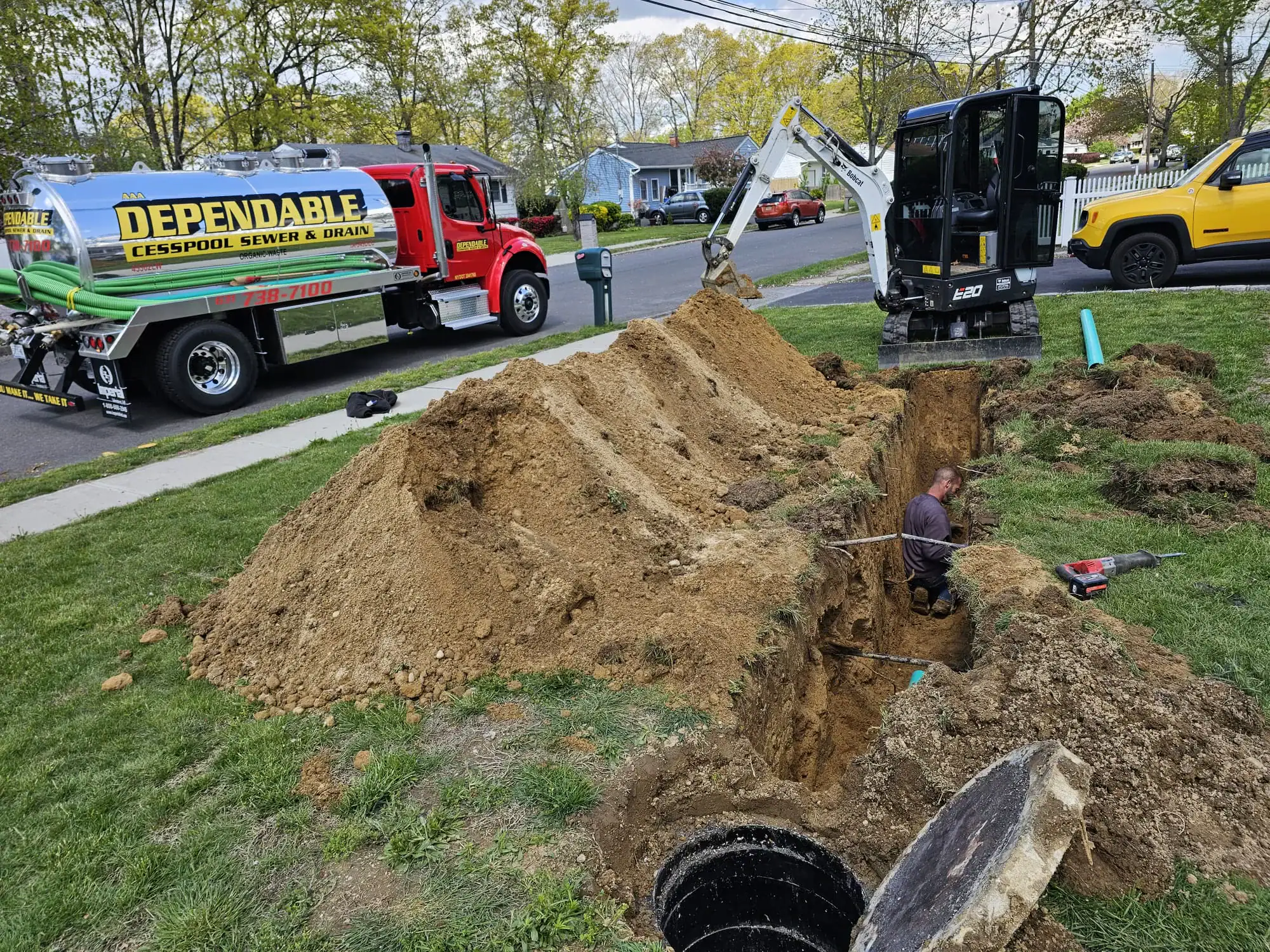
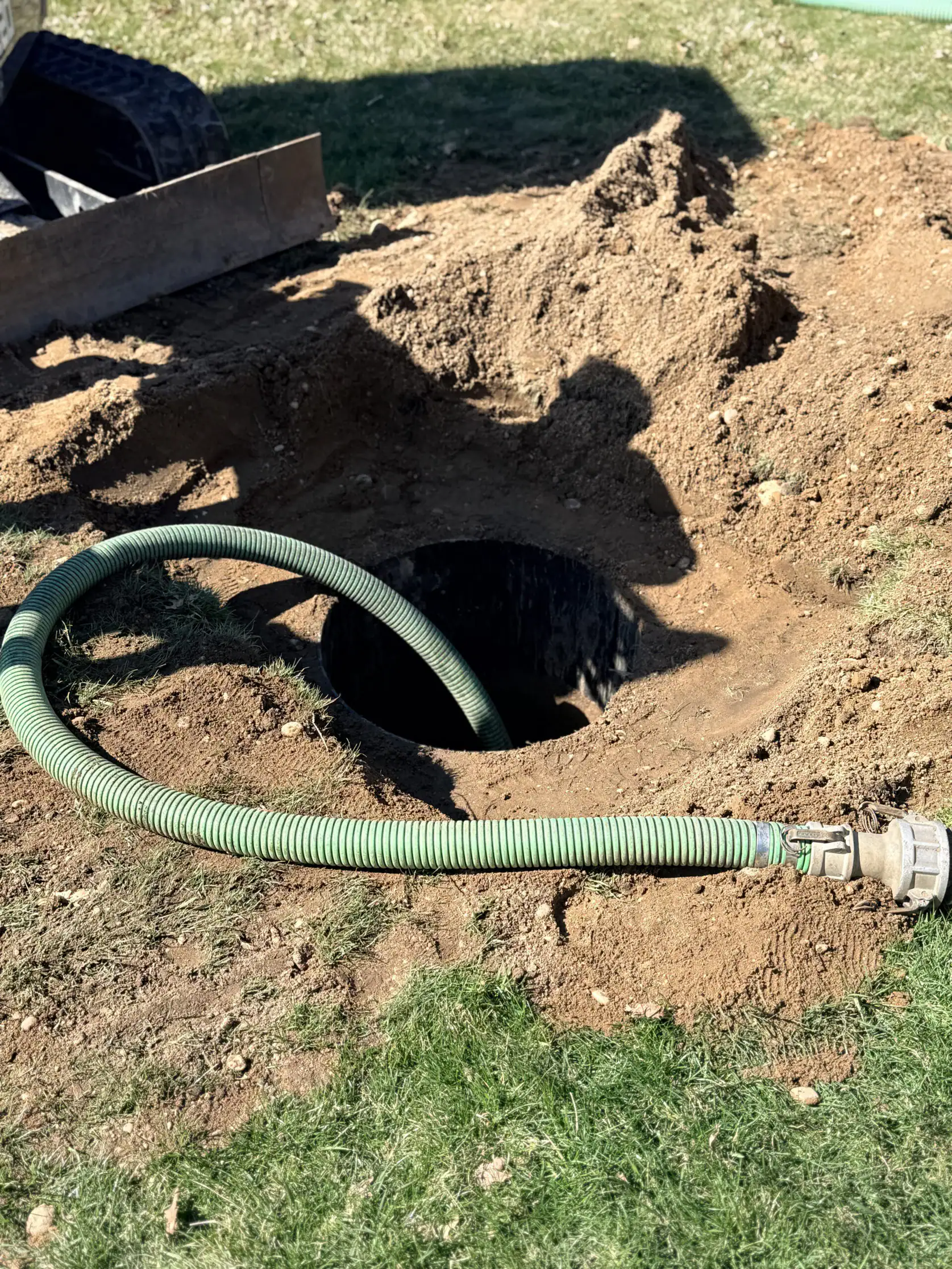
We locate your cesspool, uncover the access lid, and pump out everything inside the tank. Not just the liquid on top. All of it—liquid, sludge, and scum. That’s what complete cesspool pumping service looks like.
After the tank is empty, we flush it with water and pump again. That clears out buildup stuck to the walls and makes sure nothing gets left behind. While we’re there, we inspect the tank’s condition. We check baffles, inlet and outlet pipes, and look for cracks or structural issues.
If we find something that needs attention, you’ll know about it before we leave. We’ll explain what we saw, what it means, and what your options are. Then we document the service for Suffolk County compliance and make sure your property records are up to date.
For emergency cesspool pumping in Amityville, NY, we respond fast. If your system backs up after hours or on a weekend, you’re not waiting until Monday. We handle genuine emergencies within hours, not days.
Ready to get started?
You’re getting complete tank evacuation, not partial pumping. The waste goes directly into our truck and gets transported to a Suffolk County-approved treatment facility. We handle disposal properly, and you get documentation proving it.
We include a full system inspection while we’re on site. That means checking the structural integrity of your tank, making sure baffles are intact, and confirming that your inlet and outlet pipes are functioning correctly. If something’s wrong, you’ll know what it is before it becomes an emergency.
Suffolk County now requires septic system inspections every three years with mandatory reporting to the county database. We make sure your service gets reported correctly so you’re not dealing with compliance issues down the road. If you’re selling your home in Amityville, NY, that documentation matters. Buyers and lenders want proof that your system has been maintained.
Most cesspools in this area need pumping every two to three years depending on household size and water usage. We’ll let you know what makes sense for your property based on what we see during service. Some systems need more frequent attention. Some can go longer. It depends on the tank size and how many people are using it.

Most residential cesspools in Amityville, NY need pumping every two to three years. That timeline changes based on how many people live in your home and how much water you’re using daily. A household of two might stretch it to three years. A family of five might need service closer to every two years.
If you’re running a lot of laundry, taking long showers, or using a garbage disposal regularly, your tank fills faster. The more solids that accumulate, the less capacity your system has to handle wastewater. When the tank gets too full, sewage has nowhere to go except back into your drains or out into your yard.
Suffolk County requires documentation of regular maintenance for property transfers. If you don’t have records showing when your cesspool was last pumped, you’ll need to get it done before closing. That can delay a sale and create negotiation headaches that routine service would’ve prevented.
When you skip cesspool pumping in Amityville, NY, solids build up inside the tank until there’s no room left for wastewater. At that point, sewage backs up into your home through drains, toilets, and basement fixtures. It’s not a minor inconvenience. It’s a health emergency that exposes your family to dangerous pathogens.
You might also see sewage surfacing in your yard. That happens when the tank overflows and waste seeps up through the soil. It smells terrible, it’s a health hazard, and it contaminates the groundwater that supplies drinking water for Suffolk County.
The longer you wait, the worse it gets. Accumulated sludge hardens inside the tank and becomes difficult to remove. In extreme cases, the tank can crack or collapse under the pressure. At that point, you’re not looking at a routine service call. You’re looking at a full system replacement, which is significantly more involved than regular maintenance.
Yes. We respond to emergency cesspool pumping calls in Amityville, NY around the clock. If your system backs up at midnight on a Saturday, you’re not waiting until Monday morning. We handle genuine emergencies within hours.
Sewage backups don’t happen on a convenient schedule. They happen when your tank is full and can’t handle any more wastewater. That could be during a holiday dinner when you’re running the dishwasher and multiple people are using the bathroom. It could be during a rainstorm when groundwater is infiltrating an aging tank.
When you call for emergency service, you’re talking to our team directly. No answering service. No automated system. We assess the situation, give you a realistic timeframe, and get someone to your property as fast as possible. Emergency situations get priority, and we don’t leave you waiting while sewage backs up into your home.
The process is nearly identical. Both cesspools and septic tanks collect wastewater from your home, and both need regular pumping to remove accumulated solids. The main difference is how they handle wastewater after it leaves the tank.
A septic system has a tank that separates solids from liquids, then sends the liquid to a drain field where it filters through soil before reaching groundwater. A cesspool is essentially a holding tank with perforated walls that allow wastewater to seep directly into the surrounding soil without additional treatment.
Many homes in Amityville, NY still rely on cesspools installed decades ago. Suffolk County is pushing for upgrades to modern septic systems because cesspools don’t filter nitrogen and other contaminants before they reach the aquifer. But whether you have a cesspool or a septic tank, the pumping process is the same. We remove all the waste, inspect the system, and document the service for compliance.
If sewage is backing up into your drains, toilets, or basement, that’s an emergency. If you’re seeing wastewater surfacing in your yard or smelling sewage near your tank, that’s also an emergency. Both situations mean your cesspool is full and can’t handle any more waste.
You might notice slow drains throughout your home before a full backup happens. If multiple fixtures are draining slowly at the same time, that’s a warning sign. One slow drain might be a clog in that specific pipe. Multiple slow drains usually mean the cesspool is reaching capacity.
Some homeowners hear gurgling sounds coming from drains or toilets. That happens when air is being pushed back through the plumbing because wastewater has nowhere to go. If you’re noticing any of these signs, don’t wait. Call for emergency cesspool pumping in Amityville, NY before the situation gets worse. The longer you wait, the more likely you are to deal with sewage inside your home.
Yes. Suffolk County requires documentation of regular cesspool maintenance, and we make sure your service gets reported correctly. As of 2018, contractors must hold active Liquid Waste Licenses and report all pumping activities to the health department. We handle that reporting so you don’t have to.
If you’re selling your home in Amityville, NY, the buyer’s lender will likely require proof that your cesspool has been maintained. If you don’t have records, you’ll need to get the tank pumped and inspected before closing. That can delay the sale and create negotiation problems.
Suffolk County is also cracking down on failing systems because of nitrogen contamination in the aquifer. Regular cesspool pumping helps prevent your system from contributing to that problem and helps you avoid fines for non-compliance. We provide documentation showing when your tank was pumped, what we found during inspection, and where the waste was disposed. That paperwork protects you during property transfers and keeps you compliant with county regulations.
Other Services we provide in Amityville