Hear From Our Clients

Your toilets flush without hesitation. Your drains clear fast. There’s no sewage smell creeping through your vents or pooling in your yard.
Real cesspool pumping in Gordon Heights means removing all the sludge, scum, and liquid from your tank—not just skimming the top. We flush and backflush multiple times to break up buildup that’s been sitting there for years. That’s what keeps solid waste from pushing through into your cesspool walls and causing a backup you’ll regret.
Most Gordon Heights homes sit on cesspools built decades ago, and with Suffolk County’s high water table, those systems fill faster than you think. A single-person household might go three to four years between services. A family of four? You’re looking at every year or two. Skip it, and you’re not just risking a soggy lawn—you’re looking at emergency repairs that run thousands of dollars.
When your system’s maintained right, you’re not dealing with surprise backups, health hazards, or frantic calls at midnight. You’re protecting your property, your drinking water, and your sanity.
We’re family-owned, Suffolk County-based, and we’ve been handling cesspool pumping and septic system cleaning in Gordon Heights since before most companies had websites. We’re licensed with Suffolk County Consumer Affairs, and we’re not here to upsell you on services you don’t need.
Gordon Heights has unique soil conditions and water table challenges that affect how your cesspool functions. We know which streets flood first, which neighborhoods need more frequent maintenance, and what regulations you’re actually required to follow when it comes time to sell or renovate your home.
We offer military, first responder, and senior discounts because this community matters to us. Our reputation depends on your neighbors, and we treat every job like it’s our own house. No door-to-door sales tactics. No surprise fees. Just honest work from a small team that answers the phone when you call.

First, we locate your cesspool and assess the situation. Most Gordon Heights homes have 1,000 to 1,500-gallon cesspools, and we need to see how full yours is before we start pumping.
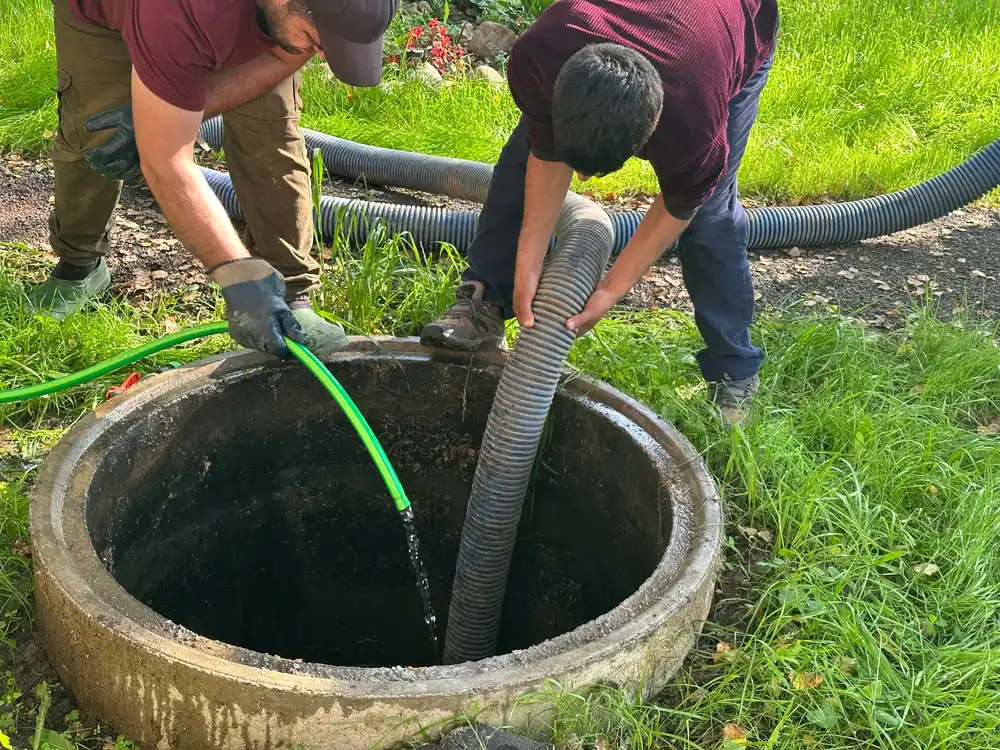
Then we use our vacuum truck to remove everything—liquid, sludge, and scum. Not just the easy stuff floating on top. We’re pulling out the compacted waste at the bottom that causes your real problems. After that, we flush the tank with clean water and backflush it to break up anything stuck to the walls or baffles.
Once the tank’s empty and clean, we inspect the condition of your system. If we see cracks, collapses, or signs that your cesspool’s failing, we’ll tell you. If it looks good, we’ll let you know when you should schedule your next service based on your household size and usage.
We haul the waste to a licensed disposal facility—because Suffolk County sits on a sole-source aquifer, and improper disposal contaminates the same groundwater you’re drinking. We document everything for your records, especially if you’re planning to sell or renovate. Suffolk County requires proof of regular maintenance for permits and property transfers.
The whole process takes a couple of hours, depending on access and tank size. You’ll know what we’re doing, why we’re doing it, and what to expect next time.
Ready to get started?
When you schedule cesspool maintenance in Gordon Heights, you’re getting complete waste removal, tank flushing, system inspection, and proper disposal. You’re also getting documentation that proves your system’s been serviced—something Suffolk County requires if you’re refinancing, selling, or pulling renovation permits.
Standard cesspool pumping costs between $400 and $700 depending on tank size and how much waste we’re removing. That’s a fraction of what you’ll pay if your system backs up into your house or contaminates your yard. Emergency repairs average $3,000 to $8,000, and that’s if the damage is caught early.
Gordon Heights homeowners deal with specific challenges. Your water table’s high, your soil drains slower than other parts of Suffolk County, and your cesspools are aging. Most were installed in the 1960s and 70s, and if yours is pre-1972, it’s likely made of cinder blocks—which means it’s at risk of collapse.
We also offer emergency cesspool service when you’re already dealing with a backup. Sewage coming up through your drains or toilets means your tank’s full and there’s nowhere for new waste to go. We answer calls 24/7 and can usually get to you within a couple of hours, because we know how fast a backup turns into a health hazard.
If you’re seeing slow drains, hearing gurgling from your toilets, or smelling sewage in your house or yard, don’t wait. Those are warning signs, not minor annoyances. Catching problems early saves you money and keeps your home livable.

Most Suffolk County experts recommend cesspool maintenance every three to five years, but that’s a general guideline—not a rule that fits every household. If you live alone, you might stretch it to every three or four years. If you’ve got a family of four or more, you’re looking at every one to two years.
Gordon Heights sits on soil that doesn’t drain as quickly as other parts of Long Island, and the water table here runs high. That means your cesspool fills faster than it would in a drier area. Add in older systems that weren’t built to modern standards, and you’re dealing with more frequent maintenance needs than newer neighborhoods.
The best way to know your schedule is to have your tank inspected. We’ll measure how much solid waste has built up and give you a realistic timeline based on your household size, water usage, and system condition. Waiting until you see backups or smell sewage means you’ve already gone too long.
Cesspools and septic systems both collect wastewater, but they work differently. A cesspool is basically a large underground pit with perforated walls that let liquid waste seep into the surrounding soil. A septic system uses a tank to separate solids from liquids, then sends the liquid to a drain field for further treatment.
In Gordon Heights, most older homes have cesspools because that’s what was standard before the 1970s. Suffolk County banned new cesspool installations in 2019, so if your system fails, you’ll need to upgrade to a septic tank—not replace it with another cesspool.
The pumping process is similar for both. We remove all the waste, flush the tank, and inspect for damage. But cesspools tend to fill faster because they don’t separate waste as efficiently as septic systems. That’s why cesspool maintenance in Gordon Heights often needs to happen more frequently than septic tank pumping in newer developments.
If you’re not sure which system you have, we can tell you during the inspection. Knowing the difference matters when it comes to maintenance schedules and understanding what your home will need long-term.
If you’re seeing raw sewage coming up through your drains or toilets, you’ve got an emergency. That means your cesspool’s completely full and there’s no room for new waste. Every time someone flushes or runs water, it’s backing up into your house instead of draining into the tank.
Other warning signs include multiple slow drains throughout your home, gurgling sounds when you flush, or a sewage smell inside your house or yard. Wet, soggy patches of grass over your cesspool are another red flag—that’s liquid waste surfacing because your system can’t absorb any more.
We answer emergency cesspool calls 24/7 in Gordon Heights because we know how fast these situations escalate. Sewage backups are health hazards, especially if you’ve got kids or pets. The longer waste sits in your home, the more damage it causes to floors, walls, and air quality.
If you’re dealing with any of these issues, don’t wait until morning or try to fix it yourself with drain cleaner. Call us. We’ll get there fast, assess what’s happening, and get your system pumped so you can use your plumbing again. Most backups can be resolved within a few hours if we catch them before they cause structural damage.
Start with licensing. Any company pumping cesspools in Suffolk County should be licensed with Suffolk County Consumer Affairs. If they can’t show you proof, walk away. You also want insurance, because cesspool work involves heavy equipment and underground systems that can collapse if handled wrong.
Ask how they pump. Real cesspool cleaning means removing all the waste—not just the liquid on top. If a company’s offering a suspiciously low price, they’re probably skimming the tank and leaving the sludge behind. That doesn’t solve your problem. It just delays it.
Look for local experience. Gordon Heights has specific soil conditions, water table challenges, and aging infrastructure that affect how cesspools perform. A company that’s been working in Suffolk County for decades will know what to expect and how to handle problems that come up during the job.
Avoid door-to-door sales and companies offering free chemical treatments. Legitimate cesspool companies don’t need to hunt for customers by knocking on doors, and free chemicals are usually watered-down products that don’t do anything except get you to say yes to a service call. Honest pricing, transparent communication, and a local reputation matter more than flashy ads or aggressive sales tactics.
Yes. Suffolk County requires proof of regular cesspool maintenance if you’re selling your home, refinancing, or pulling permits for renovations. That means you need receipts or service records showing that your system’s been pumped by a licensed contractor.
If you can’t provide documentation, your property transfer or permit application can get delayed—or denied. Buyers and lenders want to know your cesspool’s been maintained because a failing system is a liability. If there’s no record of service, they’ll assume it hasn’t been done.
We provide detailed records for every job we complete, including the date of service, amount of waste removed, and condition of your system. Keep those records with your home maintenance files. If you’ve lived in your Gordon Heights home for years and don’t have past records, start fresh now. Regular maintenance from this point forward will show that you’re taking care of the property.
Suffolk County’s also cracking down on nitrogen pollution from aging cesspools, so expect more oversight in the coming years. Having a documented maintenance history protects you if regulations tighten or if your system needs to be upgraded. It’s not just about passing inspections—it’s about proving you’ve been responsible with a system that directly affects Long Island’s drinking water.
No. Additives don’t replace cesspool pumping in Gordon Heights or anywhere else. Some products claim they’ll break down solids or extend the time between pumpings, but they don’t remove waste—they just shift it around or temporarily liquefy it.
Your cesspool still fills with solid waste over time, and that waste has to be physically removed. Additives can’t do that. In some cases, they actually make things worse by breaking down solids into smaller particles that clog your cesspool walls and reduce how well the system drains.
Suffolk County’s regulations are built around regular pumping because that’s the only way to prevent system failure and groundwater contamination. If a company’s offering you free chemicals or telling you that additives will cut your maintenance costs, they’re either uninformed or trying to upsell you on something that doesn’t work.
Stick with the basics. Pump your cesspool on schedule, watch what you flush, and don’t dump grease or chemicals down your drains. That’s what keeps your system running and your home safe. If someone’s pushing additives as a substitute for real maintenance, find a different company.
Other Services we provide in Gordon Heights