Hear From Our Clients

Your drains flow. Your toilets flush. Your lawn doesn’t have that smell. You’re not wondering if today’s the day something goes wrong.
That’s what regular cesspool pumping gets you in Old Field. Not just a working system, but one that stays working without surprise failures or emergency calls that start at double the normal rate.
Most homeowners in Suffolk County wait until there’s a problem. By then, you’re looking at sewage backup, contaminated groundwater, or worse—a full system replacement that runs $15,000 to $30,000. Regular pumping costs a fraction of that and catches the small issues before they empty your savings account.
Your cesspool handles everything that goes down your drains. When it’s full, that waste has nowhere to go but back into your home or into the ground near your foundation. Neither option protects your property value or keeps your family safe.
We’re a family-owned business serving Old Field and Suffolk County for over 25 years. We’re licensed with Suffolk County Consumer Affairs and carry the insurance your property deserves.
Old Field homes sit on some of the most valuable property in Suffolk County, with median home values over $1.2 million. Your cesspool system protects that investment. We understand what’s at stake when you’re maintaining a high-value property in a community where 84% of residents own their homes.
We’re not the biggest operation. We’re the one that shows up, does the work right, and keeps detailed records that matter when you need them—whether that’s for a property transfer, a renovation permit, or just knowing your system is in good shape.

We start with an assessment, not a sales pitch. We locate your cesspool, check the access points, and measure what’s actually in there. That tells us what needs to happen and what it’ll cost before any work starts.
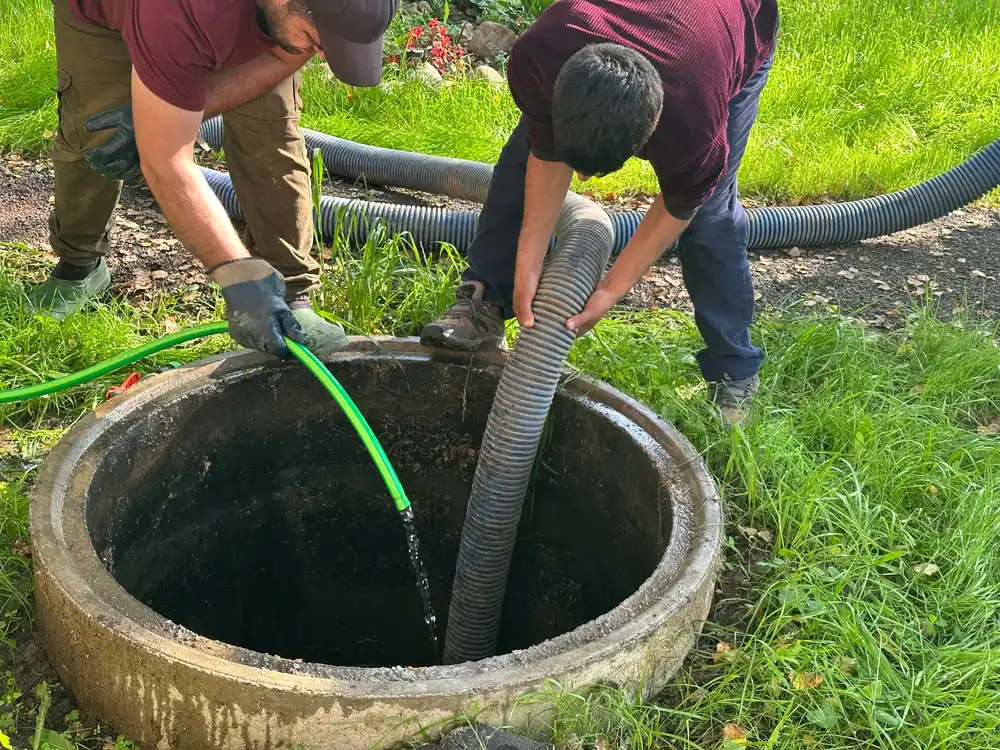
The pumping itself removes all the accumulated waste and sludge. We’re pulling out everything that’s built up since your last service—or longer if it’s been a while. Our equipment handles the job completely, and we’re not leaving until the tank is empty.
While we’re pumping, we’re also inspecting. We look for cracks, shifting, tree root infiltration, and any damage that could cause problems down the line. If something needs attention, you’ll know about it with a clear explanation of what it means and what your options are.
After the work is done, you get documentation. That’s the waste volume we removed, the condition of your system, and the date of service. Keep those records. Suffolk County requires them for property transfers, and they’re proof your system has been maintained properly.
Ready to get started?
Cesspool pumping in Old Field isn’t just about emptying a tank. You’re getting a complete system inspection, proper waste removal, and documentation that protects your property value.
Suffolk County sits on a sole-source aquifer. That means every drop of water you drink comes from the ground beneath us. When cesspools overflow or fail, that contamination goes straight into our drinking water supply. Nitrogen pollution in our aquifer increased 200% between 1987 and 2005. Regular septic system cleaning prevents you from contributing to that problem.
Old Field’s older homes—most built around 1970—often have cesspool systems that need more frequent attention than newer septic tanks. The sandy soil drains well, but it also means contamination spreads faster when something goes wrong. We understand how local soil conditions affect your system and what that means for your maintenance schedule.
Most Suffolk County experts recommend pumping every 3-5 years, but that varies based on household size and water usage. A single person might go 3-4 years between services. A family of four might need it every 1-2 years. We’ll tell you what makes sense for your situation, not what makes us the most money.

Most Old Field homeowners need cesspool pumping every 2-3 years, but your specific timeline depends on how many people live in your home and how much water you use. A household of one or two people might stretch it to 3-4 years. Four or more people, and you’re looking at every 1-2 years.
The age of your home matters too. Old Field’s housing stock has a median build year of 1970, and older cesspool systems often need more frequent maintenance than modern septic tanks. If you’re not sure when yours was last pumped, that’s a sign it’s probably time.
Waiting too long costs more than just the service call. When a cesspool overflows, you’re dealing with sewage backup in your home, contaminated groundwater, and potential damage to your system that turns a $400 maintenance call into a $20,000 replacement project.
Slow drains throughout your house are usually the first warning. If multiple drains are backing up at once, your cesspool is likely full. Sewage odors in your yard or near your foundation mean waste is coming up through the ground instead of staying contained.
Wet spots or unusually green patches in your lawn can indicate your cesspool is overflowing underground. That’s contaminated water surfacing where it shouldn’t. If you’re seeing any of these signs, don’t wait—this is when routine maintenance becomes emergency cesspool service, and emergency calls cost significantly more.
Gurgling sounds when you flush or run water suggest air is trapped in your lines because the cesspool can’t accept more waste. Toilets that won’t flush or drains that back up with sewage are past the warning stage. At that point, you need immediate service to prevent health hazards and property damage.
Suffolk County requires documentation because our entire water supply comes from the ground beneath us. We’re designated as a sole-source aquifer, which means there’s no backup water source if contamination spreads. Regular cesspool maintenance and proper records prove you’re not contributing to groundwater pollution.
When you sell property in Old Field, buyers and their lenders want proof the cesspool system has been maintained. Missing records can delay closing or kill a sale entirely. Renovation permits often require showing your system is up to code and properly maintained before Suffolk County approves construction work.
The county can also fine property owners for septic violations. If your system fails and creates a health hazard, you’re liable. Detailed service records from a licensed contractor show you’ve been responsible about maintenance. That documentation protects you legally and financially. Keep every receipt and inspection report—they’re worth more than you think.
Routine cesspool pumping in Old Field is scheduled maintenance before problems start. You’re paying $300-600 to keep your system working properly. Emergency cesspool service happens when something’s already wrong—sewage backing up into your home, complete system failure, or contamination spreading into your yard.
Emergency calls often start at double the routine rate, and that’s before you factor in the damage already done to your property. If sewage has backed up into your home, you’re also paying for cleanup, potential health risks, and the stress of dealing with a crisis that could have been prevented.
The work itself is similar—we’re still pumping out waste and inspecting your system. But emergency service means we’re responding to a failure that’s already costing you money and creating health hazards. Routine maintenance catches problems early, when they’re small and cheap to fix. Emergency service is what happens when small problems become big ones because they were ignored too long.
Yes, and here’s why that matters in Suffolk County. Licensed contractors are bonded and insured, which protects you if something goes wrong during service. We’re also required to dispose of waste properly at approved facilities, not just dump it somewhere cheap and convenient.
Suffolk County Consumer Affairs licenses cesspool companies that meet specific standards for equipment, training, and environmental compliance. Unlicensed operators might charge less, but they’re cutting corners somewhere—usually on proper disposal, insurance, or the quality of work. That saves them money and costs you later.
Licensed contractors also provide documentation that holds up when you need it. If Suffolk County asks for proof of proper maintenance, or if you’re selling your property and need to show service records, documentation from a licensed company carries weight. Records from an unlicensed operator might not be accepted, which means you could end up paying for the work twice—once to the unlicensed guy, and again to a licensed contractor who can provide proper documentation.
Absolutely. When solid waste builds up too high in your cesspool, it starts clogging the outlet pipes and the surrounding soil that’s supposed to absorb liquid waste. Once that soil gets saturated with solids, it stops draining properly. At that point, you’re not just looking at pumping—you might need excavation work to restore proper drainage.
Excess pressure from an overfull cesspool can crack the tank walls or shift the structure, especially in older systems common throughout Old Field. Tree roots seek out moisture and can infiltrate a struggling cesspool, causing damage that requires expensive repairs beyond basic pumping and maintenance.
The bacteria that break down waste in your cesspool need room to work. When the tank is too full, that biological process stops functioning properly, and you end up with a system that’s essentially just a holding tank instead of a treatment system. Regular pumping keeps everything working as designed and prevents the kind of damage that turns a $400 maintenance job into a $15,000 replacement project.
Other Services we provide in Old Field