Hear From Our Clients
You’re not calling someone back in three months because the same drain clogged again. The shower drains fast enough that water doesn’t pool around your ankles. Your basement floor drain isn’t backing up sewage during heavy rain.
That’s what thorough drain cleaning does. Not just punching a hole through the clog—actually cleaning the line so it stays clear.
Most homes in Northport were built before 1980. That means clay pipes that are past their 50-60 year lifespan. Add mature oaks and pines with roots constantly searching for water, and you’ve got the perfect recipe for recurring blockages. A real cleaning addresses the root mass, the grease buildup, the sand infiltration—not just the symptom you’re seeing at the surface.
You get your time back. No more standing water in sinks. No more scheduling your day around which drains you can actually use. Just a system that works the way it’s supposed to.
We’ve been handling drain problems in Northport since 1998. Not as a franchise or a national chain—as a family-owned business that understands what Suffolk County soil does to sewer lines.
We know the difference between a quick fix and a real solution. We’ve seen what happens when roots from a 60-year-old oak infiltrate clay pipes. We understand why your basement drain backs up every spring when the water table rises.
That local knowledge matters when you’re dealing with drainage issues specific to Long Island. We’re not guessing. We’re not learning on your property. We’re applying decades of experience to problems we’ve solved hundreds of times before—in homes just like yours, in neighborhoods we’ve served for over 25 years.

First, we assess what’s actually happening. That usually means running a camera through your line to see the blockage, identify root intrusion, check for pipe damage, and locate the problem down to the foot. No guessing. No unnecessary digging.
Once we know what we’re dealing with, we choose the right approach. For root masses and heavy buildup, that’s typically hydro jetting—high-pressure water that scours the entire pipe interior clean. For simpler clogs, mechanical snaking with the right size cable and cutting head. The goal is always the same: remove the blockage completely and restore full flow.
After the line is clear, we run the camera again. You see the before and after. You know exactly what was removed and what your pipes look like now. If there’s damage or deterioration that needs attention, you’ll know that too—with footage showing exactly where and why.
You’re not left wondering if the problem is really fixed or if it’ll be back next month. You see the work. You understand what happened. You make informed decisions about your property.

Ready to get started?
Camera inspection before and after cleaning. That’s standard, not an upsell. You need to see what’s blocking your line and confirm it’s actually cleared.
The cleaning itself uses equipment sized for your specific pipes—residential drains need different tools than commercial lines. We carry multiple cable sizes, cutting attachments for different materials, and hydro jetting equipment that can handle everything from grease to established root systems.
For Northport homes, that often means addressing tree root infiltration. Roots from mature trees don’t just clog your line—they grow into it through cracks and joints, expanding until water can barely pass. Removing them requires cutting them out completely and cleaning the pipe walls so new growth takes longer to re-establish.
If you’re on a cesspool or septic system—like roughly 70% of Suffolk County homes—we handle the unique drainage challenges that come with that setup. Main line blockages that cause sewage backup through floor drains. Slow-draining fixtures that indicate your cesspool is reaching capacity. Sand infiltration that builds up over time in your lines.
You get 24/7 emergency service when you need it. No extra charges for nights, weekends, or holidays. Because a backed-up sewer line at 9 PM on a Saturday is still an emergency, and you shouldn’t pay double because of when it happened.
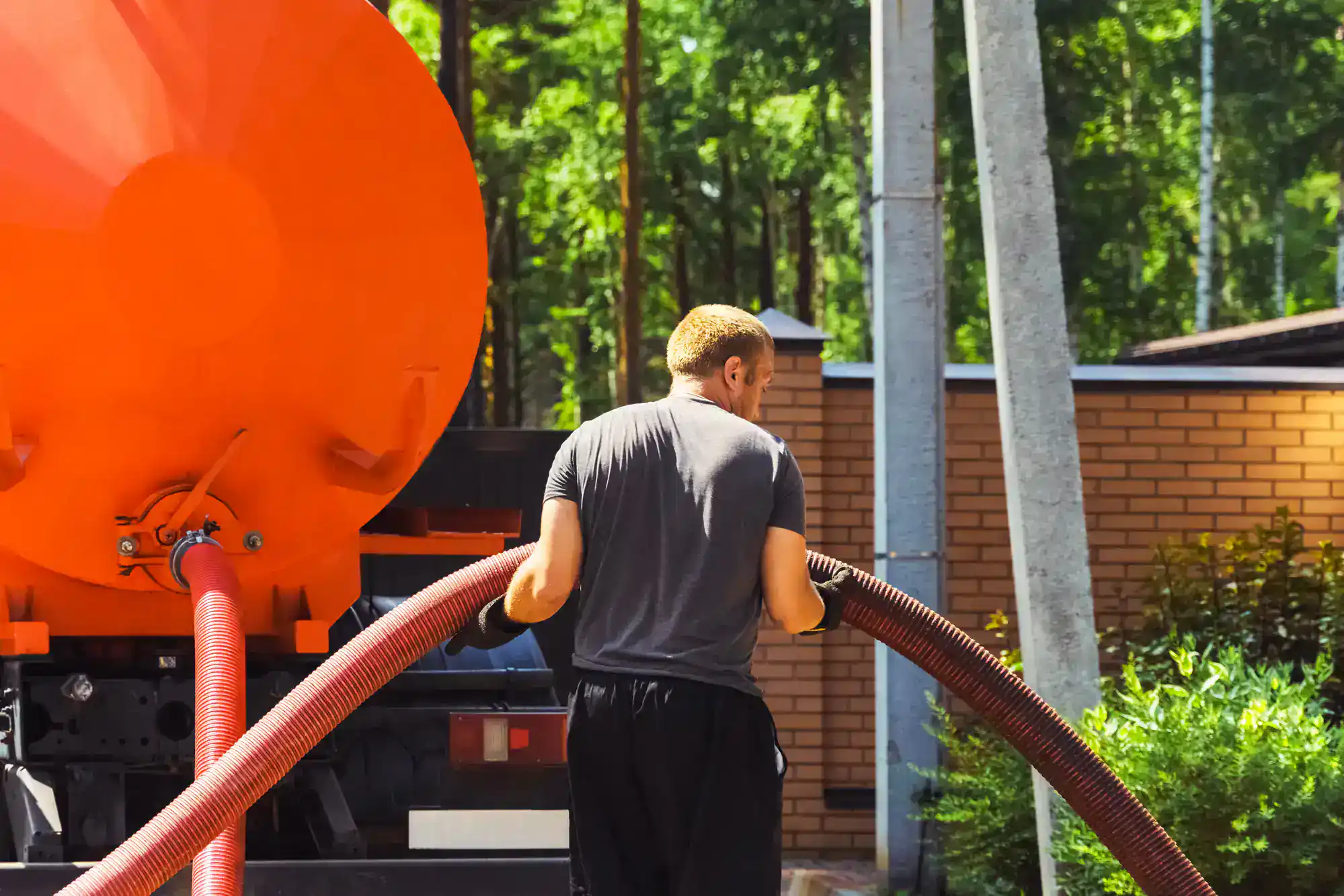
If a plunger or basic drain cleaner fixes it and it stays fixed, you probably didn’t need us. But if the same drain clogs repeatedly, if multiple fixtures are draining slowly, or if you’re seeing sewage backup through floor drains or the lowest fixtures in your home—that’s a main line problem.
Main line issues don’t resolve with a plunger. The blockage is too far down the system, often 30-50 feet from your house where your sewer line runs under your yard. That’s where tree roots infiltrate. That’s where decades of grease and debris accumulate. That’s where clay pipes crack and separate.
You’ll also need professional help if you hear gurgling from drains when you flush a toilet, if water backs up in your tub when you run the washing machine, or if there’s a sewage smell coming from drains. Those are signs that your main line is restricted and air can’t flow properly through the system. A camera inspection will show exactly what’s happening and where.
Snaking uses a rotating cable with a cutting head to bore through a blockage and restore flow. It’s effective for many clogs, especially in smaller lines. But it punches a hole through the obstruction—it doesn’t necessarily remove everything from the pipe walls.
Hydro jetting uses high-pressure water (1,500 to 4,000 PSI) to scour the entire interior of the pipe. It removes root masses, cuts through grease buildup, flushes out sand and debris, and leaves the pipe as clean as it can be without replacing it. The water pressure is strong enough to cut through established roots and scrape away years of accumulated material.
For Northport homes with older clay pipes and mature trees, hydro jetting usually delivers longer-lasting results. It addresses the root system that’s invaded your line, not just the immediate blockage. It removes the grease layer that’s been building up for decades. It clears out the sand that infiltrates through separated joints.
The camera inspection beforehand tells us which approach makes sense for your specific situation. If your pipes are severely deteriorated, high-pressure jetting might not be appropriate. If you’ve got a simple clog in a newer line, snaking might be all you need.
Usually because the cleaning didn’t address the actual problem—just the symptom. If someone snaked your drain and got water flowing again but didn’t remove the root mass or clean the pipe walls, you’re looking at a temporary fix. The roots are still there. The grease buildup is still there. The blockage reforms.
In Northport, tree roots are the most common culprit for recurring clogs. Roots from oaks, maples, and pines seek out the moisture in your sewer line. Once they find a crack or separated joint in your clay pipes, they grow aggressively inside the line. Cutting a hole through them doesn’t stop them—they grow back, often within months.
The other common cause is deteriorating pipes. If your clay sewer line has cracks, separations, or sections that have collapsed, debris will continue catching at those points no matter how many times you clear the line. The camera inspection shows whether you’re dealing with a cleaning issue or a pipe integrity issue.
Sometimes it’s also about what’s going down your drains. Grease, “flushable” wipes, excessive toilet paper, or other materials that don’t break down will keep causing problems. But if you haven’t changed your habits and suddenly drains are clogging regularly, something in your system has changed—and that usually means roots or pipe damage.
For most Northport homes, every two to three years makes sense as preventive maintenance—especially if you have older clay pipes and large trees within 20 feet of your sewer line. That schedule catches root intrusion before it becomes a complete blockage. It removes buildup before it restricts flow enough to cause backups.
If you’re already dealing with recurring issues, you might need more frequent service until the underlying problem is addressed. Some properties with aggressive root systems need annual cleaning. Some homes with newer PVC lines and no nearby trees might go five years without issues.
The camera inspection gives you a realistic timeline. If we clean your line and the footage shows early root intrusion at several joints, you’ll probably need service again in 18-24 months. If your pipes are clear with minimal buildup, you might be fine for three to four years.
Emergency cleaning when your drains are completely blocked costs more in stress and potential water damage than scheduled maintenance. You’re also more likely to need service on a weekend or holiday when the problem becomes urgent. Preventive cleaning lets you schedule service at your convenience and catch problems while they’re still manageable.
Yes. Roots don’t just clog your line—they break it apart. They start small, sending hair-thin roots through cracks or gaps at pipe joints. Once inside, they have constant access to water and nutrients, so they grow aggressively. As they expand, they widen the cracks. They separate joints. They can eventually collapse sections of pipe.
Oak and maple roots are particularly aggressive. They can grow several inches in diameter inside your sewer line. The camera footage often shows root masses so thick you can barely see the pipe behind them. That’s not something you can flush away or dissolve with chemicals.
In Northport, where many homes were built in the 1960s and 70s with clay sewer pipes, this is extremely common. Clay pipes were designed to last 50-60 years. Most are now past that lifespan. The joints weren’t sealed the way modern PVC is—they were meant to allow some seepage. That made them vulnerable to root intrusion from day one.
If you have large trees in your yard and your home is more than 40 years old, there’s a strong chance roots have found your sewer line. The question is how much damage they’ve done. A camera inspection shows the extent of the problem. Sometimes cleaning is enough. Sometimes you’re looking at pipe repair or replacement for damaged sections. But ignoring it doesn’t make it better—roots don’t stop growing.
Call us for emergency service. A backed-up sewer line isn’t something you wait out until Monday morning. Sewage in your home is a health hazard, especially if you have kids or elderly family members. It can damage flooring, walls, and belongings. The longer it sits, the worse it gets.
We handle emergency drain cleaning 24/7 in Northport, NY without charging extra for the time or day. A sewer backup at 2 AM costs the same as one at 2 PM. You’re already dealing with a stressful situation—you shouldn’t pay a premium because of when it happened.
While you’re waiting for service, stop using water. Don’t flush toilets, run sinks, or use the washing machine. Every gallon you send down the drain has nowhere to go if your main line is blocked, which means it’s coming back up through the lowest point in your system—usually a basement floor drain or first-floor toilet.
If sewage has already backed up, keep people and pets away from the affected area. Don’t try to clean it yourself before the line is cleared—you’ll just be moving contaminated water around, and it’ll keep coming until the blockage is removed. Once we’ve cleared the line and confirmed flow is restored, then you can address cleanup safely.
Other Services we provide in Northport