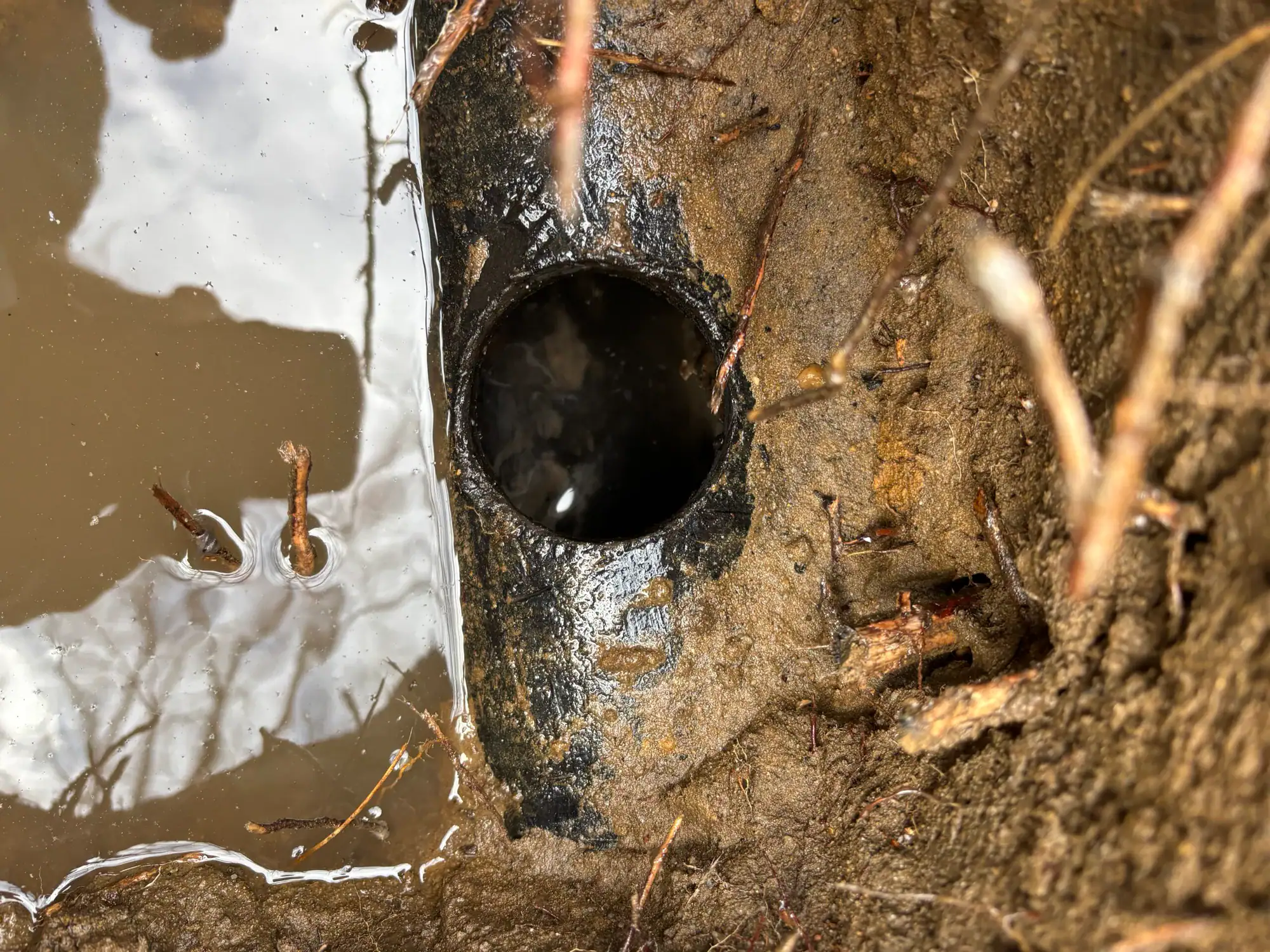
Drain field failing? Before you spend a dollar, find out what Suffolk County homeowners actually need — and what they often don't.

Slow drains. A smell in the backyard you can’t quite place. A wet patch of grass that wasn’t there last spring. Something’s wrong, and you’re trying to figure out how bad it really is — and what it’s going to cost you.
Here’s the honest answer: it depends on what’s actually failing. Not every septic problem means a full drain field replacement, and not every drain field problem means you need to tear out your entire system. In Suffolk County, the decision is also shaped by local regulations that most homeowners don’t know exist until they’re already in the middle of a problem. This page walks you through what’s what — clearly, without the upsell.
The drain field — sometimes called a leach field — is the part of your septic system where treated wastewater from the tank gets slowly absorbed into the soil. When it fails, you’ll usually notice it in a few ways: standing water or soggy ground over the field, sewage odors in the yard, slow drains throughout the house, or in worse cases, sewage backing up inside.
But here’s what a lot of homeowners don’t realize: the drain field and the septic tank are separate components. One can fail while the other stays perfectly functional. Before anyone starts digging, the right move is to figure out which part of the system is actually the problem — because replacing the wrong thing is an expensive mistake.
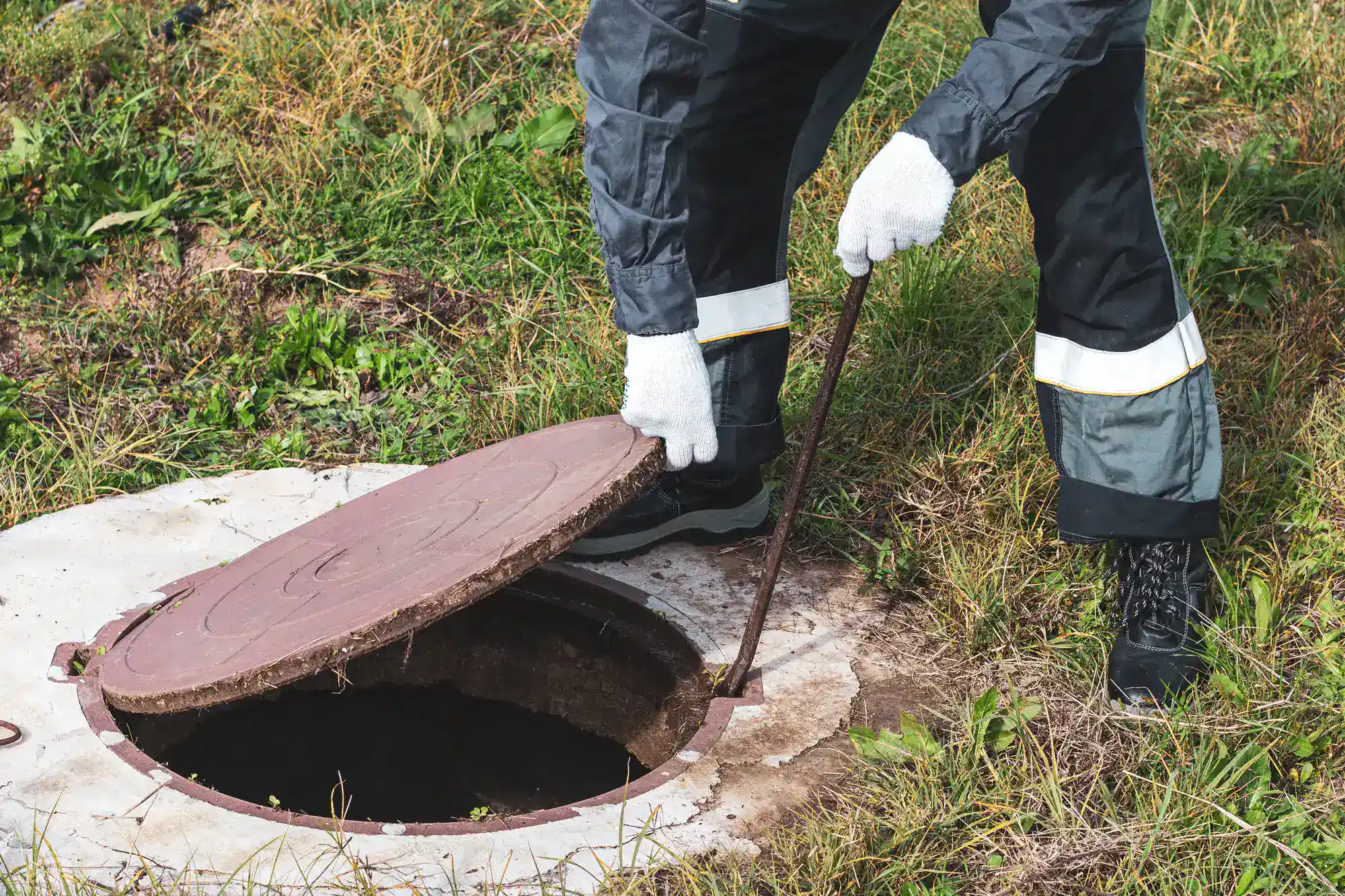
Drain fields don’t last forever. Most last somewhere between 15 and 30 years depending on how well the system was maintained, how much load it handled, and what the soil conditions are like on your property. When the field reaches the end of its life, the soil becomes saturated and can no longer absorb effluent properly. At that point, no amount of pumping is going to fix it — the soil itself is the problem.
That said, not every struggling drain field needs full replacement. Sometimes what looks like field failure is actually a clogged distribution box, a broken pipe, or a tank that’s overdue for pumping and pushing solids into the field. A proper inspection can tell the difference. If the field itself is genuinely saturated or physically damaged, replacement is the right call. If the problem is upstream, you might be looking at a much simpler — and cheaper — fix.
The situations that most clearly point to drain field replacement are persistent surfacing sewage, complete drainage failure that doesn’t respond to pumping, a field that’s simply past its useful life, or a soil perc test that confirms the ground can no longer absorb at a functional rate. In those cases, you’re not going to repair your way out of it.
One thing worth knowing for Suffolk County specifically: since July 1, 2019, you cannot replace a failed cesspool with another cesspool. If your system fails and needs replacement, the new system must include a septic tank preceding the leaching structure. That’s a county requirement under the Suffolk County Sanitary Code, and it applies whether you’re in Babylon, Smithtown, Riverhead, or the Hamptons. A lot of homeowners find this out mid-process and are caught off guard by the added cost and complexity. Better to know going in.
This is one of the most common points of confusion we see. When a homeowner is told they need drain field work, they often assume that means the whole system goes. Sometimes it does. Often it doesn’t.
If your septic tank is structurally sound — no cracks, no significant corrosion, functioning baffles — it may be able to stay in place while only the drain field is replaced. The tank and the field are separate systems connected by pipe, and a good inspection will tell you the condition of each independently. Replacing only what’s failing is almost always the smarter financial move, and it’s exactly what we’ll tell you after we’ve actually looked at your system.
There are situations, though, where septic tank removal becomes part of the equation. If the tank itself is cracked, collapsed, or has deteriorated to the point where it’s no longer functioning as a treatment chamber, keeping it in place while installing a new field doesn’t solve the problem — it just delays it. Similarly, if your property has an old cesspool configuration that doesn’t meet current Suffolk County standards, the county may require the entire system to be brought up to code as part of the replacement project. In those cases, removing the old tank or cesspool is part of the site preparation for the new installation.
Septic tank removal is also sometimes necessary for practical reasons — if the old structure is sitting in the footprint where the new drain field needs to go, it has to come out. The removal process involves pumping and cleaning the tank, breaking it down or crushing it in place (depending on the material and depth), and properly backfilling the excavation before new system installation begins. It adds cost, but when it’s necessary, it’s necessary. We’ll always tell you why before any work starts.
Want live answers?
Connect with a AAA Dependable Cesspool expert for fast, friendly support.
When septic tank removal is part of a replacement project, the process is more involved than most homeowners expect — but it’s also more manageable than it sounds when you have a crew that’s done it hundreds of times across Suffolk County properties.
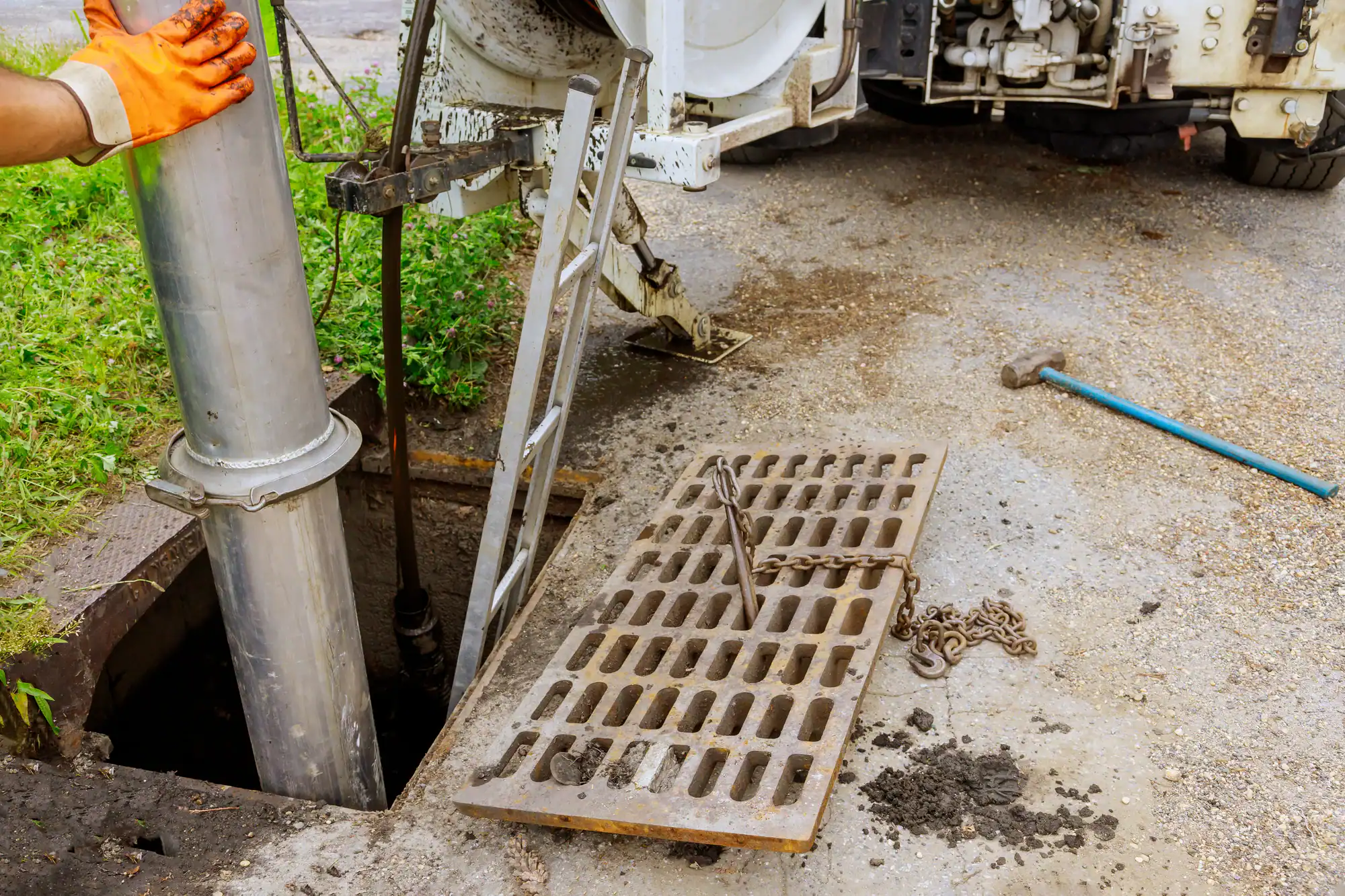
The first step is always pumping and cleaning the existing tank or cesspool. Nothing gets removed until it’s been properly emptied and the contents are disposed of according to county requirements. From there, the structure is either excavated and removed entirely, or — in cases where full removal isn’t practical — it’s crushed in place and the void is filled with clean material to prevent future settling. Which approach is right depends on the tank’s size, depth, material, and what’s going in its place.
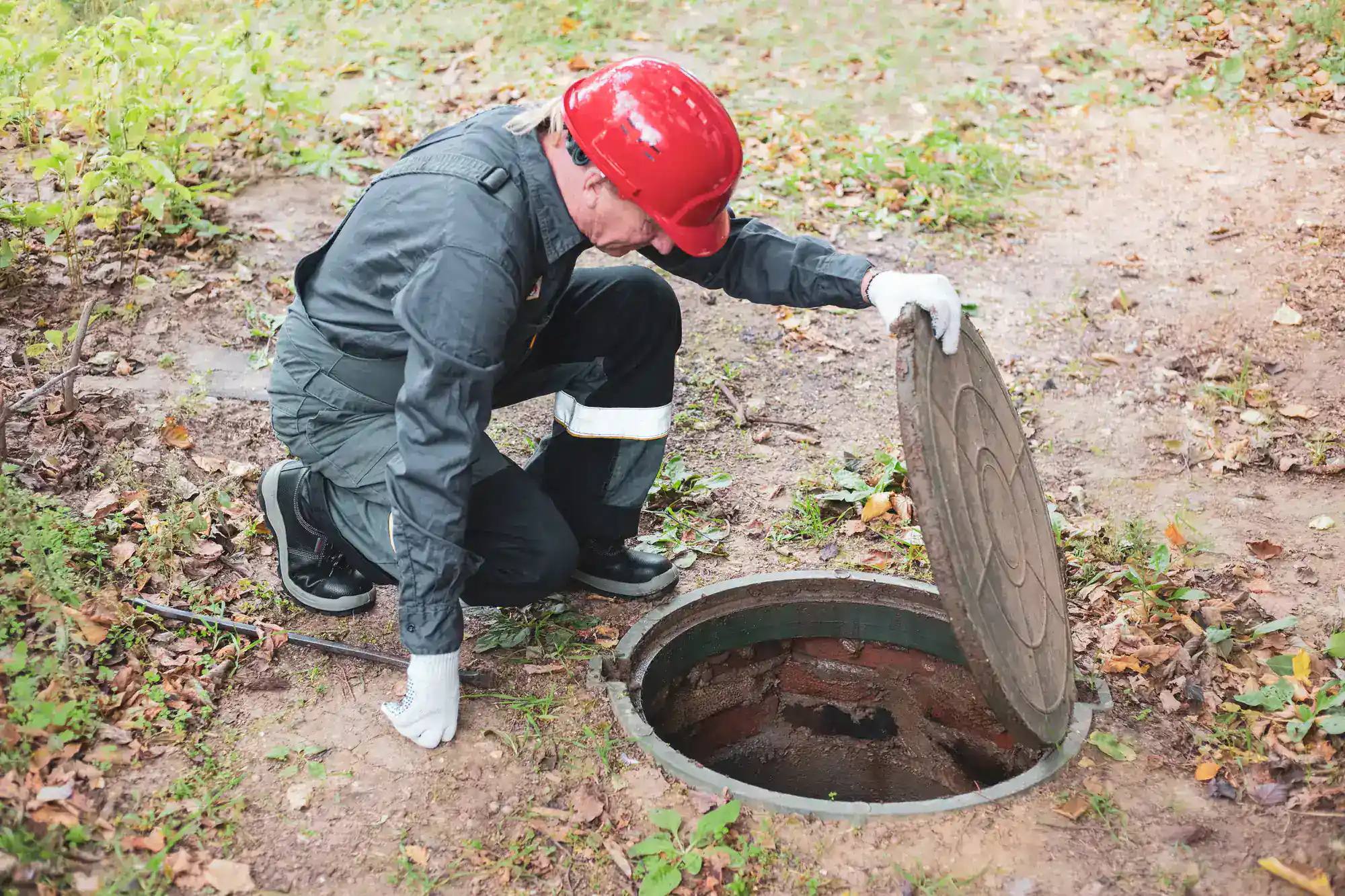
This is where a lot of homeowners run into trouble when they try to navigate this on their own. In Suffolk County, drain field replacement and septic system work isn’t something you can just schedule and start. Since July 1, 2019, all onsite wastewater treatment system replacements require approval from the Suffolk County Department of Health Services before any work begins. That means permit applications, soil testing, system design review, and in some cases a county inspection before backfill.
It sounds like a lot because it is a lot — but it exists for a real reason. Suffolk County sits over a sole-source aquifer that supplies all of Long Island’s drinking water. There’s no backup. Failing and improperly replaced septic systems are responsible for 70 to 80 percent of the nitrogen pollution in waterways like Great South Bay, Peconic Bay, and Long Island Sound. The county takes this seriously, and the permitting process reflects that.
For homeowners, the practical implication is that you need a contractor who knows how to navigate this process — not one who’s going to hand you a stack of forms and tell you good luck. We handle every permit application, every filing, and every county requirement as part of the job. You shouldn’t have to become an expert in Suffolk County Health Department regulations just to get your septic system replaced. That’s our job.
It’s also worth knowing that for new construction and major reconstruction projects in Suffolk County, Innovative/Alternative Onsite Wastewater Treatment Systems — I/A OWTS — are now required as of July 1, 2021. These are nitrogen-reducing systems that go beyond standard septic treatment. If your project qualifies as major reconstruction, this may apply to you. And if it does, there’s actually a financial upside: the Suffolk County Septic Improvement Program offers grant funding that can reach $20,000 to $30,000 for eligible homeowners when county, state, and federal sources are combined. It’s worth asking about before you assume you’re paying for everything out of pocket.
Before any major septic decision gets made — replacement, upgrade, or otherwise — a proper well and septic inspection is the right first step. This isn’t just due diligence. In many cases, it’s what determines whether you actually need what someone is telling you that you need.
A septic inspection covers the condition of the tank, the distribution box, the pipes, and the drain field itself. It tells you what’s functioning, what’s marginal, and what’s failed. Combined with a well water test, it gives you a complete picture of your property’s water and wastewater systems — which matters both for your family’s health and for the value of your home.
In Suffolk County, this kind of inspection has become increasingly important for two specific reasons. First, the county now requires septic system inspections on a three-year cycle with mandatory reporting to the county database. If you’re not current on that, you’re technically out of compliance — and fines range from $250 to $2,000. Second, if you’re selling your home, buyers and their inspectors are paying close attention to septic condition. A failing drain field discovered during a buyer’s inspection can kill a deal or force an emergency replacement under the worst possible time pressure. Getting ahead of it with a proactive inspection protects you.
We do these inspections regularly across Suffolk County — from Ronkonkoma and Islip to Huntington, Babylon, Smithtown, and out to the East End. What we’re looking for isn’t just whether the system is working today, but whether it’s likely to keep working — and what the honest options are if it isn’t. That’s the kind of assessment that actually helps you make a good decision, rather than one based on fear or incomplete information.
If a home inspector or buyer’s agent has flagged your system and you’re not sure what it means or what comes next, that’s exactly the kind of situation where a second, independent opinion from someone who knows Suffolk County systems makes a real difference.
Drain field replacement is sometimes the right answer. So is a targeted repair, a system upgrade, or a full replacement that includes the tank. The only way to know which one applies to your property is to actually look at your system — not guess based on symptoms alone.
What we’ve seen in 25-plus years of working on septic systems across Suffolk County is that homeowners who get honest information upfront make better decisions, spend less money overall, and avoid the kind of emergency situations that happen when problems get deferred too long. That’s the whole point of this page.
If you’re trying to figure out what’s going on with your system, or you already know something needs to be done and you want a straight answer on what that actually involves, reach out. We’ll tell you what we find — not what costs the most.
Summary:
Article details:
Share: