Slow drains, bad smells, and recurring backups — here's what's actually causing them and what to do before a small clog becomes a big problem.
You’ve plunged it. Maybe poured something down it. It drained for a week, then slowed down again. Sound familiar? Recurring drain clogs aren’t just annoying — they’re usually telling you something. And in Suffolk County, where the majority of homes run on cesspools rather than municipal sewer, a persistent drain problem can mean more than just a blocked pipe. This guide walks you through what’s actually causing your drains to clog, what’s safe to try yourself, and when the smartest move is picking up the phone before a minor issue turns into a costly one.
Most drain clogs don’t happen overnight. They build up gradually — a little grease here, some hair there, soap scum coating the pipe walls over months — until one day the water just sits there staring back at you. The cause depends a lot on which drain is giving you trouble and what kind of home you’re in.
Kitchen drains are almost always a grease problem. Cooking oil, butter, and food residue go down as liquid but cool and solidify inside the pipe. Over time, that layer gets thicker and thicker until the pipe is barely passable. Bathroom drains are usually hair and soap scum — a combination that clumps together and catches everything else that comes through. In older Suffolk County homes, you’ve also got the added factor of aging pipes that have rougher interior surfaces, which means buildup accumulates faster than it would in newer plumbing.

If you’re in a home built in the 1950s, 60s, or 70s — which describes a large portion of the housing stock in towns like Smithtown, Commack, Huntington, and Centereach — your pipes have had decades to accumulate buildup, develop rough spots from corrosion, and potentially crack in places where tree roots can get in. That last one is more common than most people realize.
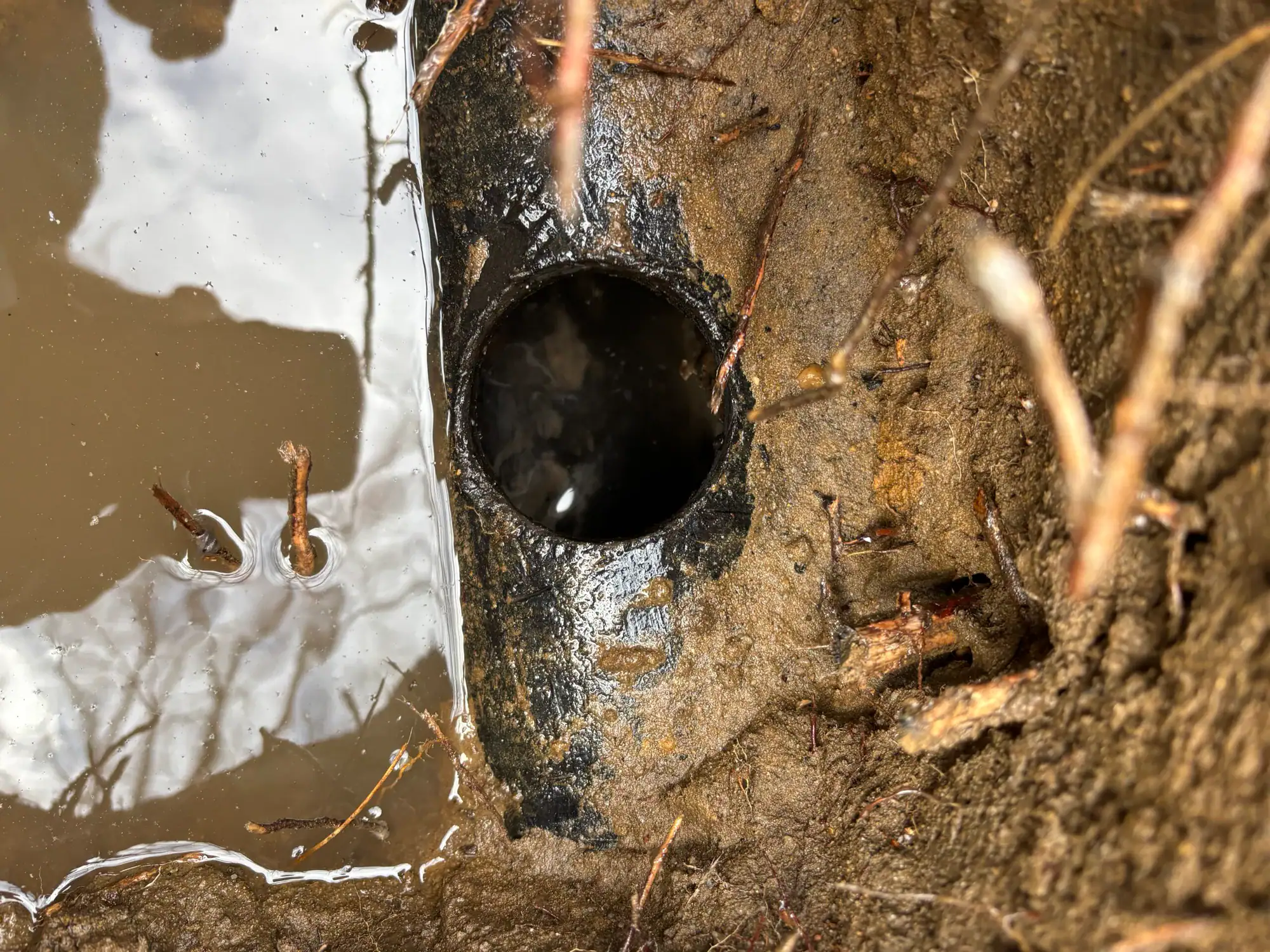
Long Island’s established neighborhoods are full of mature trees, and tree roots are relentless in their search for moisture. Underground sewer and drain lines are exactly what they’re looking for. Once a root finds even a hairline crack in a pipe joint, it grows into it. Over time, that root mass catches debris, restricts flow, and eventually causes a full blockage. If your drain clogs keep coming back despite clearing them, root intrusion is one of the first things worth ruling out — and the only way to know for sure is a camera inspection .
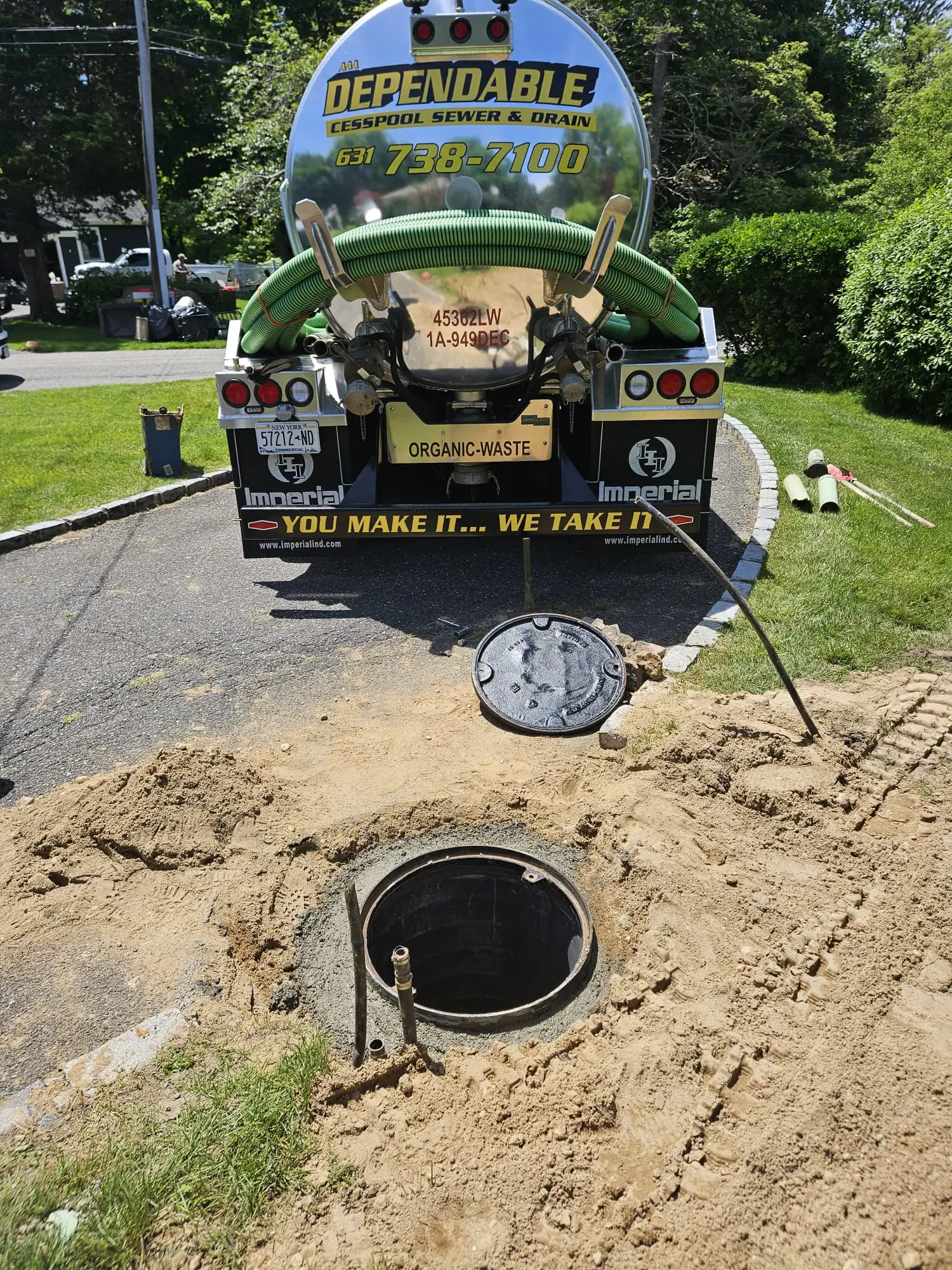
There’s also the cesspool factor, which is something that sets Suffolk County apart from most other markets. Roughly 75% of households here are on cesspools or septic systems rather than municipal sewer lines. That means your drains don’t connect to a city treatment plant — they connect to an underground system on your property. When that system starts getting full or isn’t functioning properly, slow drains throughout the house are often one of the first signs. It’s easy to assume it’s just a pipe clog and treat it accordingly, but if the real issue is a cesspool that needs attention, clearing the drain gives you temporary relief at best. The problem comes back, usually worse.
This is why local knowledge matters here in a way it genuinely doesn’t in other places. A company that only handles drains and has no experience with cesspools can miss what’s actually driving the problem. We’ve been working with both sides of that system across Suffolk County since 1998, and we’ve seen plenty of cases where what looked like a simple drain clog was actually an early warning from the cesspool.
Beyond hair and grease, there are a few causes of drain clogs that catch homeowners off guard — and some of them are things people actively believe are safe to flush or rinse away.
“Flushable” wipes are one of the biggest offenders in residential drain lines right now. Despite what the packaging says, these wipes don’t break down in water the way toilet paper does. They stay intact, catch on any rough spot or partial buildup in the pipe, and create clogs that can extend several feet into the line. We pull these out of drain lines regularly, and the clogs they create are not minor. If anyone in your household uses them, that’s worth knowing.
Hard water mineral deposits are another issue that’s easy to overlook because you can’t see them building up. Long Island water has a relatively high mineral content, and over time those minerals — primarily calcium and magnesium — leave deposits on the inside of pipes that narrow the passable opening and create a rough surface that catches debris more easily. This is especially common in older galvanized steel pipes.
Outdoor and storm drains are also worth mentioning, particularly in fall. Leaf debris accumulates fast once the trees start turning, and blocked storm drains around the foundation of a home can create drainage issues that aren’t immediately obvious until water is backing up somewhere it shouldn’t be. For homes on cesspools, this kind of surface water intrusion can also affect the system’s ability to absorb properly.
Seasonal patterns play a real role here. Holiday gatherings in November and December put simultaneous strain on every drain in the house — more cooking, more guests, more showers — and kitchen drains in particular tend to take the hardest hit during that stretch. If you’ve ever noticed a slow drain appearing right around Thanksgiving, that’s not a coincidence.
Want live answers?
Connect with a AAA Dependable Cesspool expert for fast, friendly support.
The instinct to handle it yourself is completely reasonable — and for minor clogs, there are things you can safely try before calling anyone. The key word is “safely.” Some of the most common DIY drain fixes can actually damage your pipes or push the blockage deeper, turning a straightforward job into a bigger one.
A plunger is almost always the right first move for a toilet or sink. It’s low-risk, it works well on fresh clogs that haven’t had time to compact, and it doesn’t involve any chemicals. Hot water — not boiling, which can warp PVC pipes — can help loosen grease buildup in a kitchen drain when used consistently. A drain screen or hair catcher is one of the simplest prevention tools available and genuinely reduces how often bathroom drains need attention.

The thing most homeowners reach for first is a chemical drain cleaner, and it’s understandable — they’re right there on the shelf, they’re inexpensive, and the marketing makes them sound like a complete solution. The reality is more complicated. Chemical drain cleaners are highly caustic. They work by generating heat and dissolving organic material, but that same chemical reaction can degrade pipe interiors over time, particularly in older metal pipes or PVC that’s already seen some wear. They also tend to only partially clear a blockage, pushing it further into the line rather than fully removing it. You get relief for a week or two, then the problem comes back — sometimes worse because the loosened debris has compacted further down the pipe.
Baking soda and vinegar is a gentler option that gets recommended a lot online. It’s not going to clear a real clog, but it’s harmless and can help with minor odor issues or very light buildup in a drain that’s still flowing reasonably well. Treat it as a maintenance rinse, not a fix.
Consumer-grade drain snakes are a middle-ground option. They can work on a clog that’s close to the drain opening, but they have real limitations — they’re shorter and less powerful than professional equipment, and if used aggressively on older pipes, they can scratch or damage the interior surface. If you’ve snaked a drain yourself more than once for the same clog, that’s a signal the problem is either deeper than the snake is reaching or structural in some way that requires a camera to diagnose properly.
The honest answer is that DIY makes sense for a fresh, localized clog — the kind that appeared recently in one fixture and hasn’t come back before. If you’re dealing with a recurring clog, multiple slow drains at the same time, or a drain that smells bad even when it’s flowing, those are situations where a professional is going to save you time and money compared to cycling through home remedies.
Knowing when to stop troubleshooting and make a call is genuinely useful information — not because we want the work, but because catching certain problems early is significantly cheaper than dealing with them after they’ve progressed.
Multiple slow drains at the same time is probably the clearest signal. If your kitchen sink, bathroom sink, and shower are all draining slowly within the same week, the problem almost certainly isn’t in each individual fixture — it’s in the main line. That’s not a plunger situation.
Gurgling sounds coming from a drain when you run water somewhere else in the house — flushing a toilet and hearing the sink gurgle, for example — indicate air being displaced in the line, which usually means a partial blockage somewhere in the system. The drain may still be functioning, but that sound is an early warning worth paying attention to.
A persistent bad smell, even when the drain is clear, often means there’s organic buildup somewhere in the pipe that isn’t being flushed out properly. In some cases it can also indicate a venting issue, but either way it’s worth having someone take a look.
And for Suffolk County homeowners specifically — if you’re on a cesspool and you’ve noticed slow drains throughout the house combined with wet spots in the yard, unusually lush grass over the cesspool area, or a sewage smell outside, those are signs the cesspool itself may need attention. Don’t let a drain company treat only the pipes in that scenario. The two systems are connected, and the drain issue may be a symptom rather than the source.
We use video camera inspection to get a clear picture of what’s actually happening inside the line before recommending any specific service. It takes the guesswork out of it — for both sides.
Drain clogs are one of those problems that reward acting early and punish waiting. A slow drain today is manageable. Left alone, it becomes a backup — and in a home on a cesspool system, a backup can escalate quickly into something that affects the whole property.
If you’ve tried the straightforward fixes and the problem keeps returning, or if you’re seeing the warning signs described above, it’s worth getting a professional set of eyes on it. Not to sell you something you don’t need — just to actually find out what’s going on so it can be fixed properly.
We’ve been serving homeowners across Suffolk County since 1998. We’re local, we’re licensed with Suffolk County Consumer Affairs, and we give you a straight answer about what’s wrong and what it’ll cost before any work begins. Give us a call — we’re here when you need us.
Summary:
Article details:
Share: