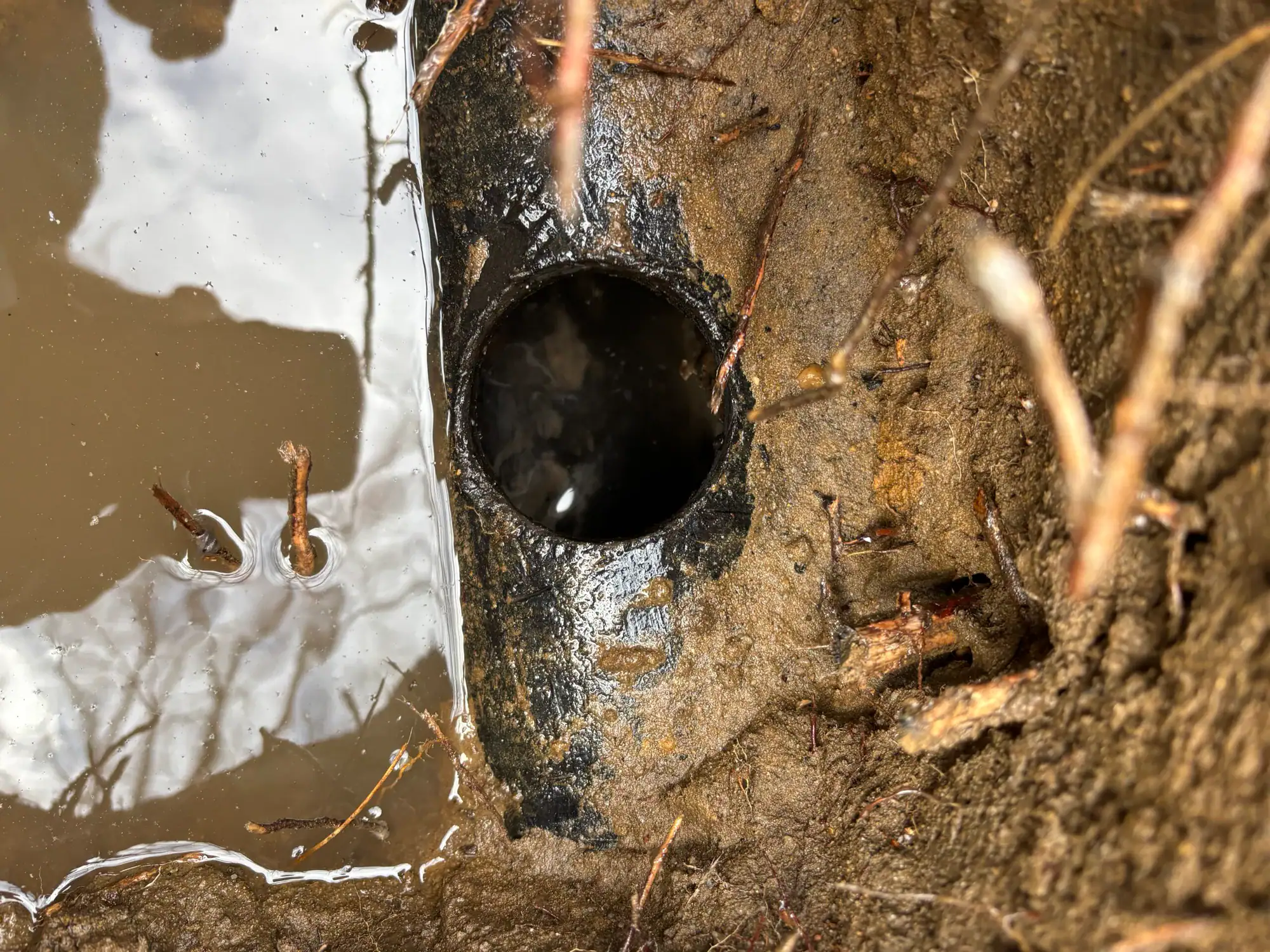
Suffolk County's mature oak and pine trees often invade sewer lines. Learn how camera inspections locate root entry points without destroying your property.

Suffolk County sits on over 100,000 acres of Pine Barrens, home to pitch pine and oak forests with root systems that stretch deep and wide through sandy soil. Those roots aren’t just looking for space—they’re hunting for water and nutrients. Your sewer line? It’s a buffet.
Even a hairline crack or a loose pipe joint releases moisture into the surrounding soil. Roots sense it and grow toward it. Once they find a way in through that tiny opening, they don’t stop. They expand, fill the pipe, trap waste, and eventually cause backups that flood basements and ruin weekends.
Many Suffolk County homes were built before 1980, which means clay pipes that were designed to last 50 to 60 years. If your house falls into that range, those pipes are already at or past their lifespan. Combine aging infrastructure with aggressive tree roots, and you’ve got a recipe for problems that won’t announce themselves until it’s too late.
Roots don’t bulldoze their way into your sewer line. They’re opportunistic. They start small—slipping through a crack, a separated joint, or even a pinhole in the pipe. Once inside, they have access to a constant supply of water and waste material, which acts like fertilizer. That’s when they start growing in earnest.
As the roots thicken, they create blockages. Waste can’t flow. Water backs up. You might notice slow drains first, then gurgling sounds when you flush. Those are early warnings. Ignore them, and you’re looking at sewage backing up into your home, which brings health hazards, cleanup costs, and a level of stress no homeowner should deal with.
The damage isn’t just about blockages. Growing roots can crack pipes further, shift sections out of alignment, or even cause a full collapse. In Suffolk County, where soil is sandy and pipes are often older, the risk is higher. And because many properties have large, mature trees—oaks, pines, maples—the roots have had decades to spread and probe underground.
What makes this worse is that you can’t see it happening. Everything looks fine above ground. Your lawn is green. Your trees are healthy. But underground, roots are working their way through your system, expanding with every season. By the time symptoms show up, the problem is usually well established.
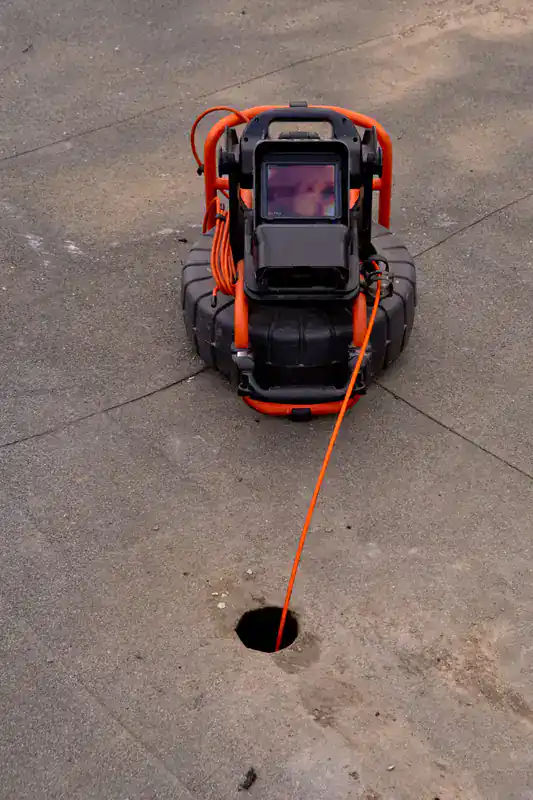
That’s where a sewer camera inspection becomes essential. It’s the only way to see inside the pipe without digging. A small, waterproof camera mounted on a flexible cable gets fed into your line through an access point like a cleanout. As it moves through the pipe, it sends back live video footage. You see exactly what we see—roots, cracks, blockages, corrosion, whatever’s there.
Root problems don’t show up overnight, but they do leave clues. If you know what to watch for, you can catch the issue before it turns into a full-blown emergency.
Slow drains are usually the first sign. If water takes longer than usual to go down in multiple fixtures—sinks, showers, toilets—that’s a red flag. One slow drain might just be a local clog. But when several are affected at once, it points to a problem in the main sewer line, and roots are a common culprit.
Gurgling sounds are another giveaway. When roots partially block a pipe, air gets trapped and bubbles up through the water in your drains or toilet. It sounds harmless, but it means flow is restricted somewhere downstream.
Sewage backups are the worst-case scenario. If waste comes back up through floor drains, toilets, or tubs, you’ve got a serious blockage. At that point, the line is so compromised that normal flow is impossible. This isn’t just inconvenient—it’s a health hazard. Sewage contains bacteria and pathogens that can contaminate your home and require professional cleanup.
You might also notice unexplained wet spots or extra-green patches in your yard. If a pipe is leaking because roots have cracked it, water and waste seep into the surrounding soil. That creates soggy areas or unusually lush grass right above the problem spot.
Foul odors are another indicator. If you smell sewage around your property—especially near drains or outside—it could mean a compromised line. Roots can create openings that let gases escape, and those gases smell exactly like you’d expect.
Suffolk County homeowners with older homes and large trees should be especially vigilant. Clay pipes and mature root systems are a bad combination. If your house was built in the 1970s or earlier, and you’ve got oaks or pines within 20 feet of your sewer line, you’re in the high-risk category. Regular camera inspections—every few years—can catch root intrusion early, before it becomes a costly disaster.
Want live answers?
Connect with a AAA Dependable Cesspool expert for fast, friendly support.
A sewer camera inspection is straightforward, non-invasive, and incredibly effective. We locate an access point—usually a cleanout or sometimes through a drain opening. A high-resolution, waterproof camera attached to a flexible cable gets fed into the line. As it travels through the pipe, it sends live video back to a monitor.
The camera has built-in LED lights, so even in a completely dark pipe, the footage is clear. We can see cracks, root masses, corrosion, blockages, and pipe condition in real time. If roots are present, they’re visible immediately. The camera also has a locating transmitter, which means we can pinpoint exactly where the problem is—depth, distance from the access point, even GPS coordinates in some cases.
This is a game changer compared to the old way of doing things. Before video technology, finding a sewer problem meant guesswork, exploratory digging, and hoping you hit the right spot. Now, you know exactly what’s wrong and where it is before anyone picks up a shovel.

Camera inspections don’t just show you roots. They give you a complete picture of your pipe’s condition, which is valuable information whether you’re dealing with an active problem or just want to know what you’re working with.
You’ll see the pipe material—clay, cast iron, PVC, or a mix. Older homes often have clay or cast iron, which are more prone to cracking and root intrusion. Knowing what you have helps you plan for future maintenance or upgrades.
You’ll see any cracks, fractures, or separated joints. These are entry points for roots, but they’re also weak spots that can get worse over time. If the camera catches them early, repairs might be simple. If they’re left alone, they can lead to collapses or major leaks.
You’ll see blockages—whether from roots, grease buildup, sediment, or foreign objects. The camera shows not just that there’s a blockage, but also what it’s made of and how severe it is. That determines the best removal method, no matter if it’s snaking, hydro jetting, or something else.
You’ll see root intrusion at every stage. Small root tendrils are just starting to poke through a crack. Thick root masses completely filling the pipe. Roots wrapped around the outside, putting pressure on the structure. The camera captures it all, so there’s no question about what you’re dealing with.
You’ll also see the overall condition of the line—whether it’s holding up well, showing signs of age, or nearing the end of its useful life. That information is critical for long-term planning. If your pipes are in decent shape aside from a localized root problem, a targeted repair might be all you need. If the whole line is deteriorating, you might be looking at a replacement, and it’s better to know that now than after an emergency.
Most inspections also include a recorded video and a written report. You get a copy, which is useful for insurance claims, property sales, or just keeping in your records. If you ever need to reference what was found, you have documentation.
Let’s talk numbers, because this is where camera inspections really prove their value. A typical residential camera inspection in Suffolk County runs between $200 and $400, depending on the length and accessibility of your line. That’s a small investment for the information you get.
Now compare that to what happens without a camera. If you’ve got a sewer problem and no one knows where it is, you’re looking at exploratory excavation. That means digging trenches across your yard, tearing up landscaping, possibly breaking through concrete or asphalt, and hoping the crew finds the problem before they run out of places to dig. Even if they find it on the first try, you’re paying for labor, equipment, disposal, backfill, and restoration. That can easily hit $3,000 to $5,000 or more, and that’s before any actual repairs.
If the problem is deeper or harder to locate, costs go up fast. Emergency sewer repairs can start around $3,000 and quickly reach $10,000 or more when pipes need replacement. Add in the cost of restoring your lawn, replacing plants, and repairing driveways or walkways, and you’re looking at a financial hit that could have been avoided.
Camera inspections eliminate the guesswork. You know exactly where to dig—if digging is even necessary. In many cases, root problems can be cleared with hydro jetting or mechanical cutting, and the camera confirms the line is clear afterward. No excavation required. Even when digging is needed, the camera narrows it down to a specific spot, so you’re not tearing up half your property.
There’s also the time factor. Exploratory digging takes days, sometimes longer. A camera inspection takes an hour or two. You get answers the same day, and you can make informed decisions about next steps without waiting for a crew to dig around blindly.
For Suffolk County homeowners, especially those with older homes and mature trees, a camera inspection isn’t just a good idea—it’s the smart financial move. Catching root intrusion early, before it causes a backup or pipe collapse, can save you thousands in emergency repairs and property restoration. And even if the camera shows everything is fine, you’ve got assurance and a baseline for future inspections.
Tree roots and sewer lines don’t mix well, especially in Suffolk County, where mature oaks and pines are everywhere and many homes have aging clay pipes. The good news is you don’t have to wait for a disaster to find out what’s happening underground. Camera inspections give you accurate, real-time information about your pipes without tearing up your yard.
Regardless of if you’re dealing with slow drains, gurgling toilets, or just want to be proactive, a video inspection is the fastest and most cost-effective way to get answers. You’ll know exactly what’s going on, where the problem is, and what needs to be done—no guessing, no unnecessary digging, no surprises.
If you’re ready to see what’s really happening in your sewer line, reach out to us. We bring local expertise, honest assessments, and the right tools to get the job done right.
Summary:
Article details:
Share: