Snaking might work for residential drains, but commercial kitchens need a different approach. High-pressure sewer jetting actually clears FOG from your lines instead of just poking holes through it.

Walk into any plumbing supply shop, and you’ll see drain snakes everywhere. They’re effective tools—for the right job. A snake uses a rotating cable with a cutting head to break through blockages mechanically. For a residential bathroom clog caused by hair and soap, that’s usually enough.
But your commercial kitchen isn’t dealing with hair. You’re dealing with bacon fat, fryer oil, butter, dairy products, and everything else that goes down a three-compartment sink during a busy Saturday night. That grease doesn’t just sit in one spot. It coats the inside of your pipes like plaque in an artery, building up gradually until water can barely squeeze through.
When a plumber snakes your line, they’re creating a hole through that buildup. Water flows again. Problem solved, right? Not even close. All that grease is still clinging to your pipe walls, catching food particles, and building back up. You might get a few weeks of relief before you’re right back where you started, calling for another service visit and losing money on repeat calls that don’t fix anything.

FOG stands for fats, oils, and grease—the three substances that cause more commercial kitchen plumbing problems than everything else combined. When hot grease goes down your drain, it’s liquid. But as it travels through your pipes and cools down, it solidifies and sticks to the pipe walls.
At first, it’s just a thin film. You don’t notice any difference in how your sinks drain. But every shift, every service, every time someone scrapes a pan into the sink or rinses a plate, more grease joins that coating. Food particles start sticking to it. The coating gets thicker. Your pipe diameter gets smaller.
Eventually, you’re down to a fraction of your original flow capacity. That’s when you start seeing water backing up in your floor drains during dishwashing or your three-compartment sink taking forever to empty. By the time you notice the problem, you’ve already got significant buildup that snaking can’t address.
The worst part? This isn’t just happening in one spot. It’s happening throughout your entire drain system—from your prep sinks to your dish area to the main line leading to your grease trap. Snaking might clear one section temporarily, but the rest of your system is still coated and getting worse every day.
Suffolk County restaurants deal with this constantly because of the volume. You’re not cooking dinner for four people. You’re running hundreds of plates through your kitchen every night, and all that FOG has to go somewhere. Even with the best grease trap in the world, some of it makes it into your lines. It’s not a question of if you’ll have buildup—it’s a question of how bad you’ll let it get before you address it properly.
Here’s what keeps restaurant owners up at night: the Suffolk County Board of Health doesn’t care that you had your drains snaked last month. They care about whether your grease management system is actually working. And if your lines are coated with FOG buildup, your grease trap can’t do its job properly.
When your drain lines are restricted by grease, wastewater moves slower. That means more FOG stays in your lines instead of making it to your grease trap where it belongs. Your trap might look fine during an inspection, but if your lines are compromised, you’re still violating regulations. The health department can issue fines, require immediate corrective action, or, in serious cases, shut you down until the problem is fixed.
The impact goes beyond the penalty itself. You’re losing revenue for every hour you’re closed. You’re paying staff who can’t work. You’re dealing with frustrated customers who showed up to find your doors locked. And you’re facing the reputation damage that comes with failing a health inspection—something that spreads fast in the age of online reviews and social media.
Snaking gives you the illusion of compliance. Your drains are flowing again, so you think you’re good. But that grease is still there, building back up, putting you at risk every single day until your next inspection. High-pressure sewer jetting actually removes the FOG, giving you real compliance instead of temporary relief.
Suffolk County takes FOG regulations seriously because grease doesn’t just affect your restaurant. When it gets into the municipal sewer system, it can cause blockages that affect entire neighborhoods. That’s why local authorities require businesses to properly maintain their interceptors and drain lines. They’re not just protecting your business—they’re protecting the whole community’s infrastructure. And they will hold you accountable if your maintenance isn’t up to standard.
Want live answers? Connect with a AAA Dependable Cesspool expert for fast, friendly support. Request Professional Service Call: 631-738-7100
Want live answers?
Connect with a AAA Dependable Cesspool expert for fast, friendly support.
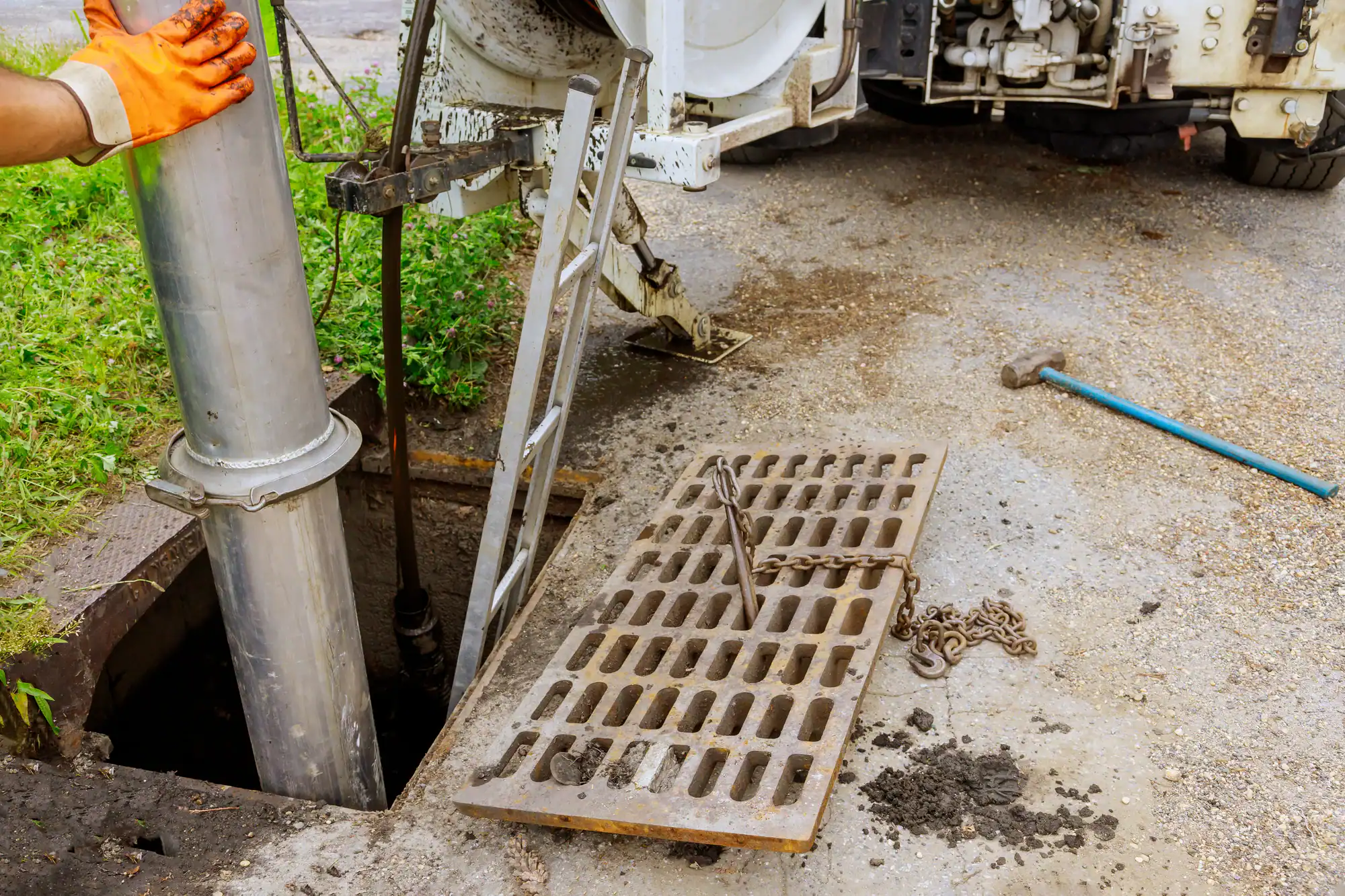
High-pressure sewer jetting—also called hydro jetting—takes a completely different approach than snaking. Instead of trying to break through a clog, it removes everything from your pipes using water pressure. Think of it as pressure washing the inside of your drain lines.
The equipment uses a specialized nozzle attached to a high-pressure hose. Water is pumped through at anywhere from 3,000 to 8,000 PSI, depending on your pipe condition and the severity of buildup. The nozzle has jets pointing forward to cut through blockages and jets pointing backward to scour the pipe walls and propel the hose through your system.
As we feed the hose through your drain lines, the pressurized water blasts away grease, food particles, mineral deposits, soap scum—everything that’s been accumulating inside your pipes. The debris gets flushed down the line and out through your grease trap or into the sewer system. What you’re left with is a pipe that’s clean from wall to wall, restored to nearly its original diameter.

Commercial kitchens in Suffolk County have different needs than residential properties. You’re not dealing with occasional cooking—you’re running a production operation. The volume of FOG you generate in a single day is more than most homes produce in a month. That demands a maintenance approach that matches the intensity of your operations.
Sewer jetting addresses the root cause of your drainage problems instead of just treating symptoms. When your lines are completely clean, water flows at full capacity. Your grease trap works more efficiently because wastewater is reaching it properly. You’re meeting code requirements because there’s no FOG buildup restricting your system. And you’re preventing the emergency situations that cost you thousands in repairs and lost revenue.
The frequency you need commercial kitchen drain cleaning depends on your specific operation. A busy restaurant serving fried foods and running 200+ covers a night will need more frequent service than a coffee shop. Most commercial kitchens in Suffolk County benefit from quarterly jetting, though some high-volume operations opt for monthly or bi-monthly service. It’s not about following a generic schedule—it’s about matching your maintenance to your actual usage.
The investment in regular jetting provides value quickly. You’re avoiding emergency service calls that are far more taxing than preventative maintenance. You’re not losing revenue to unexpected shutdowns. You’re extending the life of your plumbing system by preventing the kind of buildup that leads to pipe damage and major replacements. And you’re protecting yourself from penalties and compliance issues.
Some restaurant owners compare jetting to snaking. But the real comparison is the value of regular jetting against the burden of repeated snaking plus emergency repairs plus potential penalties plus lost business from shutdowns. When you look at the full picture, jetting is the logical choice because it solves the problem instead of postponing it.
Professional sewer jetting starts with assessment, not equipment. We want to understand your operation—what kind of food you’re serving, your volume, and how often you’re experiencing drainage issues. We might use a camera inspection to see exactly what’s happening inside your lines before we start jetting. This isn’t about upselling you on services you don’t need. It’s about making sure the approach matches your specific situation.
Older pipes or systems with existing damage might not be able to handle full-pressure jetting without risk. That’s why the inspection matters. We’ll tell you if there are concerns and adjust our approach accordingly. We’re not just trying to clear your drains—we’re trying to do it safely without causing damage that creates bigger problems.
During the actual jetting, you’ll typically need to avoid using your sinks and drains. The process itself doesn’t take that long—usually a few hours depending on the size of your system—but you’ll want to schedule it during off-hours when your kitchen isn’t in full production. Many Suffolk County restaurants schedule jetting service early morning or late night to avoid disrupting their business operations.
After jetting, your drains should flow like they did when your system was new. Water disappears instantly instead of slowly draining. There are no gurgling sounds or slow spots. Your grease trap operates more effectively because wastewater is moving through your system properly instead of sitting in restricted lines. And you’ve bought yourself real time before you need service again—not just a few weeks, but months of reliable operation.
The key is working with someone who understands commercial kitchen systems specifically. Residential drain cleaning and commercial kitchen maintenance are different specialties. You want technicians who know Suffolk County regulations, understand FOG management requirements, and have experience with high-volume food service operations. We recommend a maintenance schedule based on your actual needs, not just trying to sell you the most frequent service possible.
Your restaurant’s success depends on more than great food and good service. It depends on infrastructure that works when you need it. Drain problems don’t wait for convenient times—they happen during your busiest shifts, when you can least afford downtime.
High-pressure sewer jetting gives you real prevention instead of temporary fixes. It keeps you code-compliant with Suffolk County regulations. It protects you from the fines, shutdowns, and reputation damage that come with grease management failures. And it costs less in the long run than the cycle of repeated snaking and emergency repairs that never solve the underlying problem.
If you’re dealing with recurring drain issues, slow drainage, or you just want to stay ahead of problems before they shut you down, reach out to us at AAA Dependable Cesspool Sewer & Drain. Serving Suffolk County restaurants since 1998, we bring honest, straightforward service focused on what works for commercial kitchens—not what generates the most service calls.
Summary:
Article details:
Share: