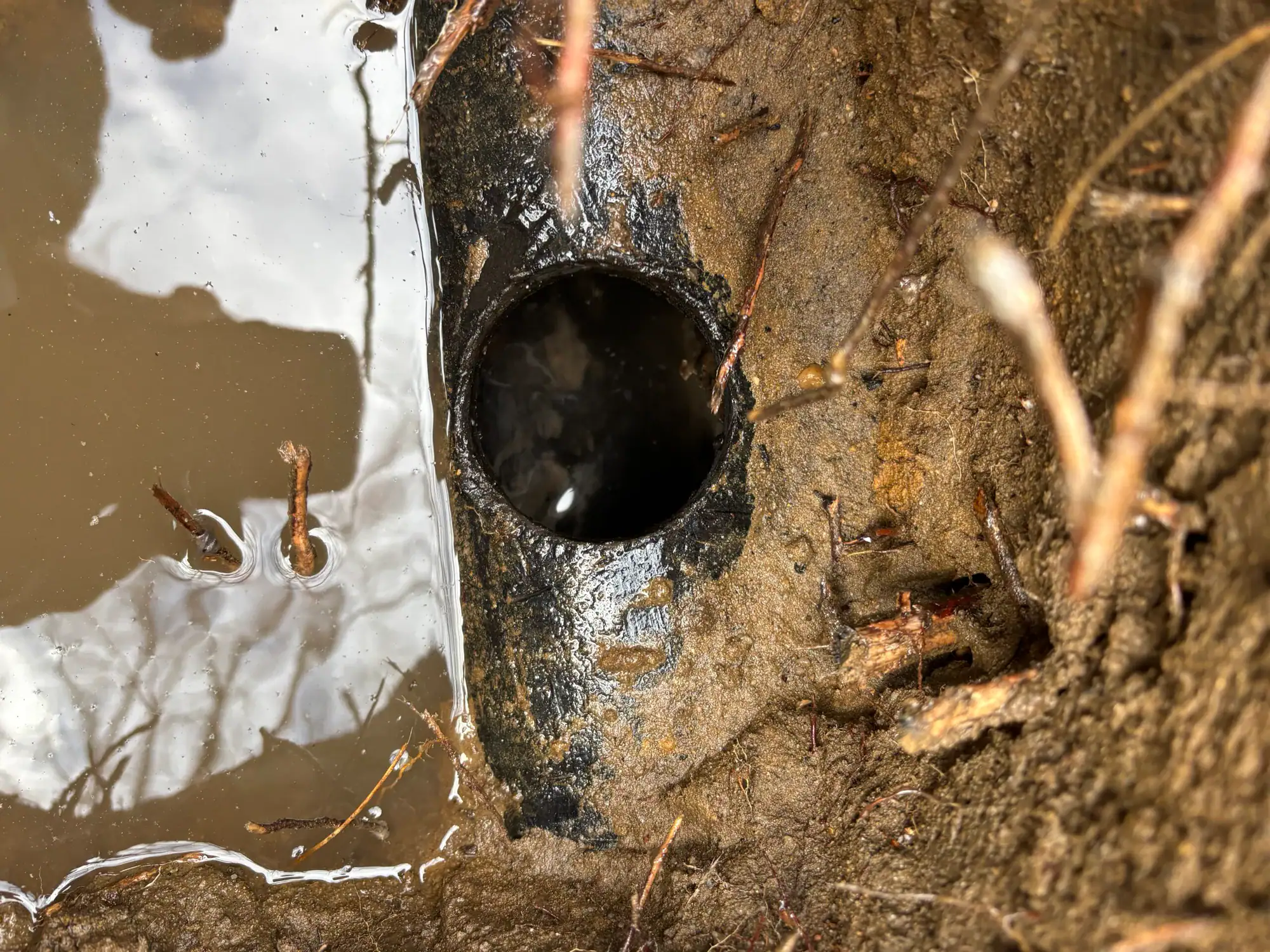
Routine cesspool pumping does more than remove waste—it reveals whether your overflow tank is failing before you face a backup emergency.
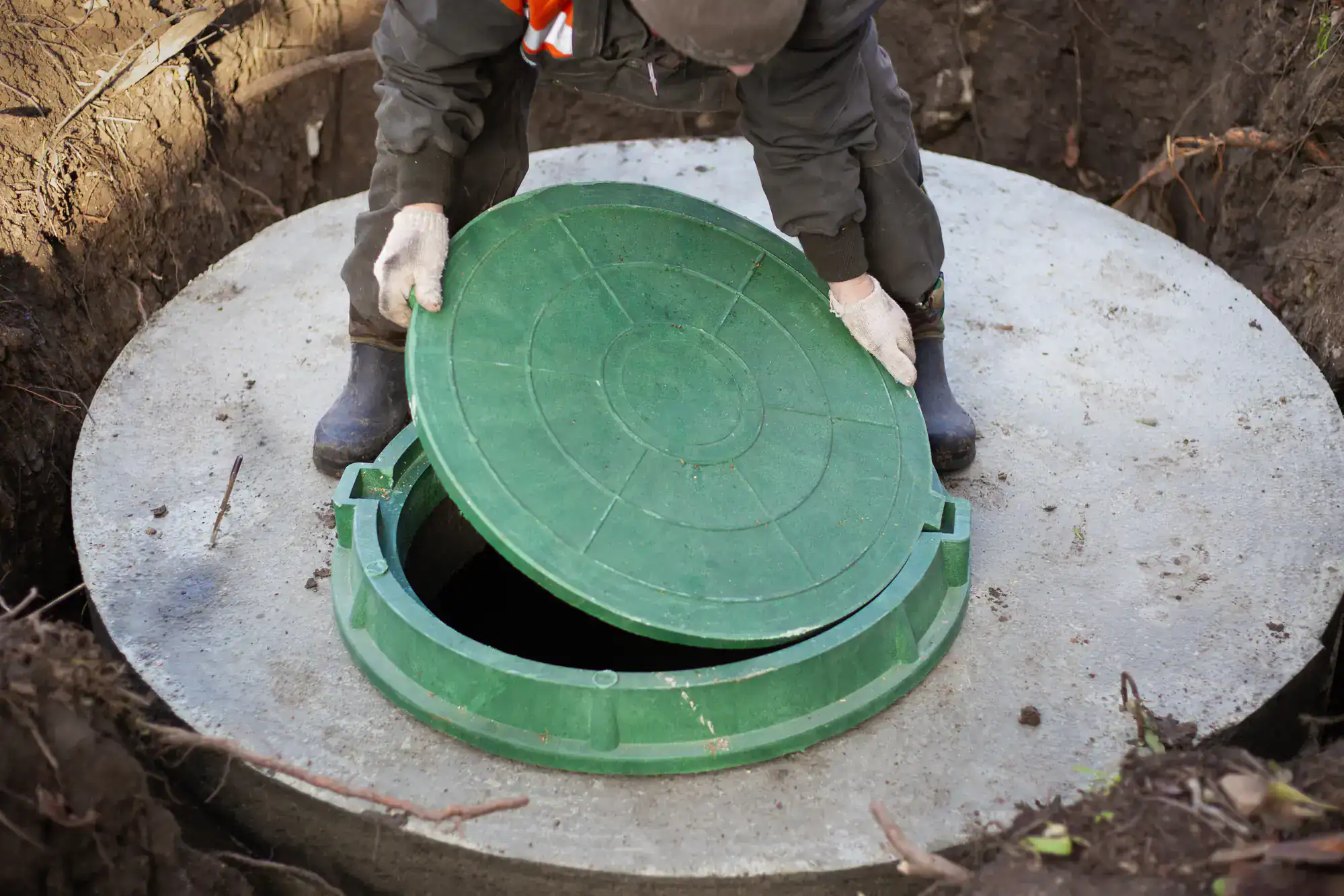
If your Suffolk County home was built before modern septic regulations took effect, you likely have what’s called a two-pool system. Wastewater from your home flows into a primary pool—usually a septic tank or pre-cast cesspool—where solids settle and separate from liquids. The clarified liquid then overflows into a second pool, your leaching pool or overflow tank, which allows that liquid to percolate into the surrounding soil through side-wall drainage.
This setup is more efficient than single-pool systems because your overflow tank receives mostly liquid with minimal solid material. That’s the theory, anyway. When the primary pool fills with sludge and isn’t pumped regularly, solids start flowing into the overflow tank. That’s when problems accelerate.
Your overflow tank relies on soil absorption to function. It has perforated walls or an open bottom that lets liquid seep into the ground. But when solids enter this tank, they clog those openings. The soil around the tank becomes saturated. Drainage slows, then stops entirely.

Think of your primary pool as the first line of defense for your entire system. When it’s working properly, it captures and holds solid waste while only allowing clarified liquid to pass through to the overflow tank. This separation is critical.
Inside the primary pool, heavier solids sink to the bottom forming sludge, while lighter materials like grease float to the top creating a scum layer. The middle zone contains relatively clear liquid—this is what should flow to your overflow tank. Natural bacteria in the primary pool work to break down organic solids, but they can’t eliminate everything. Over time, sludge accumulates.
Here’s where regular cesspool pumping becomes essential. When sludge levels rise too high in the primary pool, there’s no longer enough space for proper separation. Solids start flowing out with the liquid. Your overflow tank, which isn’t designed to handle solid waste, begins receiving material it can’t process.
The perforated walls or open bottom of your overflow tank allow liquid to drain into surrounding soil. But when solids arrive, they don’t drain—they accumulate. These solids coat the drainage surfaces, clogging the pores in your cesspool walls and saturating the soil. The biological mat that forms blocks water from escaping.
Suffolk County soil conditions compound this problem. The sandy soil common on Long Island normally provides good drainage, but it can only handle so much. When your overflow tank sends solids into that soil, saturation happens faster than you’d expect. The soil loses its ability to absorb water, and suddenly your system has nowhere to send wastewater.
This is exactly what cesspool pumping prevents. By removing sludge from the primary pool before it overflows, you protect the overflow tank from receiving solids it can’t handle. We measure sludge depth during pumping to determine whether you’ve been servicing your system frequently enough. If sludge levels are too high, we know your overflow tank has likely been receiving solids—and we’ll check for damage.
Overflow tank failure doesn’t announce itself with a dramatic event. It’s a gradual process that accelerates once it starts. The first sign is usually subtle—drains that take slightly longer to empty, or a toilet that doesn’t flush quite as forcefully as it used to. You might dismiss these as minor plumbing quirks. They’re not.
As your overflow tank’s drainage capacity decreases, wastewater backs up into the primary pool. The primary pool fills faster than it can drain, which means it fills to capacity sooner. You’ll notice this as slow drainage throughout your home, particularly in lower-level fixtures. Multiple drains acting sluggish at the same time is your system telling you the overflow tank isn’t keeping up.
The next stage involves soil saturation around the overflow tank. Water has nowhere to go, so it rises toward the surface. You might see wet spots in your yard, particularly after heavy water use like doing laundry or running the dishwasher. That patch of unusually green, lush grass over your cesspool? That’s not a gardening win—it’s wastewater feeding your lawn because your overflow tank can’t drain properly.
If the problem continues, you’ll eventually see standing water or sewage pooling on the surface. This is a health hazard and an environmental violation. Raw sewage contains bacteria, viruses, and pathogens that contaminate soil and groundwater. In Suffolk County, where drinking water comes entirely from groundwater aquifers, this contamination affects the community water supply.
The worst-case scenario is complete system failure with sewage backing up into your home. This typically starts in the lowest drains—basement floor drains, laundry room sinks, or ground-floor bathrooms. Once sewage enters your living space, you’re dealing with an emergency that requires immediate professional response, potential property damage, and serious health risks.
Overflow tank failure also accelerates primary pool problems. When the overflow tank can’t accept water, the primary pool stays full. This reduces the time wastewater has to separate properly, meaning more solids flow toward the already-failing overflow tank. It’s a cycle that gets worse quickly.
Brick cesspools and older pre-cast cesspool rings are particularly vulnerable to this type of failure. The mortar between bricks deteriorates over time, and older concrete can crack or crumble. When these structural issues combine with soil saturation and solid buildup, you’re looking at potential collapse. A collapsed cesspool creates a dangerous sinkhole in your yard and requires complete system replacement.
The financial impact of overflow tank failure is significant. Emergency pump-outs cost more than scheduled maintenance. If soil saturation has damaged the drainage field around your tank, you might need soil replacement or system relocation. Complete system failure often means installing a new septic system to meet current Suffolk County regulations, which prohibit replacing failed cesspools with new cesspools.
Want live answers?
Connect with a AAA Dependable Cesspool expert for fast, friendly support.
When we pump your cesspool, we’re not just removing waste and driving away. A proper cesspool pumping service includes inspection of both your primary pool and overflow tank to assess system health. This is your opportunity to catch problems before they become emergencies.
First, we measure sludge and scum levels in your primary pool. We use a specialized tool to determine how much solid waste has accumulated at the bottom and how thick the scum layer is at the top. These measurements tell us whether you’re pumping frequently enough and whether solids have been overflowing into your system.
Next, we inspect the condition of the primary pool itself while it’s empty. We look for cracks in concrete, deteriorating brick or mortar, damaged baffles, and structural issues that could lead to failure. We check inlet and outlet pipes for blockages, damage, or improper connections. This is also when we can see whether tree roots have infiltrated your system—a common problem in Suffolk County’s mature neighborhoods.
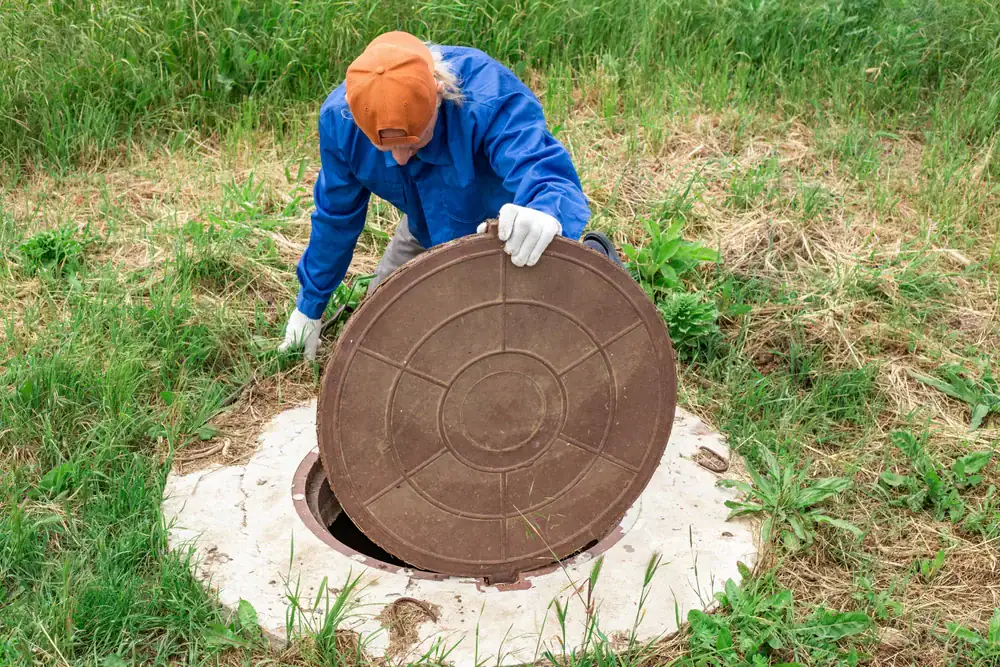
The overflow tank inspection is where we identify whether your second pool is functioning properly. We start by checking water levels. If the overflow tank is holding water at a higher level than normal, that indicates drainage problems. The tank should be relatively empty between uses, with water draining into surrounding soil. Standing water means the soil is saturated or the drainage surfaces are clogged.
We also assess the condition of side-wall drainage. In a healthy overflow tank, water percolates through perforated walls or the open bottom into surrounding soil. When we pump the tank, we watch how quickly it drains. Slow drainage or water that won’t drain at all signals that soil saturation or biological mat buildup has blocked the drainage paths.
We look for solid accumulation in the overflow tank. Remember, this tank should only receive clarified liquid from the primary pool. If we find significant solid waste, sludge, or scum in the overflow tank, it means your primary pool has been overflowing solids—probably for a while. This solid buildup is coating the drainage surfaces and clogging the pores that allow water to escape.
Odor is another indicator. A properly functioning overflow tank shouldn’t produce strong sewage smells because it’s only handling clarified liquid. Foul odors indicate anaerobic conditions, solid decomposition, or system failure. If we smell sewage when we open the overflow tank, there’s a problem.
We check cesspool venting as well. Your system needs proper venting to release gases that build up during waste decomposition. Inadequate venting can cause pressure problems that affect drainage and create odor issues inside your home. During pumping, we can assess whether venting is adequate and functioning correctly.
The soil around your overflow tank tells its own story. We look at the excavation area if it’s visible, checking for signs of saturation, sewage seepage, or soil collapse. Wet, dark, or foul-smelling soil around the tank location indicates that wastewater isn’t draining properly and is instead saturating the surrounding area.
We also evaluate the overall system capacity. If your household has grown—more people living in the home, more bathrooms added, increased water usage—your original two-pool system might no longer be adequate. We can assess whether your system is appropriately sized for current usage or whether you’re overwhelming its capacity.
For homes with pre-cast cesspool rings or brick cesspools, structural integrity is critical. We look for signs of deterioration, cracks, or shifting that could lead to collapse. Older brick cesspools are particularly vulnerable to mortar failure, which allows soil to enter the tank and reduces drainage capacity.
The connection between regular cesspool pumping and overflow tank health is direct. When you pump your primary pool before sludge levels get too high, you prevent solids from flowing into the overflow tank. This single action protects your entire system from the cascade of problems that lead to failure.
Most Suffolk County homes need cesspool pumping every two to three years, but your specific schedule depends on household size and water usage. A family of four typically needs service more frequently than a couple living alone. Homes with garbage disposals, frequent laundry loads, or heavy water use fill up faster and require more frequent pumping.
The cost of preventive pumping is modest compared to emergency repairs. A standard pump-out runs a few hundred dollars and takes a few hours. Emergency service during a backup crisis costs significantly more—often double or triple the regular rate—and comes with the added expense of property damage, health risks, and the stress of dealing with sewage in your home.
Regular pumping also gives us the opportunity to track your system’s condition over time. When we service your cesspool consistently, we maintain records of sludge levels, drainage performance, and any issues we’ve observed. This historical data helps us identify trends that might indicate developing problems. We can tell you if your system is filling faster than it used to, if drainage is slowing, or if structural issues are worsening.
Documentation matters for another reason: Suffolk County requires cesspool pumping records for property transfers and renovation permits. If you decide to sell your home, potential buyers will want to see maintenance records proving the system has been properly cared for. Missing documentation can delay sales or cost you negotiating power. Regular pumping with a licensed contractor ensures you have the paperwork you need.
Preventive pumping also extends the life of your entire system. Overflow tanks that never receive solid waste can function for decades. The soil around them maintains its absorption capacity. The structural components don’t experience the stress of constant saturation or solid buildup. You get more years out of your system before facing replacement costs.
There’s an environmental consideration too. Failed overflow tanks leak untreated sewage into groundwater. In Suffolk County, this directly threatens the sole-source aquifer that supplies drinking water to the community. Nitrogen pollution from failing cesspools has increased dramatically over recent decades, contributing to algal blooms, beach closures, and marine life die-offs in Long Island’s bays and harbors. Regular maintenance isn’t just about protecting your property—it’s about protecting shared water resources.
The inspection component of regular pumping catches small problems while they’re still fixable. A crack in your primary pool that’s identified early can be repaired for a few hundred dollars. That same crack, left unaddressed until it causes system failure, might require complete replacement costing thousands. A partially clogged overflow tank can often be restored with treatment. A completely failed overflow tank usually needs replacement.
Understanding your system’s condition also helps you plan financially. If we tell you your overflow tank is showing early signs of failure, you have time to budget for repairs or replacement. You can research options, compare contractors, and make informed decisions. When failure happens without warning, you’re forced to make expensive decisions under pressure with limited options.
Your cesspool system is one of those things you don’t think about until it forces you to. But the reality is simple: regular cesspool pumping is the most effective way to identify overflow tank problems before they become expensive emergencies. During a standard pump-out, we assess both your primary pool and overflow tank, checking for the specific signs that indicate your system is struggling.
The two-pool system works when both components are maintained properly. Your primary pool captures solids and protects the overflow tank from receiving waste it can’t handle. Your overflow tank provides the drainage capacity that keeps your entire system functioning. When either component fails, the whole system is at risk.
If you’re seeing slow drains, wet spots in your yard, or unusual odors, your system is already telling you something’s wrong. Don’t wait for a backup crisis to address it. We’ve been helping Suffolk County homeowners maintain healthy cesspool systems since 1998, providing honest assessments and reliable service that keeps systems running and families safe.
Summary:
Article details:
Share: