Suffolk County small businesses face unique cesspool challenges. Learn maintenance schedules, non-flushable item problems, and how to prevent expensive emergencies.

Your business cesspool isn’t just a bigger version of a home system. It operates under fundamentally different conditions that affect everything from pumping frequency to failure risks. The difference starts with volume but extends far beyond it.
Commercial properties in Suffolk County typically need cesspool pumping every 30 to 120 days, depending on customer traffic and usage patterns. Compare that to residential systems that might go two to three years between services. That’s not because commercial systems are poorly designed—it’s because they handle exponentially more waste in a much shorter timeframe.
Public restrooms create unique problems that residential cesspools rarely face. When you run a retail store or office building, you’re dealing with dozens or hundreds of people using your facilities daily. Each person brings their own habits, assumptions, and unfortunately, their own ideas about what belongs in a toilet. The result is a constant influx of items that shouldn’t be there, accelerating wear and increasing the risk of system failure at the worst possible time.

Walk into any commercial restroom in Suffolk County and you’ll see the signs: “Please don’t flush paper towels.” “Feminine products in trash only.” “Flushable wipes aren’t actually flushable.” Despite clear instructions, public restrooms collect an astonishing array of items that wreak havoc on cesspool systems.
Research shows that 50 percent of non-dispersible material in wastewater comes from paper towels in public restrooms, followed by 25 percent from baby wipes. Add feminine hygiene products, dental floss, cotton swabs, and the occasional “flushable” wipe that manufacturers swear dissolves but absolutely doesn’t, and you’ve got a recipe for frequent blockages. These items don’t break down like toilet paper. They accumulate in your cesspool’s side-wall drainage areas, clog the perforations in pre-cast cesspool rings, and eventually cause the system to fail.
The problem intensifies because you can’t control user behavior. In a home, you can educate family members about proper disposal. In a commercial setting, you’re relying on strangers to read signs, care about your plumbing, and make responsible decisions—often when they’re in a hurry or distracted. Even one person flushing a handful of paper towels can contribute to a blockage that takes weeks to fully develop.
Brick cesspools and older systems with pre-cast cesspool rings are particularly vulnerable. These systems rely on side-wall drainage to allow liquid waste to percolate into the surrounding soil while solids remain in the primary pool. When non-flushable items clog these drainage pathways, liquid can’t escape properly. The system backs up, overflow tanks fill faster than they should, and you’re facing an emergency situation that could close your business until it’s resolved.
The financial impact extends beyond the immediate pumping cost. When your restrooms are out of service, you lose customers. Retail stores see shoppers leave for competitors. Restaurants face health code violations. Office buildings deal with employee complaints and productivity issues. The cost of prevention through regular maintenance is always lower than the cost of emergency repairs plus lost business during downtime.
If you’re used to residential cesspool maintenance schedules, commercial requirements will feel aggressive. But they’re necessary, and understanding why helps you budget appropriately and avoid surprises.
Commercial cesspool pumping frequency depends on several factors specific to your business. Customer traffic matters most. A small office with ten employees needs less frequent service than a retail store seeing hundreds of customers weekly. The type of business also affects the schedule—restaurants with grease traps face different challenges than office buildings, though both need significantly more attention than residential properties.
Suffolk County regulations add another layer of requirements. The county mandates inspections every three years for commercial properties, and missing these deadlines results in fines that can double your compliance costs. Beyond regulatory requirements, practical considerations drive the schedule. Commercial systems accumulate solids faster because of higher volume and the non-flushable item problem we discussed earlier.
Most small businesses in Suffolk County fall into the 30 to 90 day pumping cycle. That might sound frequent, but it prevents the catastrophic failures that shut down operations. Think of it as preventative maintenance rather than reactive crisis management. A routine $300 to $400 pumping service every few months costs far less than a $5,000 to $10,000 emergency replacement when your system fails during peak business hours.
The schedule also needs to account for seasonal variations. If you operate a business near the beach or in a tourist area, summer months bring higher customer volumes and more frequent restroom usage. Your pumping schedule should reflect these patterns. A leaching pool that handles normal traffic fine in February might struggle in July when visitor numbers triple.
Working with a local cesspool service that understands Suffolk County’s commercial landscape makes scheduling easier. We can assess your specific usage patterns, evaluate your system’s capacity, and recommend a maintenance schedule that prevents problems without over-servicing. The goal is finding the sweet spot where you’re pumping often enough to avoid failures but not so frequently that you’re wasting money on unnecessary services.
Documentation matters more for commercial properties than residential ones. Suffolk County requires cesspool pumping records for property transfers and renovation permits. If you ever sell your business or building, or if you plan expansions that require permits, you’ll need proof of regular maintenance by licensed contractors. Keep detailed records of every service, including dates, volumes removed, and any issues identified during pumping.
Want live answers?
Connect with a AAA Dependable Cesspool expert for fast, friendly support.
Understanding your commercial cesspool system helps you spot problems early and communicate effectively with service providers. Most Suffolk County commercial properties use systems with multiple components working together to manage wastewater.
The basic setup includes a primary pool where waste enters from your building’s plumbing. This pool, often constructed with pre-cast cesspool rings or brick, allows liquids to drain through side-wall perforations while solids settle at the bottom. In properly functioning systems, only clear water should move beyond this primary pool into the surrounding soil or overflow tanks.
Many commercial systems include a leaching pool or overflow tank to handle the higher volume of wastewater. These secondary components provide additional drainage capacity when the primary pool reaches its limit. The system relies on soil saturation levels—when the ground around your cesspool absorbs liquid waste, everything flows smoothly. When soil becomes saturated or drainage pathways clog, problems develop quickly.
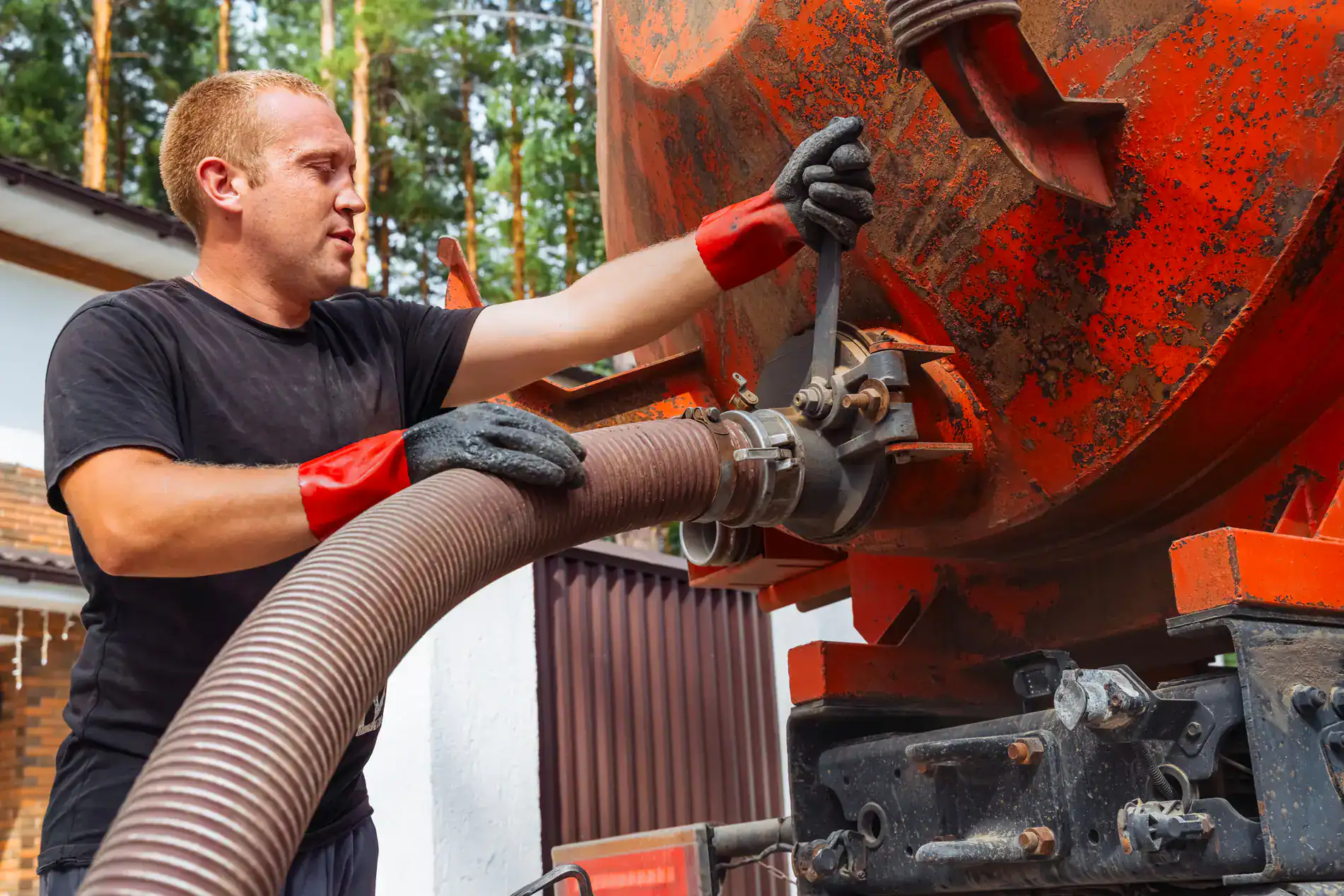
Soil saturation is one of the most common reasons commercial cesspools fail in Suffolk County, and it’s directly related to the higher volumes commercial properties generate. Understanding this process helps you recognize warning signs before they become emergencies.
Your cesspool relies on the surrounding soil to absorb liquid waste that drains through side-wall perforations. In a residential system with lower volume, soil has time to process this liquid and recover between drainage events. Commercial systems don’t offer that luxury. The constant flow of wastewater from public restrooms means soil around your leaching pool stays perpetually saturated, especially during busy periods.
When soil can’t absorb more liquid, your cesspool’s drainage slows dramatically. Liquid waste backs up in the primary pool, filling faster than it can drain. Solid waste has less space to settle. The system’s capacity effectively shrinks even though nothing is physically wrong with the cesspool itself. This is when you start noticing slow drains in your restrooms, gurgling sounds from fixtures, and occasionally foul odors that indicate the system is struggling.
Suffolk County’s soil conditions complicate this issue. Sandy soils common in coastal areas typically drain well, but they can become compacted around cesspool walls over time, reducing permeability. Areas with higher water tables face additional challenges—when groundwater sits close to the surface, there’s less room for your cesspool’s liquid waste to go. Heavy rains exacerbate the problem by raising the water table temporarily and saturating soil that would normally absorb your wastewater.
The solution isn’t always simple. Sometimes more frequent pumping helps by removing solids before they accumulate enough to restrict drainage. Other situations require cesspool venting improvements to allow gases to escape properly, which can improve overall system function. In severe cases, particularly with older brick cesspool systems, you might need additional overflow tanks or even system modifications to handle your business’s volume.
Prevention focuses on managing what enters your system and maintaining proper pumping schedules. The less solid waste that accumulates in your primary pool, the more capacity remains for liquid drainage. This is why the non-flushable item problem matters so much—every paper towel or wipe that enters your system takes up space and contributes to the conditions that lead to soil saturation issues.
The construction type of your commercial cesspool affects its durability, maintenance needs, and likelihood of specific problems. Suffolk County properties built in different eras use different construction methods, and knowing which type you have helps predict potential issues.
Pre-cast cesspool rings became standard in Suffolk County around the 1970s and represent a significant improvement over older construction methods. These concrete rings are manufactured with controlled perforations for side-wall drainage, stacked to create the cesspool chamber, and designed to handle the weight of soil and surface traffic without collapsing. They’re more uniform, more durable, and less prone to structural failure than older alternatives.
Brick cesspools, common in properties built before the 1970s, use loose-fitting bricks that allow liquid to seep through gaps between bricks. While this provided adequate drainage when new, brick construction has several vulnerabilities that become more pronounced in commercial applications. The bricks can shift over time, especially under the stress of constant wastewater flow. Gaps can widen or narrow unpredictably, affecting drainage patterns. And brick is more susceptible to deterioration from the chemicals and bacteria present in commercial wastewater.
If your business operates in an older building with a brick cesspool, you face higher maintenance requirements and greater risk of structural problems. These systems need more frequent inspections to catch deterioration before it causes collapse. They’re also more vulnerable to the non-flushable item problem because debris can lodge in irregular gaps between bricks, accelerating blockage formation.
The practical difference shows up in how these systems fail. Pre-cast cesspool rings typically fail due to clogged perforations or soil saturation issues—problems that regular pumping and maintenance can address. Brick cesspools can develop structural weaknesses that require more extensive repairs or complete replacement. When evaluating a commercial property or planning long-term maintenance budgets, knowing your construction type helps you anticipate costs and potential issues.
Suffolk County’s 2019 ban on new cesspool installations means any major repair or replacement requires upgrading to modern septic systems. For businesses with aging brick cesspools, this creates a planning consideration. You can maintain the existing system as long as it functions properly, but when it fails beyond repair, you’re looking at a complete system upgrade rather than a simple cesspool replacement. Grant programs exist to help offset these costs, but the expense is still significant.
Regular inspections become even more critical for brick cesspool systems. A qualified technician can identify structural concerns during routine pumping visits, giving you time to plan for repairs or replacement rather than facing an emergency situation during your busiest season. This proactive approach protects your business from unexpected closures and allows you to budget appropriately for system maintenance.
Commercial cesspool management in Suffolk County isn’t optional—it’s essential for keeping your business operational and compliant. The combination of higher volumes, non-flushable items from public restrooms, and strict regulatory requirements means small business owners need reliable, knowledgeable service providers who understand commercial systems.
Regular pumping on a schedule appropriate for your customer traffic prevents the catastrophic failures that close businesses and cost thousands in emergency repairs. Understanding your system’s construction type, whether pre-cast cesspool rings or older brick construction, helps you anticipate maintenance needs and budget appropriately. And recognizing warning signs like slow drains, odors, or soil saturation issues lets you address problems before they escalate.
Your cesspool system might not be the most exciting aspect of running a business, but it’s one of the most important for daily operations. When restrooms fail, everything else stops. At AAA Dependable Cesspool Sewer & Drain, we’ve been solving these exact problems for Suffolk County businesses since 1998, bringing the local knowledge and honest approach your commercial property deserves.
Summary:
Article details:
Share: