DIY septic maintenance has its place — but so does knowing when it stops being enough. Here's the honest breakdown for Suffolk County homeowners.

If you’ve been putting off septic service because you’re not sure whether it’s something you can handle yourself or something that needs a professional, you’re not alone. It’s one of the most common questions we hear from homeowners across Suffolk County. And the honest answer is: it depends on what you’re actually trying to do.
Some maintenance tasks are perfectly reasonable to handle on your own. Others aren’t just difficult — they’re genuinely dangerous, and in some cases, illegal. This page will walk you through the difference so you can make a smart, informed decision before anything goes wrong.
There’s a common misconception that septic tank pumping and septic cleaning are the same thing. They’re not. Pumping removes the liquid layer and some loose solids. A full professional septic tank cleaning goes further — it includes backwashing to break up compacted sludge, complete removal of all layers (scum, sludge, and effluent), inspection of the tank’s structural integrity, and cleaning of the effluent filter if one is present.
Think of it like the difference between vacuuming a room and actually deep-cleaning it. One addresses the surface. The other addresses what’s been building up underneath.
A thorough cleaning also includes an inspection of your inlet and outlet pipes, a check for cracks or shifting in the tank walls, and a written record of what we found — so you’re not left guessing about the condition of your system after our truck pulls away.

A septic clean out is the full-service version of what most people call “getting the tank pumped.” It’s the process of removing everything that’s accumulated in your tank — not just what’s easy to extract — and leaving the system in a condition where it can actually do its job properly again.
For most households in Suffolk County, this needs to happen every two to three years. The EPA recommends pumping every three to five years, but that’s a broad national guideline. Penn State Extension research, which accounts for real household patterns like adults working outside the home and kids at school, points to a more realistic two-to-three-year window for average families. A family of four with a standard 1,000-gallon tank is typically looking at a clean out every two and a half years.
Here’s why the timing matters more than most people realize: about 75% of properties across Suffolk County rely on private septic systems, and Long Island’s drinking water comes entirely from the groundwater beneath our properties. There’s no municipal backup. When a septic system fails or overflows here, it doesn’t just become your problem — it becomes a direct threat to the aquifer that everyone in the county depends on.
The signs that you’re overdue for a septic tank clean out aren’t always dramatic. Slow drains are often the first thing people notice. A faint odor near the yard, a patch of unusually green grass over the tank or drain field, or gurgling sounds in your pipes are all worth paying attention to. By the time you’re dealing with an active backup, the system has usually been under stress for a while — and the drain field may already be compromised.
Most homeowners think about septic service in terms of years. We think about it in terms of what’s actually inside the tank. When sludge and scum layers combined exceed about 50% of your tank’s total capacity, the system is no longer functioning the way it should. In practice, we typically recommend cleaning when either layer reaches 30 to 35% of capacity — before the system is under strain, not after.
The problem with waiting until you notice symptoms is that by that point, solids may have already passed through to your leaching pool or drain field. Replacing a failed drain field in Suffolk County can run anywhere from $10,000 to well over $20,000. A routine septic tank clean out costs a fraction of that.
This is also why enzyme treatments and bacterial additives — the kind you find at hardware stores — can’t substitute for professional cleaning. They support the biological activity inside a healthy tank, and there’s nothing wrong with using them between service calls. But they don’t remove accumulated sludge. They don’t inspect your pipes. And they don’t catch a cracked baffle before it becomes a system failure. They’re a supplement, not a solution.
Chemical drain cleaners are genuinely harmful to septic systems. They kill the beneficial bacteria that make the whole system work. If you’re using them regularly, you’re likely accelerating sludge buildup and shortening the life of your system — even if everything looks fine on the surface.
Want live answers?
Connect with a AAA Dependable Cesspool expert for fast, friendly support.
Not everything about septic care requires a professional. There are things you can do as a homeowner that genuinely help — and we’d rather tell you that honestly than pretend every task requires a service call.
Being mindful of what goes down your drains is the single most impactful thing you can do between cleanings. Excessive water use in short periods, flushing anything other than waste and toilet paper, and pouring grease down the drain all stress the system in ways that add up over time. These aren’t small things — they directly affect how quickly your tank fills and how well your drain field functions.
Where the line gets drawn is at anything that involves opening the tank, handling the contents, or trying to diagnose what’s happening inside the system.
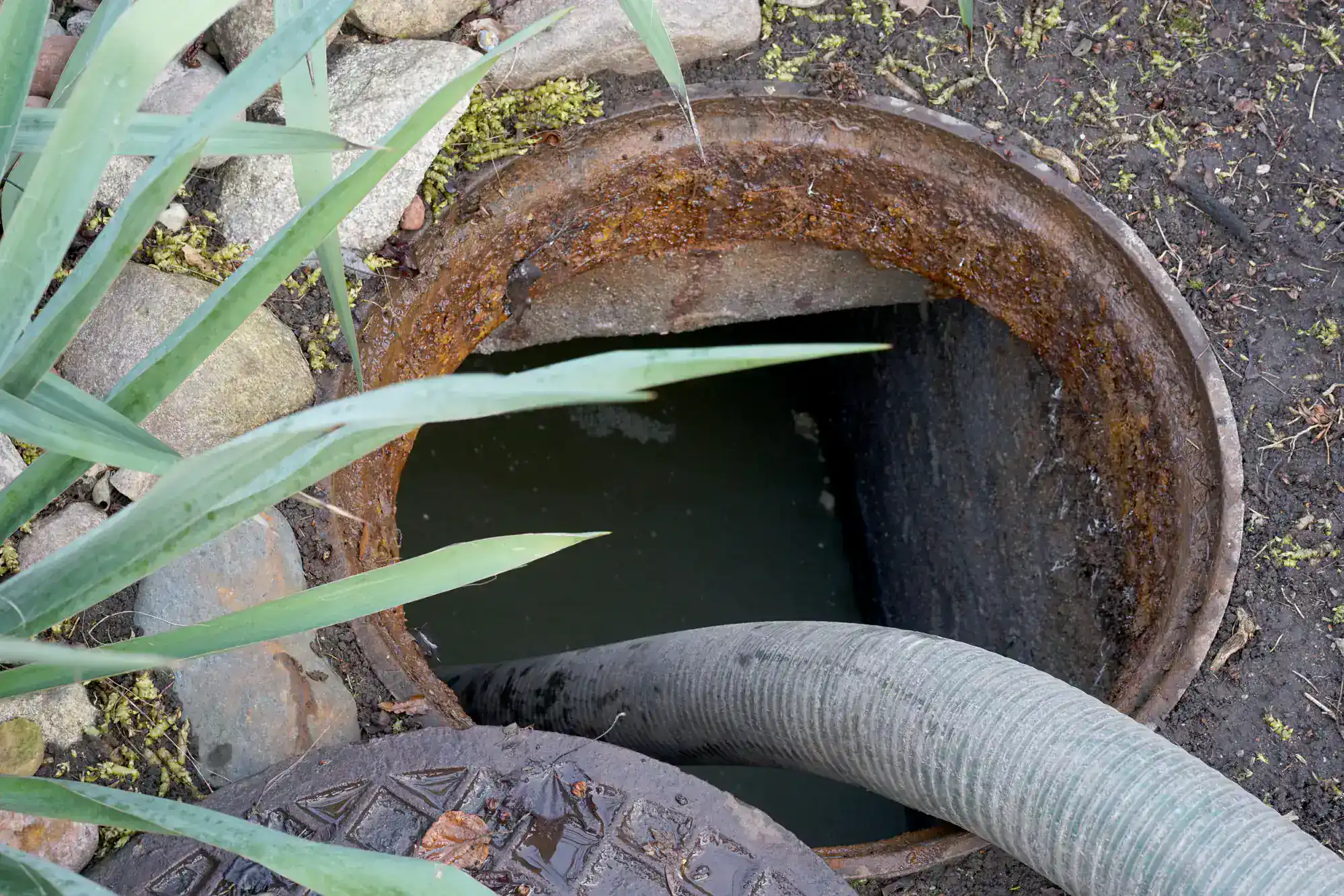
This comes up more than you’d think, and the short answer is no — not safely, and not legally.
Septic tanks produce hydrogen sulfide and methane gas. Both are odorless at dangerous concentrations, and hydrogen sulfide in particular is lethal at levels that give almost no warning. Professionals who work on septic systems are trained in confined space entry procedures specifically because of these risks. Opening a tank without that training and without proper equipment isn’t a calculated risk — it’s genuinely unpredictable in a way that can go very wrong, very fast.
Beyond the safety issue, there’s a legal one. The waste removed from a septic tank — called septage, which is the combined mixture of sludge, scum, and effluent — must be transported and disposed of at a licensed facility. In New York, homeowners have no legal mechanism to do this themselves. So even if you had the equipment to pump the tank, you’d have no legal way to dispose of what you removed. Any company operating in Suffolk County without a proper waste disposal chain isn’t just cutting corners — they’re creating a liability for you.
This is also why Suffolk County Consumer Affairs licensing matters when you’re choosing a service provider. Licensed operators are accountable to local regulatory standards. Unlicensed ones aren’t — and in an industry where some operators do partial pump-outs, skip inspections, and disappear without documentation, that distinction is real. We’ve been licensed with Suffolk County Consumer Affairs since 1998, and we carry full insurance on every job. It’s not a selling point — it’s a baseline that every company you call should be able to confirm.
There’s a reasonable middle ground between doing nothing and calling a professional every time something seems slightly off. Here’s what actually makes a difference when you’re managing your system between scheduled service visits.
Water conservation habits matter more than most people expect. Running multiple high-water appliances at the same time — dishwasher, washing machine, multiple showers — sends a large volume of water into the tank in a short window. The tank needs time to process and distribute that load. Spreading out laundry over the week instead of doing it all on Saturday is a small change that reduces real stress on the system.
Protecting the drain field is something homeowners can do without any equipment at all. Don’t park vehicles on it. Don’t plant trees or large shrubs nearby — root systems are one of the most common causes of pipe damage in Suffolk County’s older systems. Keep roof drains and surface water directed away from the drain field area so the soil doesn’t become saturated.
Bacterial additives used monthly can help maintain a healthy bacterial population in the tank, especially after events that disrupt it — like a heavy dose of antibiotics in the household, or a period of very low water use at a seasonal property. For homeowners on Fire Island or with summer homes on the North Fork, this is worth thinking about before you open the property for the season after months of dormancy.
What you shouldn’t do is use tank readings or visual checks as a substitute for professional inspection. You can’t gauge sludge levels by looking into an access port without the right equipment, and you can’t assess baffle condition or pipe integrity from the surface. The value of a professional septic tank clean out isn’t just the pumping — it’s the set of eyes on the system from someone who knows what a problem looks like before it becomes a failure.
The decision between DIY and professional septic tank cleaning isn’t really a close call once you understand what each actually involves. Homeowners can and should take an active role in maintaining their systems between service visits. But the cleaning itself — the full septic clean out, the inspection, the documentation — requires licensed professionals with the right equipment and a legal disposal chain.
In Suffolk County, where three-quarters of all properties run on private septic systems and the entire county’s drinking water comes from the ground beneath your yard, the stakes of getting this wrong are higher than most places.
If you’re not sure when your system was last serviced, or if something feels off and you want a straight answer without being pushed toward services you don’t need, we’ve been doing this work honestly across Suffolk County since 1998. Give us a call — we’ll tell you exactly what we find.
Summary:
Article details:
Share: